


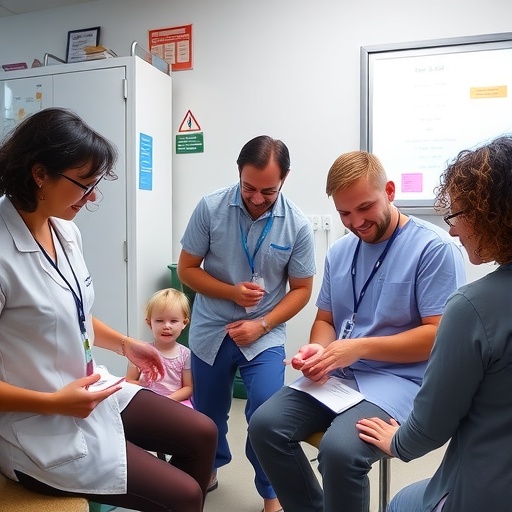
In the evolving landscape of nursing education, innovative pedagogical approaches are vital for the development of future healthcare professionals. The integration of photovoice with team-based learning practices has emerged as a notable trend, particularly in pediatric nursing education. This method not only engages students actively but also fosters critical thinking and reflection, which are crucial for effective nursing practice.
Recently, a groundbreaking study led by researcher F. Ebrahimpour explored nursing students’ experiences using this novel educational intervention. This research offers a comprehensive insight into how photovoice—a participatory research method engaging students through photography—can enhance the learning experience when combined with collaborative team-based learning environments. As nursing educators seek fresh methodologies to enrich their curriculum, Ebrahimpour’s findings present compelling evidence that could reshape how nursing is taught in academic settings.
Photovoice encourages students to capture images that resonate with their learning experiences, thereby creating a powerful narrative of their educational journey. This method allows students to express their thoughts visually, attempting to reflect their understanding and perceptions of pediatric nursing. When combined with team-based learning, students not only articulate their individual insights but also engage in rich discussions, sharing different perspectives that contribute to group learning. Such interactive learning environments can significantly enhance the depth of understanding among nursing students, allowing them to grasp complex concepts in pediatric care more effectively.
One of the significant benefits noted in Ebrahimpour’s study involved increased engagement among nursing students. The photovoice project enabled them to become more active participants in their learning. Rather than passively consuming information, students immersed themselves in the learning process, using their creativity and personal experiences to engage with course material actively. This transition from passive to active learning is crucial, particularly in a field where patient-centered care is of utmost importance.
Moreover, the study highlights how teamwork aspects of this approach cultivate strong interpersonal skills among nursing students. In pediatric nursing education, the ability to communicate effectively and collaborate with peers and other healthcare professionals is essential. The team-based learning component of the photovoice approach allows students to work collectively to analyze the images they produce, discuss implications, and develop strategies for better patient care. This collaborative atmosphere can help students forge lasting relationships with their classmates, ultimately enhancing their professional network as they enter the workforce.
Ebrahimpour’s research also pointed out a significant change in the students’ attitudes towards learning and patient care. Students reported feeling more empowered and confident in their abilities after participating in the photovoice project. This newfound sense of agency is particularly vital in pediatric nursing, where practitioners must advocate for their young patients effectively. Building confidence through creative expression and collaborative learning cultivates a generation of nurses who are not only knowledgeable but passionate about their roles in patient advocacy.
Further, the study’s findings resonate with broader trends in healthcare education that emphasize experiential learning. It draws attention to the fact that learning experiences should not only be informative but also transformative, allowing students to grow personally and professionally. By incorporating real-world scenarios and challenges, photovoice equips students with tools necessary for navigating the complexities of pediatric healthcare environments.
Additionally, Ebrahimpour’s work is backed by qualitative data collected through interviews and focus groups. Students provided insightful commentary on their experiences, emphasizing how the project enhanced their understanding of critical issues in pediatric nursing. This qualitative approach not only enriches the data but affirms the value of student voices in shaping the educational curriculum.
The challenges of implementing such innovative teaching strategies are also part of Ebrahimpour’s exploration. While the photovoice method showed promising outcomes, the study revealed complexities in facilitating group discussions and ensuring that all student voices were heard. The instructor’s role transitions from a traditional lecturer to a facilitator of learning, guiding students through discussions and ensuring equitable participation. This requires an adept understanding of group dynamics and a commitment to fostering an inclusive learning environment.
At a time when healthcare systems worldwide face significant challenges, the skills and knowledge engendered by such educational approaches are more critical than ever. The insights garnered from Ebrahimpour’s research could serve as a lesson for nursing educators globally. By adopting practices that prioritize student engagement and teamwork, nursing programs can prepare their graduates to meet the demands of modern healthcare effectively.
Furthermore, this study sheds light on the need for ongoing assessment and evolution of nursing curricula to align with changing patient needs and technological advancements. The integration of innovative educational strategies, such as photovoice, can spark a transformation in nursing education that not only impacts students but ultimately enhances patient care outcomes in pediatric settings.
Ebrahimpour’s research emphasizes that teaching methodologies must evolve in tandem with advancements in healthcare and education. By continually refining these approaches, nursing educators can ensure that students are equipped with the necessary competencies to thrive in an ever-changing healthcare landscape. The impact of this research could resonate for years, influencing how nursing is taught and practiced across a multitude of settings.
As we look forward to the implementation of such strategies across nursing programs, Ebrahimpour’s contribution to the field stands as a beacon of innovation. It encourages a re-evaluation of traditional pedagogies, inspiring educators to adopt methods that not only engage students but also empower them to take ownership of their learning. The potential for fostering meaningful change in nursing education has never been more significant, and the implications of this research echo far beyond the classroom into the real-world practice of nursing itself.
No doubt, the ongoing dialogue surrounding educational practices in nursing aims to develop professionals who will be adaptable, empathetic, and resilient. The insights gained from integrating photovoice with team-based learning are essential for nurturing these characteristics among nursing students, ultimately benefitting the future of patient care in pediatric nursing.
Ebrahimpour, F. Nursing students’ experiences using photovoice with team-based learning in pediatric nursing education.
BMC Med Educ (2025). https://doi.org/10.1186/s12909-025-08347-5
Cite Scienmag News
Harold Sullivan. (December 17, 2025). Exploring Pediatric Nursing Through Photovoice and Team Learning. Scienmag. https://scienmag.com/exploring-pediatric-nursing-through-photovoice-and-team-learning/
Harold Sullivan. "Exploring Pediatric Nursing Through Photovoice and Team Learning." Scienmag, 17 December 2025, https://scienmag.com/exploring-pediatric-nursing-through-photovoice-and-team-learning/. Accessed 3 September 2026.
Harold Sullivan. "Exploring Pediatric Nursing Through Photovoice and Team Learning." Scienmag. December 17, 2025. https://scienmag.com/exploring-pediatric-nursing-through-photovoice-and-team-learning/


