


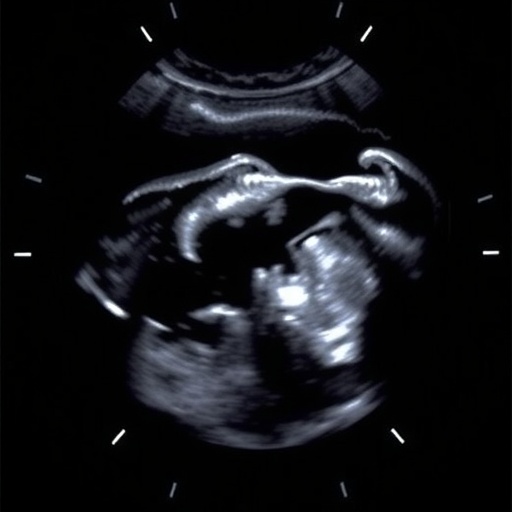
In the rapidly evolving realm of pediatric medicine, advancements in diagnostic tools are paving the way for safer and more effective evaluations of children with diverse health issues. A recent study spearheaded by renowned researchers, including Fazecas, Paiva Lopes, and Gedeon, has unveiled promising findings regarding the use of non-contrast transperineal ultrasound. This innovative imaging technique not only enhances diagnostic accuracy but also minimizes the risks associated with conventional imaging methods commonly employed in pediatrics.
Non-contrast transperineal ultrasound, a technique that involves the application of high-frequency sound waves to visualize internal structures, is gaining traction due to its non-invasive nature and absence of harmful ionizing radiation. Unlike traditional imaging modalities, such as CT scans or contrast-enhanced ultrasounds, this methodology offers a safe alternative for pediatric patients, who are particularly vulnerable to the adverse effects of radiation exposure. The research conducted by Fazecas and colleagues emphasizes the significance of this advancement in the ongoing quest to refine pediatric healthcare.
In their study, the authors meticulously evaluated the efficacy of non-contrast transperineal ultrasound in diagnosing a variety of disorders affecting children. The researchers conducted a comprehensive analysis involving a diverse cohort of pediatric patients, assessing the ultrasound’s ability to accurately detect and characterize different conditions. This analysis highlights the versatility of the ultrasound technique, showcasing its potential in addressing various clinical scenarios effectively.
Moreover, the findings indicate that non-contrast transperineal ultrasound can be particularly advantageous in evaluating children with urogenital disorders and abnormalities. Given that traditional imaging practices often require sedation or invasive procedures in young patients, this ultrasound approach emerges as a favorable alternative that aligns with the principles of pediatric care. It not only reduces the necessity for sedation but also promotes a more comfortable experience for the child and their caregivers.
The researchers employed a robust methodology to ensure the reliability of their findings. By using a well-defined set of inclusion criteria, they meticulously selected patients who presented with specific urogenital disorders. This carefully curated sample allowed for a thorough investigation into the ultrasound’s diagnostic capabilities. The results revealed a high level of correlation between ultrasound findings and subsequent clinical outcomes, underscoring the technique’s reliability as a diagnostic tool in pediatric medicine.
In addition to its diagnostic precision, the study highlights the economic implications of adopting non-contrast transperineal ultrasound in clinical practice. The reduced need for additional imaging studies, coupled with a significant decrease in procedural complications, presents an opportunity for healthcare facilities to save resources while improving patient outcomes. As pressures mount to contain healthcare costs, this finding is particularly pertinent for hospitals and clinical practices striving to enhance their operational efficiency.
One of the most compelling aspects of this study lies in its potential to transform clinical protocols in pediatric settings. With mounting evidence supporting the use of non-contrast transperineal ultrasound, healthcare providers may soon incorporate this technique into standard evaluation routines for pediatric patients. This shift could streamline diagnostic workflows, leading to quicker and more accurate assessments, ultimately facilitating timely interventions and management plans.
Furthermore, the research acknowledges the importance of training healthcare professionals in the application of this ultrasound technique. By equipping radiologists and pediatricians with the necessary skills and knowledge, the medical community can maximize the benefits that non-contrast transperineal ultrasound has to offer. Educational initiatives and workshops centered on this imaging modality could foster a deeper understanding of its utility, ensuring that healthcare providers are well-prepared to implement it effectively in their practices.
The implications of these findings extend beyond the immediate clinical landscape, potentially impacting research trajectories in pediatric imaging. As more practitioners adopt non-contrast transperineal ultrasound, opportunities for further research can arise, leading to the exploration of its applications in other pediatric conditions. This would contribute to a growing body of literature that seeks to elucidate the full range of benefits and limitations associated with this imaging technique.
Moreover, the authors emphasize the necessity for continued investigations to refine the technical parameters of non-contrast transperineal ultrasound. Optimizing equipment settings and protocols could further enhance the resolution and diagnostic accuracy of this imaging method. As technology continues to advance, ongoing research can pave the way for innovations that improve the capabilities of ultrasound and broaden its applications in pediatric care.
Ethical considerations also play a crucial role in the discussion surrounding pediatric imaging. The study’s emphasis on minimizing radiation exposure aligns with the evolving principles of medical ethics, advocating for non-invasive alternatives whenever possible. The commitment to safeguarding the well-being of pediatric patients is a testament to the dedication of researchers and healthcare professionals who strive to promote best practices in the field.
As the dialogue surrounding non-contrast transperineal ultrasound gains momentum, it is essential for healthcare policymakers to recognize its potential impact on pediatric diagnostics. Integrating this methodology into practice guidelines could standardize its use across healthcare systems, ensuring that young patients benefit from the latest advancements in imaging technology. By prioritizing evidence-based practices, policymakers can help shape the future of pediatric medicine.
In conclusion, the groundbreaking insights presented by Fazecas, Paiva Lopes, and Gedeon regarding the utility of non-contrast transperineal ultrasound herald a new era in pediatric diagnostics. This innovative imaging technique demonstrates the capacity to improve diagnostic accuracy while minimizing risks for children. As more studies emerge supporting its effectiveness, the medical community stands poised to embrace this advancement and refine the standard of care for pediatric patients.
With the ongoing discourse surrounding this promising research, the potential for widespread adoption of non-contrast transperineal ultrasound may soon become a reality in pediatric healthcare, ultimately resulting in enhanced care, improved patient experiences, and better health outcomes for children worldwide.
Cite Scienmag News
Harold Sullivan. (October 28, 2025). Exploring Non-Contrast Transperineal Ultrasound in Pediatric Care. Scienmag. https://scienmag.com/exploring-non-contrast-transperineal-ultrasound-in-pediatric-care/
Harold Sullivan. "Exploring Non-Contrast Transperineal Ultrasound in Pediatric Care." Scienmag, 28 October 2025, https://scienmag.com/exploring-non-contrast-transperineal-ultrasound-in-pediatric-care/. Accessed 5 September 2026.
Harold Sullivan. "Exploring Non-Contrast Transperineal Ultrasound in Pediatric Care." Scienmag. October 28, 2025. https://scienmag.com/exploring-non-contrast-transperineal-ultrasound-in-pediatric-care/


