


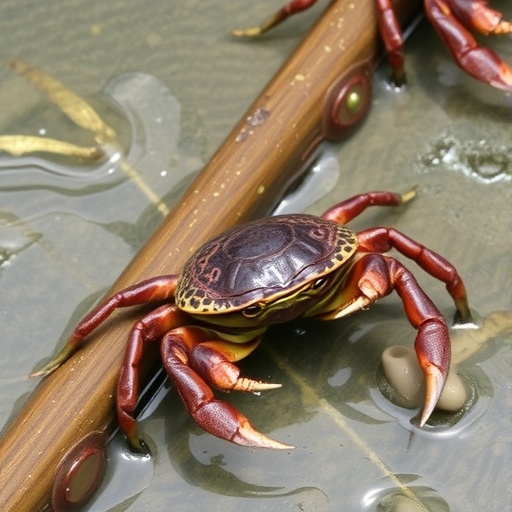
In the lush and vibrant mangrove forests lining Ambon Bay, Maluku, Indonesia, a significant ecological study has emerged, focusing on the population characteristics of the mud crab, known scientifically as Scylla olivacea. This species, pivotal to the local ecosystem and economy, thrives within these unique coastal habitats, yet remains under-researched in terms of its population dynamics and ecological roles.
The investigation led by an expert team including L. Siahainenia and D.A.J. Selanno aims to furnish vital data on the demographics of Scylla olivacea, unraveling the intricate relationships between the mud crab and its mangrove home. The researchers embarked on this critical venture in response to increasing environmental concerns impacting these crucial ecosystems, such as pollution, deforestation, and climate change.
Understanding the population characteristics of Scylla olivacea is not merely an academic exercise; it is essential for developing effective conservation strategies. These crabs play a crucial role in the mangrove ecosystems, acting as both predators and prey, thus contributing to the overall biodiversity within their habitats. Their feeding habits also help control the abundance of various organisms in the sediment, prompting a healthier ecosystem balance.
The researchers employed various sampling methods to collect data on both the size and density of the mud crab populations in different mangrove zones. By analyzing these populations, they uncovered alarming trends in growth rates and reproductive strategies, which raise questions about the sustainability of current fishing practices. Such findings echo worldwide concerns over overfishing and highlight the need for adaptive management practices in fisheries.
Additionally, the study delves into the impact of environmental variables on mud crab populations. Factors such as salinity, water temperature, and habitat complexity were recorded to ascertain their influence on the distribution and abundance of Scylla olivacea. The researchers found a significant correlation between these environmental conditions and the observed population dynamics, underscoring the complexity of marine ecosystems.
The implications of the study extend further as the team explored potential human impacts on these populations. Urbanization, coastal development, and mangrove degradation present formidable threats to the natural habitats of Scylla olivacea. The researchers argue that without dedicated conservation efforts, the future of these mud crab populations remains precarious, emphasizing the need for stakeholder engagement in environmental management plans.
The results of this research also contribute to the broader understanding of how mangroves function as essential fish habitats. By focusing on the life history traits of S. olivacea, the study provides insights into its reproductive cycles, growth rates, and mortality factors. Such knowledge is crucial not only for crafting effective fishing regulations but also for ensuring the long-term health of mangrove ecosystems.
As climate change continues to alter marine environments globally, understanding species like Scylla olivacea become crucial for predicting future ecological shifts. The study invites comparative research in other regions, fostering collaboration among marine biologists and ecologists worldwide to holistically address the challenges posed by environmental changes.
Moreover, while ground-breaking, this research underscores the necessity for continuous monitoring of mud crab populations. Establishing long-term observation sites within the mangrove ecosystems can significantly enhance the understanding of population trends and provide critical data for adaptive management strategies.
In conclusion, Siahainenia and colleagues’ work not only sheds light on the mud crab’s population characteristics but also elevates the discourse surrounding ecosystem conservation. By advocating for sustainable practices and highlighting the interconnectedness of coastal ecosystems, the research serves as a call to action for environmental stewardship in Ambon Bay and beyond.
The study presents a roadmap for future research in this vital area of marine biology, promoting greater understanding of not only Scylla olivacea but also the myriad species that coexist within mangrove habitats. As these ecosystems face unprecedented challenges, informed conservation measures stand as the best hope for preserving their rich biodiversity for generations to come.
The excitement surrounding the publication of this research lies in its potential to catalyze further scientific inquiry and to rally communities around the importance of protecting their natural resources. Following the study, many local organizations and policymakers are expected to use the findings to bolster efforts in habitat restoration and species management.
In a collective effort to sustain these vital ecosystems, we must prioritize research initiatives that focus on understanding the ecological intricacies of species such as Scylla olivacea. With each finding, we inch closer to not only preserving a species but protecting the diverse and intricate web of life they are a part of.
Siahainenia, L., Selanno, D.A.J., Tuhumury, N.C. et al. Population characteristics of the mud crab (Scylla olivacea) in the mangrove ecosystem of Ambon Bay, Maluku, Indonesia.
Environ Monit Assess 197, 1246 (2025). https://doi.org/10.1007/s10661-025-14704-0
Cite Scienmag News
Margaret Porter. (October 24, 2025). Exploring Mud Crab Populations in Ambon Bay Mangroves. Scienmag. https://scienmag.com/exploring-mud-crab-populations-in-ambon-bay-mangroves/
Margaret Porter. "Exploring Mud Crab Populations in Ambon Bay Mangroves." Scienmag, 24 October 2025, https://scienmag.com/exploring-mud-crab-populations-in-ambon-bay-mangroves/. Accessed 3 September 2026.
Margaret Porter. "Exploring Mud Crab Populations in Ambon Bay Mangroves." Scienmag. October 24, 2025. https://scienmag.com/exploring-mud-crab-populations-in-ambon-bay-mangroves/


