


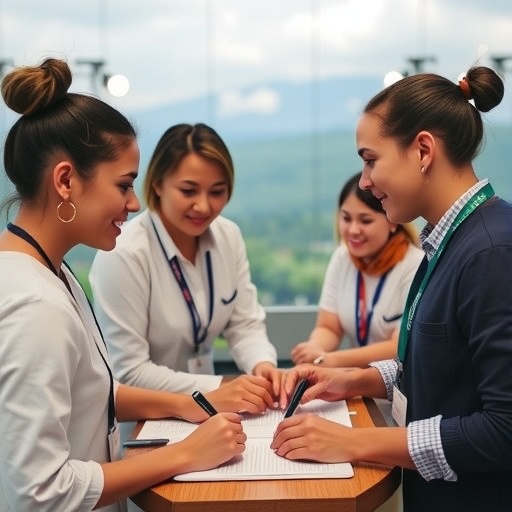
In a rapidly globalizing world where interdisciplinary collaboration becomes increasingly vital, an exploratory study led by a group of researchers sheds light on the impacts of interprofessional and international service-learning programs on student experiences and learning outcomes. The research, undertaken by Kor, P.P.K., Tan, H.Z., Tsang, A.P.L., et al., focuses on how students engage with diverse peers from different health disciplines and geographical backgrounds, ultimately shaping their professional identities and competencies.
The significance of this study cannot be overstated. With the healthcare landscape constantly evolving, nurturing highly skilled professionals who can adapt and function in varied environments is essential. This program aimed to bridge theoretical knowledge with practical skills, preparing students for real-world challenges in healthcare settings. The researchers embarked on qualitative methods, utilizing interviews and surveys to collect valuable insights from participants about their experiences in this unique educational opportunity.
One of the pivotal findings revealed that students from various disciplines underwent transformational changes in their thinking and attitudes towards collaboration. By engaging in service-learning, participants not only honed their clinical skills but also significantly enhanced their understanding of teamwork and leadership within a cross-cultural context. The interactions prompted students to examine their own biases while gaining respect for differing approaches in treatment and patient care based on cultural contexts.
Moreover, the program’s structure encouraged mutual respect and understanding among students from different backgrounds, positioning them to face the complexities of modern healthcare. Participants frequently cited enhanced communication skills as a major takeaway, indicating that effective communication is foundational to successful interprofessional practice. By participating in discussions and working together on projects, students cultivated an appreciation for diverse perspectives, which is crucial in today’s integrated healthcare systems.
The research also highlighted the emotional growth that students experienced during the program. Participants described feelings of empowerment and increased confidence when collaborating with their peers. This emotional intelligence is indispensable, as future healthcare environments necessitate practitioners who can navigate emotional complexities, not just clinical interactions. Above all, the evidence stemming from this study underscores the importance of integrating service-learning into educational curricula, as the real-world impact mirrors the best practices found in various fields of health education.
On another poignant note, the team explored how the program fostered a sense of global citizenship among participants. Many students articulated a profound commitment to social responsibility, which they credited to the service-learning component. These revelations showcased a robust connection between academic learning and community engagement, reinforcing the idea that future healthcare leaders must remain acutely aware of the social determinants of health that influence patient care worldwide.
While the research offers substantial evidence supporting service-learning within health education, it also calls attention to the need for further study. As this exploratory analysis opened new doors for understanding the benefits of interprofessional training, it inevitably raised questions about scalability. Can similar programs be effectively implemented in diverse educational settings? How might they be adapted to meet the needs of students from distinct educational backgrounds?
To ensure that the knowledge gleaned from this research translates into lasting change, institutions must evaluate their current curricula. It is essential to not only incorporate service-learning initiatives but also to actively cultivate environments where collaborative practice is the norm rather than the exception. By doing so, educational programs can better prepare students to work in multi-disciplinary teams—a necessity in the face of ongoing public health challenges.
Encouragingly, the findings may serve as a catalyst for more interprofessional collaborations that align with global health initiatives. Innovations in healthcare necessitate a cooperative spirit among practitioners, and this research lays foundational principles to guide future explorations in the intersection of education and practice. Furthermore, institutions can derive actionable strategies based on students’ input to refine their programs continuously, ensuring that they remain relevant in the ever-changing landscape of health care.
As this study continues to spark discussions, it reinforces the narrative that we live in an interdependent world, where the sharing of knowledge across borders is invaluable. Future researchers must take heed of the implications and explore additional dimensions of interprofessional education. The potential to reimagine healthcare training worldwide rests on the shoulders of those willing to adapt, innovate, and learn from one another.
Lastly, it is important for stakeholders in health education—administrators, educators, students, and policymakers—to perpetuate discussions surrounding interprofessional and international service-learning. The shared experiences articulated by students in this study are not merely anecdotes but examples of how structured educational programs can be transformational. Fostering an enriched, collaborative environment prepares healthcare providers not only for today’s challenges but also for the complexities of tomorrow.
Ultimately, this exploratory study serves as a clarion call to examine how we educate the next generation of healthcare professionals, urging a collective commitment to cultivate experiences that resonate beyond the classroom and into the everyday fabric of care delivery.
Cite Scienmag News
Courtney Benton. (November 3, 2025). Exploring Global Impact of Interprofessional Service Learning. Scienmag. https://scienmag.com/exploring-global-impact-of-interprofessional-service-learning/
Courtney Benton. "Exploring Global Impact of Interprofessional Service Learning." Scienmag, 3 November 2025, https://scienmag.com/exploring-global-impact-of-interprofessional-service-learning/. Accessed 4 September 2026.
Courtney Benton. "Exploring Global Impact of Interprofessional Service Learning." Scienmag. November 3, 2025. https://scienmag.com/exploring-global-impact-of-interprofessional-service-learning/


