


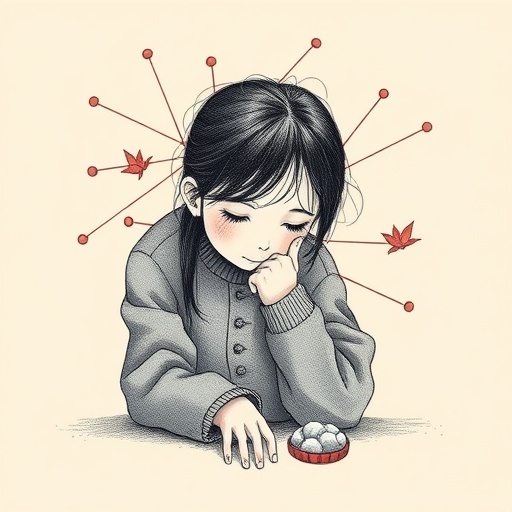
In recent years, the mental health of adolescents has become an increasingly important topic of discussion, especially in rapidly changing societies. A groundbreaking study conducted by researchers Shang and Sun sheds light on the emotional well-being of Chinese adolescents, exploring the intricate landscape of depressive symptomatology through a network approach. This study, published in “Child Psychiatry and Human Development,” delves into the multifactorial origins of depression in youth, offering a nuanced understanding of how these factors interact and influence one another.
The network approach adopted by the researchers represents a significant shift in how we can conceptualize depressive symptoms. Rather than viewing depression as a linear condition resulting from specific causes or risk factors, this model illustrates depression as a complex web of interconnected symptoms. This perspective enables researchers and clinicians to pinpoint how various factors—both psychological and environmental—can exacerbate or alleviate symptoms of depression among teenagers. By utilizing a network framework, this study offers innovative insights into the mechanisms behind adolescent depression, which could lead to more targeted interventions.
Central to the study is the focus on understanding not only the symptoms of depression but also the factors that contribute to its prevalence. The researchers conducted an extensive analysis involving various variables such as family dynamics, peer relationships, academic pressures, and social media influence. Their findings suggest that there isn’t a single determinant of depressive symptoms; rather, it is the interplay of several factors that culminates in significant depressive symptomatology among adolescents. This holistic understanding emphasizes the importance of considering multiple domains when discussing mental health in this age group.
One of the noteworthy aspects of the research is its specific focus on Chinese adolescents. Cultural factors play a vital role in shaping emotional experiences, and the researchers argue that the cultural context can intensify or mitigate depressive symptoms. The rapid societal transitions in China, characterized by modernization and global influence, have transformed traditional family structures and community interactions. These changes may contribute to feelings of isolation and pressure among adolescents, further fueling mental health challenges. By examining these culturally specific dimensions, the research provides valuable insights that could inform mental health practices tailored for youth in China.
In addition to cultural influences, the study identifies various psychosocial factors impacting the mental health of adolescents. Peer pressure, for instance, emerges as a significant contributor to depressive symptoms. The desire to fit in and be accepted by peers can lead to feelings of inadequacy and heightened anxiety. Additionally, academic pressures remain pronounced, and the relentless pursuit of academic excellence can foster a competitive environment that neglects the emotional well-being of students. As such, addressing these pressures through supportive educational policies could play a crucial role in alleviating mental health issues among adolescents.
The role of social media cannot be overlooked in discussions about adolescent mental health. The proliferation of smartphones and social networking platforms has fundamentally altered the way teenagers interact with each other and perceive themselves. The researchers found that excessive social media usage is linked to increased feelings of loneliness, comparison, and depression. These platforms create environments where adolescents are frequently exposed to curated images of others’ lives, prompting them to judge their own worth based on unrealistic standards. Understanding this digital landscape is critical for developing effective strategies to combat depression.
Community support and parental involvement are highlighted as protective factors against the emergence of depression in adolescents. The study underscores the significance of creating robust support systems within families and communities that prioritize open communication and emotional health. When adolescents feel supported by their parents and peers, they are less likely to experience depressive symptoms. This insight directs attention to the potential of community programs that foster strong relationships and encourage discussions about mental health.
Moreover, the research emphasizes the importance of early intervention in addressing depressive symptomatology. By recognizing the early signs of depression and actively promoting mental health awareness, care providers and educators can work together to create supportive environments for adolescents. Schools can play a pivotal role in implementing mental health education initiatives that equip students with coping mechanisms and emotional regulation strategies, fostering resilience in the face of stressors.
The network approach also opens the door for innovative therapeutic interventions. Traditional therapies often focus on individual symptoms, but the interconnected framework suggests that interventions can be designed to address multiple symptoms simultaneously. For instance, cognitive-behavioral strategies that help adolescents manage their academic pressures could also alleviate feelings of inadequacy stemming from social media use. This integrated approach signifies a promising direction for clinical practice aimed at adolescent mental health.
In conclusion, the study conducted by Shang and Sun provides a compelling examination of depressive symptomatology among Chinese adolescents through a network approach. By expanding our understanding beyond isolated symptoms to the intricate relationships between various factors, the research paves the way for more holistic mental health practices. As the importance of adolescent mental health takes center stage in global discussions, this study serves as a reminder of the complex, multifaceted nature of depression and the urgent need for nuanced, culturally sensitive interventions tailored to the unique experiences of youth.
As we continue to explore the mental health landscape among adolescents, it is imperative that we recognize depression as a collective experience influenced by societal, cultural, and psychological factors. By fostering an environment of understanding and support, we can not only address the current mental health crisis but also empower the next generation to navigate the challenges they face with resilience and hope.
In light of these findings, it becomes essential for mental health advocates, educators, and policymakers to collaborate in crafting comprehensive approaches that prioritize the well-being of adolescents. By incorporating insights from this pioneering study, society can move towards a future where youth mental health is seen as a community responsibility, ultimately leading to healthier, happier generations.
Shang, Z., Sun, X. Understanding Depressive Symptomatology and the Associated Factors among Chinese Adolescents: A Network Approach. Child Psychiatry Hum Dev (2025). https://doi.org/10.1007/s10578-025-01917-0
Cite Scienmag News
Glenn Wilkins. (January 26, 2026). Exploring Depression in Chinese Adolescents: A Network Perspective. Scienmag. https://scienmag.com/exploring-depression-in-chinese-adolescents-a-network-perspective/
Glenn Wilkins. "Exploring Depression in Chinese Adolescents: A Network Perspective." Scienmag, 26 January 2026, https://scienmag.com/exploring-depression-in-chinese-adolescents-a-network-perspective/. Accessed 3 September 2026.
Glenn Wilkins. "Exploring Depression in Chinese Adolescents: A Network Perspective." Scienmag. January 26, 2026. https://scienmag.com/exploring-depression-in-chinese-adolescents-a-network-perspective/


