


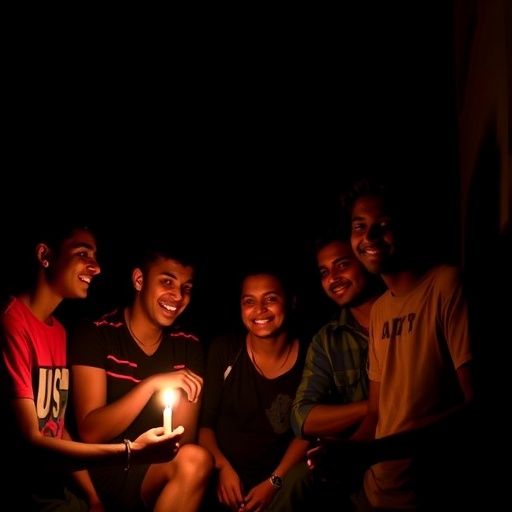
In a groundbreaking study set to be published in 2025, researchers V. Rai, A. Mohanty, and P. Sengupta explore the intricate relationship between dark humor and the overall well-being of Indian college students. As society faces a constant barrage of stressors—from academic pressures to societal expectations—this research delves into the often-taboo subject of dark humor, challenging preconceived notions about its impact on mental health. The authors propose that what might appear as inappropriate or unsettling may, in fact, serve a significant purpose in coping mechanisms and resilience among youth.
Dark humor can be broadly defined as humor that finds amusement in subjects typically considered serious, grim, or distressing. In various contexts, it offers a cathartic outlet for individuals navigating challenging life situations. This study posits that Indian college students, who are often under immense pressure to perform academically and socially, may gravitate toward dark humor as a form of relief. By examining its effects on various aspects of well-being, the authors aim to shed light on the complex dynamics of humor and mental health.
A key focus of the research involves understanding how dark humor affects emotional resilience. Emotional resilience, the ability to bounce back from challenging situations, is crucial for students facing the rigors of college life. It is hypothesized that students who engage with dark humor may exhibit higher levels of resilience, providing them with an emotional buffer against stress and anxiety. This quantitative analysis involves surveying a diverse group of college students across multiple universities, making the findings not only relevant but potentially transformative.
Moreover, the study intends to dissect the social implications of dark humor within peer groups. It seeks to understand whether sharing dark jokes fosters a sense of camaraderie among students or if it alienates certain individuals who may find such humor offensive or uncomfortable. By investigating group dynamics and interpersonal relationships, the researchers aim to uncover the nuanced ways in which humor operates within the college environment, influencing friendships and social support systems.
Another significant aspect of Rai, Mohanty, and Sengupta’s research is the impact of cultural context on the perception of dark humor. India, with its rich tapestry of cultures, traditions, and beliefs, may interpret dark humor differently compared to Western societies. This study is poised to examine how cultural norms shape humor and to what extent these factors influence the acceptance or rejection of dark themes in comedic expressions. By including the cultural component, the authors add depth to the analysis and provide a more comprehensive understanding of humor within Indian society.
The methodology employed in this research is rigorous and multifaceted. A combination of quantitative surveys and qualitative interviews will enrich the data collected, offering both statistical significance and personal insights from the participants. The survey will collect data on humor preferences, mental health indicators, and demographic variables, allowing for a thorough analysis of the correlations between dark humor and well-being. Likewise, the interviews will give voice to the students, exploring their perceptions of humor and how it relates to their personal experiences and mental health outcomes.
As part of the analysis, the researchers will also investigate the implications of dark humor on psychological health indicators, including anxiety, depression, and overall life satisfaction. By evaluating these mental health outcomes, Rai and her colleagues hope to contribute to the ongoing dialogue surrounding the benefits and drawbacks of dark humor as a coping mechanism. Additionally, understanding these relationships will be crucial for educators and mental health professionals aiming to support students’ well-being in academic settings.
This research arrives at an opportune moment, as mental health is increasingly recognized as a vital component of student success. Universities worldwide are striving to foster environments that prioritize psychological well-being. Insights from this study could inform policy and intervention strategies, enabling institutions to harness the power of humor—specifically dark humor—as a tool for promoting mental health among students. By making this connection, the researchers advocate for a deeper understanding of student experiences, suggesting that lightheartedness can coexist with the weight of life’s challenges.
Critically, the study’s findings may also offer pathways for integrating humor into mental health programs. If dark humor proves beneficial in bolstering resilience and fostering social connections, then training programs for counselors and educators might incorporate humor-based interventions. Such strategies could support students in managing stress while providing them with essential coping skills tailored to their cultural context.
Furthermore, the research is poised to spark broader conversations about the role of humor in individual and collective healing. As students navigate an era marked by uncertainty and rapid change, realizing the inherent value in humor—especially the dark variety—can empower them to confront difficult topics with levity and strength. In this respect, humor acts as a resilient tool, negotiating the balancing act between vulnerability and fortitude.
In conclusion, Rai, Mohanty, and Sengupta’s study sets the stage for a thoughtful exploration of how dark humor functions as a coping mechanism among Indian college students. By asking essential questions about resilience, social bonding, and cultural context, this research promises to shine a light on an under-explored facet of mental health. As the academic community continues to recognize the multifaceted nature of humor, this study could play a pivotal role in redefining perceptions of dark humor and its place in the conversation about well-being in the modern world.
In an age where mental health conversations are more important than ever, this pioneering research invites us to reflect on the subtle complexities of humor as a layer within the broader narrative of student life and wellness. The findings could resonate widely, offering much-needed guidance for future research, particularly in understanding how humor can be harnessed in educational and therapeutic contexts to promote resilience and foster community.
The implications of this research extend beyond academia. As humor continues to evolve, its understanding can help shape societal norms about discussing sensitive topics. By embracing humor—including its darker aspects—we can explore emotions and experiences that are often hidden in silence. Ultimately, this study encourages a reconsideration of the boundaries of humor, pushing us to appreciate its potential for healing and connection in difficult times.
Rai, V., Mohanty, A. & Sengupta, P. Understanding the impact of dark humour on wellbeing of Indian college students.
Discov Psychol (2025). https://doi.org/10.1007/s44202-025-00540-3
Cite Scienmag News
Glenn Wilkins. (December 19, 2025). Exploring Dark Humor’s Influence on Indian Students’ Wellbeing. Scienmag. https://scienmag.com/exploring-dark-humors-influence-on-indian-students-wellbeing/
Glenn Wilkins. "Exploring Dark Humor’s Influence on Indian Students’ Wellbeing." Scienmag, 19 December 2025, https://scienmag.com/exploring-dark-humors-influence-on-indian-students-wellbeing/. Accessed 3 September 2026.
Glenn Wilkins. "Exploring Dark Humor’s Influence on Indian Students’ Wellbeing." Scienmag. December 19, 2025. https://scienmag.com/exploring-dark-humors-influence-on-indian-students-wellbeing/


