


Wilson’s disease (WD) is a rare inherited disorder that leads to the accumulation of copper in various organs, particularly the liver, leading to serious hepatic complications. The disease is characterized primarily by the body’s inability to metabolize copper, resulting in toxic build-up that can cause severe damage, particularly to the liver and brain. A recent study investigated the clinical characteristics and management outcomes of patients diagnosed with liver cirrhosis secondary to Wilson’s disease, illuminating crucial factors that could guide treatment and improve patient outcomes.
The onset of Wilson’s disease is insidious, with symptoms that can vary widely, ranging from benign liver dysfunction to acute liver failure. In many instances, patients remain asymptomatic for years, leading to delayed diagnosis and initiation of treatment. This lag between symptom development and diagnosis is concerning as it is directly associated with the risk of developing cirrhosis, a potentially fatal condition characterized by permanent liver scarring. The later the diagnosis, the higher the likelihood the patient will progress to cirrhosis, emphasizing the importance of awareness and early screening in vulnerable populations.
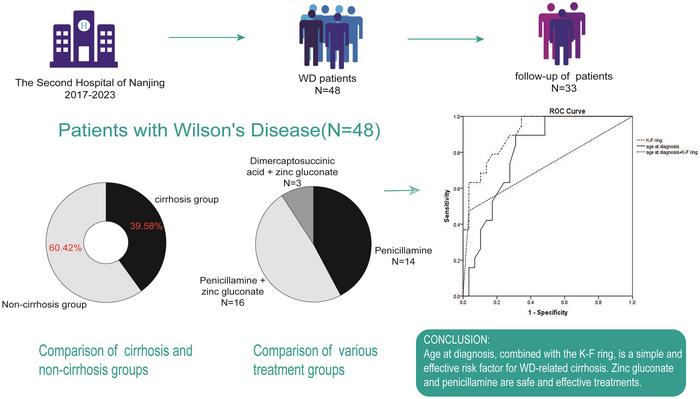
In the study, researchers conducted a comprehensive analysis on a cohort of 48 patients diagnosed with Wilson’s disease who presented with varying degrees of liver damage. The patients were assessed not only for their hepatic state but also for genetic mutations, imaging findings, and biochemical markers. The results revealed that 39.58% of patients had advanced liver cirrhosis at the time of diagnosis. A notable mutation, c.2333G>T (p.Arg778Leu), was identified as the most common genetic alteration among the study participants, appearing in over 41% of the cases.
Clinical management of Wilson’s disease typically involves therapies aimed at reducing copper levels in the body. The standard therapeutic approaches include the administration of chelating agents and zinc-based treatments, which remove excess copper and prevent its re-absorption. The long-term efficacy of these treatments is significant, as the study noted that over 60% of patients showed biochemical improvement following a treatment duration of 12 to 72 months. While the study provides promising data on treatment success, it underscores the necessity of continuous monitoring for complications arising from cirrhosis and the need for tailored treatment strategies based on individual patient characteristics.
Researchers found significant associations between certain clinical markers and the development of cirrhosis in Wilson’s disease patients. Notably, the presence of Kayser-Fleischer (K-F) rings—a hallmark clinical sign found in many affected patients—was linked to advanced disease severity. The study determined that older age at diagnosis and the presence of K-F rings were independent risk factors for progressing to cirrhosis. Specifically, each additional year of delayed diagnosis increased the odds of cirrhosis, indicating that timely detection and management are paramount in reducing disease burden.
Furthermore, the study employed logistic regression analysis to delineate the predictive value of various clinical risk factors for cirrhosis. The area under the receiver operating characteristic curve (AUC-ROC) calculated for the model exhibited excellent predictive power, indicating that combining clinical markers such as age at diagnosis and presence of K-F rings can effectively identify patients at higher risk of developing cirrhosis. This predictive capability highlights the utility of integrating clinical assessments with genetic and biochemical evaluations in developing comprehensive care plans for patients with Wilson’s disease.
Patients diagnosed with Wilson’s disease not only require effective medical treatment but also psychological and counseling support. Living with a chronic illness like WD, particularly with the added burden of liver complications, can significantly impact a patient’s emotional well-being and quality of life. Addressing these needs through holistic care models can enhance patient adherence to treatment regimens and promote better health outcomes.
The results of this study stress the critical need for increased awareness, early diagnosis, and prompt treatment of Wilson’s disease to mitigate the risk of severe complications such as cirrhosis. With advancements in genetic screening and disease understanding, healthcare providers are better equipped than ever to identify at-risk individuals. Initiatives focusing on screening high-risk populations could substantially lower the number of patients ultimately diagnosed with advanced liver disease due to delayed recognition of the condition.
In conclusion, the exploration of the clinical characteristics and treatment results among patients with liver cirrhosis due to Wilson’s disease reveals vital insights into the disease’s progression and management. The findings highlight the pressing need for heightened awareness and proactive management strategies to enhance patient outcomes in this population. Long-term follow-up and the evaluation of treatment efficacy remain essential in shaping therapeutic protocols aimed at improving survival and quality of life for individuals living with Wilson’s disease.
By recognizing the complexity of Wilson’s disease and the multifactorial approach required in managing its complications, the medical community can foster improved clinical practices that prioritize early intervention and integrated patient care.
Cite Scienmag News
Nathaniel Bowman. (March 28, 2025). Exploring Clinical Features, Treatment Outcomes, and Risk Factors of Hepatic Wilson’s Disease-Induced Liver Cirrhosis. Scienmag. https://scienmag.com/exploring-clinical-features-treatment-outcomes-and-risk-factors-of-hepatic-wilsons-disease-induced-liver-cirrhosis/
Nathaniel Bowman. "Exploring Clinical Features, Treatment Outcomes, and Risk Factors of Hepatic Wilson’s Disease-Induced Liver Cirrhosis." Scienmag, 28 March 2025, https://scienmag.com/exploring-clinical-features-treatment-outcomes-and-risk-factors-of-hepatic-wilsons-disease-induced-liver-cirrhosis/. Accessed 3 September 2026.
Nathaniel Bowman. "Exploring Clinical Features, Treatment Outcomes, and Risk Factors of Hepatic Wilson’s Disease-Induced Liver Cirrhosis." Scienmag. March 28, 2025. https://scienmag.com/exploring-clinical-features-treatment-outcomes-and-risk-factors-of-hepatic-wilsons-disease-induced-liver-cirrhosis/


