


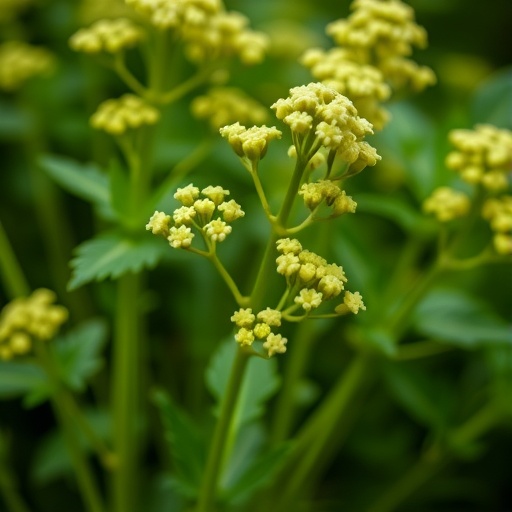
In a groundbreaking study that examines the intersection of plant physiology and biotechnology, researchers have focused on the fenugreek plant, known scientifically as Trigonella foenum-graecum, to explore its callogenic potential. Callogenesis refers to the process of forming callus tissue from plant explants, a pivotal technique in plant tissue culture that has significant applications in both agriculture and pharmacology. This study meticulously analyzes how different types of explants and auxins affect this phenomenon, underlining the importance of both components in successful plant tissue regeneration.
Fenugreek is a medicinally significant plant with a history steeped in traditional medicine, known for its anti-inflammatory, antibacterial, and blood-sugar-lowering properties. However, the ability to regenerate this plant efficiently via tissue culture has remained a challenge in the field of agronomy. This led to the comprehensive investigation by Hasnain et al., who sought to determine the most effective methods for manipulating fenugreek tissues to enhance callogenesis, thereby facilitating mass propagation and genetic studies.
The initial phase of the research involved selecting various explant types that serve as the source tissues for generating callus. These explants included cotyledons, stems, and leaves, each presenting unique advantages and challenges in terms of callus induction. The researchers meticulously documented the physiological responses observed in each of these explant types when subjected to various growth mediums and hormonal treatments. This aspect of their research highlights the complexity of plant tissue responses and sheds light on the optimization of culture conditions.
Auxins, a class of plant hormones crucial for processes such as cell elongation and differentiation, were specifically scrutinized in this study. Different concentrations of auxins like Indole-3-acetic acid (IAA) and 2,4-Dichlorophenoxyacetic acid (2,4-D) were applied to ascertain their effects on callus formation. The results indicated that auxin concentration played a pivotal role in regulating cellular activity, with specific combinations yielding superior callogenic responses across specific explant types. This correlation between hormone concentration and plant tissue behavior significantly enriches the existing body of knowledge in plant biotechnology.
Notably, the research also delves into the biochemical pathways activated during callus formation. The study indicated that auxins not only trigger cell division but also influence associated pathways that lead to the synthesis of secondary metabolites. These metabolites are of immense interest to both researchers and the pharmaceutical industry given their bioactive properties. Thus, understanding how explant types and auxins interact can open new avenues for enhancing the medicinal value of fenugreek through biotechnological means.
As the researchers progressed through their experiments, a clear trend emerged showing that certain combinations of explant type and auxin concentration were more effective than others. This iterative approach underscored the necessity of optimization in plant tissue culture practices. It also revealed the potential for tailoring these combinations not only to fenugreek but to other medicinal plants, thereby broadening the scope of the application of this research.
The implications of successfully inducing callogenesis in fenugreek extend beyond academic interest. Current agricultural practices can benefit immensely from this research, as the ability to produce large quantities of uniform plant material can enhance crop yield and sustainability. Furthermore, with the rising demand for herbal medicine, the mass propagation techniques developed could ensure a consistent supply of quality fenugreek for both consumption and research purposes.
In addition, the study discusses the impact of environmental factors on callogenesis. Conditions such as temperature, light, and humidity were systematically varied to observe changes in callus formation and growth. This holistic approach exemplifies the multi-faceted nature of plant tissue culture, emphasizing that both hormonal and environmental factors must be methodically optimized to achieve the desired outcomes.
Moreover, the research has implications for genetic engineering and biopharmaceutical production. With enhanced methods of callogenesis, there lies the potential to incorporate genetic modifications into fenugreek plants that may enhance their medicinal properties or drought resistance. This opens pathways for developing future crop varieties that could withstand the challenges posed by climate change.
Educational institutions and research organizations engaged in plant sciences can integrate the findings of Hasnain and colleagues into their programming to inspire the next generation of scientists. By demonstrating practical applications of plant tissue culture techniques, the study serves as an attractive model for students and researchers alike, showcasing the potential for innovation in agricultural practices and plant-based pharmaceuticals.
As scientists critically assess the outcomes of this research, future studies could build upon the framework established by this investigation. The potential for further exploration into other hormone interactions or genetic modifications could yield even more significant advancements in the field of plant biotechnology. The pathway towards understanding plant regenerative capabilities continues, and fenugreek stands at the forefront as a model for study.
In summary, Hasnain et al. provide a significant contribution to the scientific community with their exploration of the effects of explant types and auxins on callogenesis in fenugreek. This study offers well-documented methodologies alongside profound insights into plant development, making it a valuable reference for ongoing research in medicinal plant propagation and tissue culture techniques.
The information produced underscores the necessity for a concerted effort to further investigate and adopt these techniques broadly across medicinal plants. As the quest for sustainable agricultural practices evolves, the findings of this study may well serve as a crucial step toward a future where efficient methods of plant cultivation can meet both market demands and ecological considerations.
In conclusion, the nuanced relationship between explant choices and hormone application creates an intricate tapestry of possibilities for not just fenugreek, but for the field of plant biotechnology as a whole. The ability to harness these biological processes effectively could revolutionize agriculture and pharmacology, marking a bold step forward in how we approach the cultivation of important medicinal plants.
Hasnain, A., Khalid, F., Tahir, R. et al. Explant types and auxins impact on callogenesis in medicinally important plant fenugreek: an in vitro study.
Discov. Plants 2, 257 (2025). https://doi.org/10.1007/s44372-025-00339-5
Cite Scienmag News
Alan Morgan. (August 26, 2025). Exploring Auxins’ Role in Fenugreek Callogenesis. Scienmag. https://scienmag.com/exploring-auxins-role-in-fenugreek-callogenesis/
Alan Morgan. "Exploring Auxins’ Role in Fenugreek Callogenesis." Scienmag, 26 August 2025, https://scienmag.com/exploring-auxins-role-in-fenugreek-callogenesis/. Accessed 3 September 2026.
Alan Morgan. "Exploring Auxins’ Role in Fenugreek Callogenesis." Scienmag. August 26, 2025. https://scienmag.com/exploring-auxins-role-in-fenugreek-callogenesis/


