

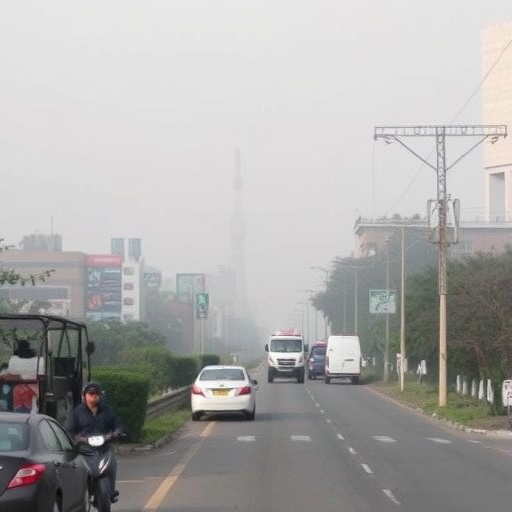
In the rapidly urbanizing world, the quality of air is becoming an increasingly critical concern, especially in tropical cities like Hyderabad, India. This Indian metropolis, known for both its rich history and burgeoning tech industry, has been facing detrimental effects due to air pollution. A comprehensive assessment led by researchers V.N. Jayachandran and T.N. Rao delves into near-surface air pollution in Hyderabad, exploring its sources and implications. Their study, published in the Environmental Science and Pollution Research journal, illustrates the necessity of tackling this impending health crisis.
Hyderabad is characterized by its unique climatic conditions and diverse urban settings, which are integral to understanding its air pollution dynamics. Given the city’s tropical climate, characterized by high humidity and frequent temperature variations, understanding how these factors influence air quality is essential. The ambient air in urban areas of Hyderabad is influenced by a combination of natural and anthropogenic activities, which complicates the management and mitigation efforts needed to improve air quality.
One of the pivotal takeaways from the study is the identification of pollution sources. The researchers utilized advanced methodologies to segment pollutants based on their origins, including traffic emissions, industrial discharges, and residential combustion. Each source contributes variably to the air quality, and this localized understanding is vital for effective policymaking. Motor vehicles remain one of the primary contributors to urban pollution, exacerbating health issues among residents and necessitating immediate intervention strategies.
Industrial activities in and around Hyderabad significantly impact air quality as well. The proliferation of manufacturing units has not only improved economic prospects but has also led to a marked increase in particulate matter and gaseous emissions. The researchers’ findings suggest that stricter regulations regarding emissions and industrial activities could be instrumental in improving urban air quality. Enhanced monitoring of these sources is essential to create a robust framework for air quality management.
Further complicating the air quality scenario is the city’s geographical landscape, which influences pollution dispersion. Hyderabad is located in a region where meteorological conditions can trap pollutants close to the surface. During certain weather patterns, the accumulation of smog becomes an acute problem. The study highlights the necessity of integrating meteorological models with air pollution data to predict pollution peaks and develop strategic responses to seasonal fluctuations in air quality.
Public health implications are another paramount aspect of this research. Air pollution is linked to respiratory diseases, cardiovascular afflictions, and other health issues that disproportionately affect vulnerable populations, including the elderly and children. The findings emphasize the urgent need for public health campaigns aimed at raising awareness regarding the dangers of air pollution. Educating the public about preventive measures, such as minimizing outdoor activities during high pollution days, could greatly mitigate health risks.
In addition to potential health impacts, the economic repercussions of air pollution are significant. The study incorporates a cost-benefit analysis, illustrating that poor air quality leads to increased healthcare costs and loss of productivity. The research underscores that investments in improving air quality not only yield health benefits but also promote economic stability and growth. Creating a cleaner environment could translate into myriad advantages, including a healthier workforce and reduced healthcare expenditures.
Technological advancements play a crucial role in monitoring and mitigating air pollution. The study advocates for the deployment of state-of-the-art air quality monitoring systems across the city. Real-time data collection would enable authorities to respond promptly to pollution spikes and inform the public effectively. Additionally, utilizing technology for predictive modeling could enhance the understanding of pollution dynamics and facilitate proactive measures.
Policy recommendations emanating from this study reflect a multi-faceted approach to address Hyderabad’s pollution crisis. The researchers argue for the implementation of stringent vehicle emission standards, increased investment in public transportation, and greater emphasis on renewable energy sources. Policy efficacy relies heavily on community involvement and cooperation among stakeholders, including governmental bodies, non-governmental organizations, and citizens themselves.
Future research directions outlined by Jayachandran and Rao include longitudinal studies to assess the long-term effects of current measures taken to combat air pollution. Understanding the effectiveness of implemented policies over time will provide valuable insights into what works and what should be modified. Moreover, comprehensive studies that encompass various pollutants and their interactions may yield a more holistic understanding of air quality in Hyderabad.
While significant challenges remain, there is also a growing sense of optimism. The local government has begun to recognize the severity of the air pollution crisis, and steps are being taken toward environmental sustainability. Public awareness campaigns and community initiatives are gaining traction, suggesting that collective action can make a difference in air quality. The researchers hope their findings will galvanize further action and inspire other cities grappling with similar challenges to take decisive steps.
Finally, understanding the intricate web of air pollution determinants is more than an academic exercise; it is a crucial step toward safeguarding public health and ensuring a sustainable future. Jayachandran and Rao’s research is a clarion call for immediate action, urging stakeholders to prioritize air quality as an essential component of urban health strategy. The success of these initiatives will undeniably hinge on collaboration, innovation, and a commitment to improving the quality of life for all residents in Hyderabad.
In conclusion, air pollution remains an existential threat to cities worldwide, and Hyderabad serves as a compelling case study walking the fine line between urban growth and environmental degradation. The research underscores that addressing air quality issues necessitates a collective effort driven by scientific insight, community engagement, and policy innovation.
Subject of Research: Air Pollution Assessment in Hyderabad, India
Article Title: Assessment of the near surface air pollution, sources, and their potential at a tropical urban location Hyderabad, India
Article References: Jayachandran, V.N., Rao, T.N. Assessment of the near surface air pollution, sources, and their potential at a tropical urban location Hyderabad, India.
Environ Sci Pollut Res (2026). https://doi.org/10.1007/s11356-025-37338-8
Image Credits: AI Generated
DOI: https://doi.org/10.1007/s11356-025-37338-8
Keywords: Air Pollution, Hyderabad, Urban Health, Pollution Sources, Air Quality Management


