


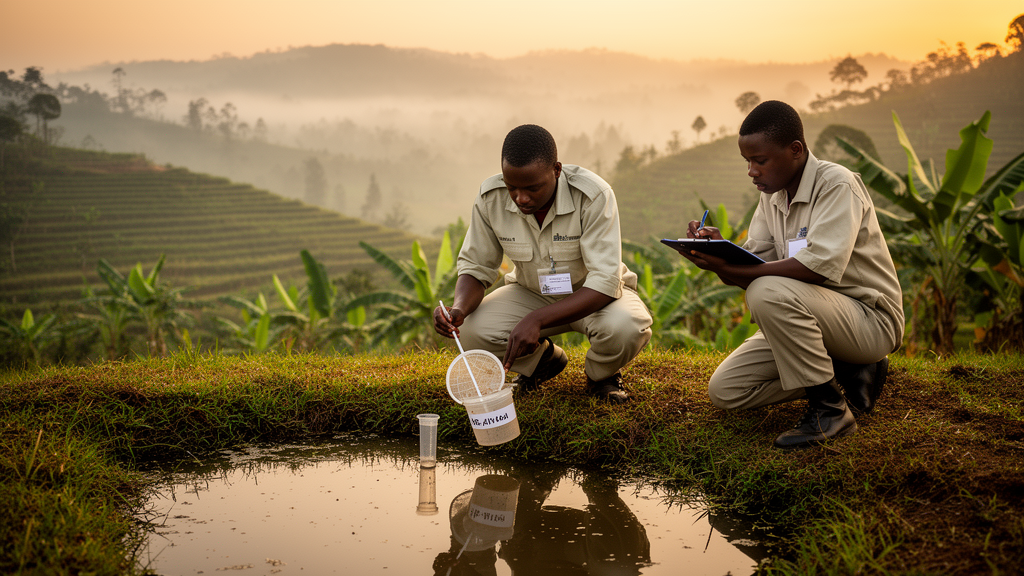
Rising minimum temperatures are driving malaria into parts of Rwanda that once had little or no transmission, according to a qualitative study of 16 experts working across government, academia, non-governmental organisations and international agencies in Kigali. The interviews, conducted between September and November 2024 and analysed thematically with ATLAS.ti, offer a multi-sectoral picture of how the country is adapting its malaria response to a shifting climate, and where the gaps remain.
Participants, selected for expertise in climate change, public health, environmental science and malaria epidemiology, showed what the researchers describe as a deep understanding of climate-malaria linkages.
The geographical expansion of malaria into previously non-endemic highland areas of Rwanda’s northern and western provinces is straining health system resources, the experts reported. Unexpected case increases in these areas require additional medication and staffing, placing burdens on facilities that had not planned for sustained malaria caseloads. Highland populations, having had little prior exposure, lack acquired immunity and are particularly vulnerable when outbreaks arrive.
Rwanda’s current adaptation toolkit includes indoor residual spraying in 12 high-burden districts, protecting 5.7 million people with 99.8 percent structural coverage, alongside universal distribution of long-lasting insecticidal nets, which have reached 97 percent coverage among pregnant women and children. Yet resource constraints limit the expansion of indoor residual spraying into the newly endemic areas, leaving a mismatch between where transmission is emerging and where the most intensive interventions are deployed.
Institutionally, the country has established a Climate and Health Desk and completed a climate-health vulnerability and adaptation assessment that is informing the development of a Health National Adaptation Plan. The researchers interpret these steps as evidence of genuine commitment to climate-resilient health policy and multi-stakeholder engagement.
Data integration, however, remains a persistent obstacle. Climate records are collected daily while malaria surveillance is reported monthly, and this temporal misalignment complicates efforts to correlate weather conditions with case trends in ways that could guide timely, targeted responses.
The interviews also revealed critical capacity gaps in climate-health education across health professional curricula, meaning clinicians and public health workers are largely entering the field without formal training on how environmental change influences disease dynamics. Strengthening this educational pipeline is identified as a priority alongside improving surveillance systems.
Socioeconomic conditions amplify the biological risks. Poverty, inadequate housing and gender disparities exacerbate malaria exposure, with women, children and highland communities disproportionately affected. The experts argued that durable control must therefore extend beyond biomedical tools to address the living conditions that determine who is bitten and who can seek care.
The study’s authors caution that focusing on Kigali-based experts may underrepresent rural perspectives, a limitation worth weighing when interpreting the findings. Their stated priorities include strengthening surveillance, integrating climate education into health training, addressing socioeconomic vulnerabilities and using community platforms for sustainable, locally driven malaria control. For a country pursuing malaria elimination while its climate shifts beneath it, the message from those managing the response is that policy ambition currently outpaces the data systems, financing and workforce capacity needed to deliver it.
Subject of Research: Expert perspectives on climate-driven malaria transmission and adaptation strategies in Rwanda
Article Title: Climate change and malaria in Rwanda: multi-sectoral expert insights on adaptation strategies, capacity needs and implementation challenges
Article References: Rubuga, F. K., Absolomon, G., Mmbando, A. S., Jeanine, C., Sebakunzi, T., Ahmed, A., Cissé, G., & Utzinger, J. (2026). Climate change and malaria in Rwanda: multi-sectoral expert insights on adaptation strategies, capacity needs and implementation challenges. BMC Public Health. https://doi.org/10.1186/s12889-026-30104-6
Image Credits: AI Generated
DOI: 10.1186/s12889-026-30104-6
Keywords: malaria, Rwanda, climate change, highland transmission, indoor residual spraying, insecticidal nets, health system capacity, qualitative study, vector-borne disease, climate-health data integration, Climate, change
Cite Scienmag News
Sloane Callahan. (October 29, 2026). Experts Map How Climate Change Is Reshaping Malaria in Rwanda. Scienmag. https://scienmag.com/experts-map-how-climate-change-is-reshaping-malaria-in-rwanda/
Sloane Callahan. "Experts Map How Climate Change Is Reshaping Malaria in Rwanda." Scienmag, 29 October 2026, https://scienmag.com/experts-map-how-climate-change-is-reshaping-malaria-in-rwanda/. Accessed 31 October 2026.
Sloane Callahan. "Experts Map How Climate Change Is Reshaping Malaria in Rwanda." Scienmag. October 29, 2026. https://scienmag.com/experts-map-how-climate-change-is-reshaping-malaria-in-rwanda/









