


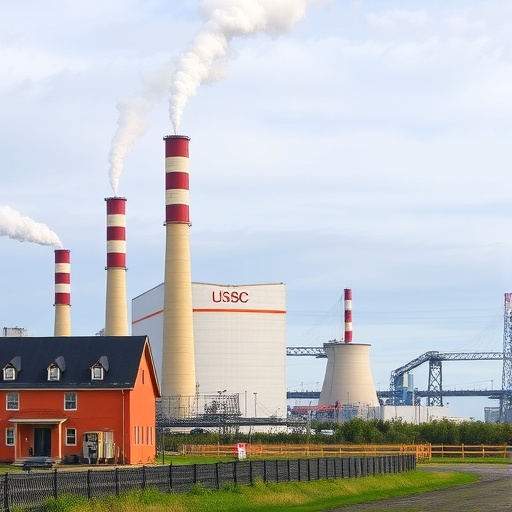
Industrial processes account for roughly a quarter of the world’s carbon dioxide emissions, positioning the industrial sector at the heart of climate change discussions. Yet, the complex ripple effects of decarbonization initiatives aimed at achieving the Paris Agreement’s net-zero targets remain inadequately explored. This significant research gap leaves policymakers and stakeholders grappling with uncertainties about the broader economic implications of transitioning heavy industries towards cleaner energy and technologies. A recent paper published in Science by economists at Yale School of the Environment brings this underexplored domain into sharper focus, advocating for intensified empirical study on industrial decarbonization’s macroeconomic consequences.
Kenneth Gillingham, the Grinstein Class of 1954 Professor of Environmental and Energy Economics and one of the paper’s lead authors, emphasizes the expansive opportunities for scholarly work in this sphere. He argues that understanding the multifaceted impacts of decarbonizing energy-intensive industries can generate crucial insights for policymakers, enabling them to devise strategies that optimize environmental benefits while managing economic trade-offs. This research frontier promises to unlock knowledge about how shifts in industrial practices reverberate through wages, labor markets, supply chains, and global trade networks.
The economic landscape influenced by industrial decarbonization is far from straightforward. The paper highlights the urgent need for empirical data and robust models that clarify how transitioning technologies affect employment patterns and wages across various sectors. For instance, subsidies provided to upstream manufacturers adopting clean hydrogen technologies might not automatically translate downstream if shipping industries and other users find these solutions economically unviable. This disjointed adoption could create bottlenecks, impairing overall decarbonization potential and economic benefits.
Furthermore, the study underlines the workforce implications surrounding clean energy transitions. While industries in renewable sectors are capable of offering stable, high-wage jobs, historical data show these opportunities have disproportionately favored workers formerly employed in fossil fuel industries. This skew presents a critical research gap concerning the career trajectories and wage dynamics of workers unable to move into clean energy roles. More thorough investigation into how policies can facilitate equitable labor market transformations is essential to ensure just transitions that do not leave vulnerable groups behind.
Environmental regulation also wields significant influence over industrial emissions but comes coupled with complex international ripple effects. The paper documents how stringent policies in one nation might drive production of pollution-intensive goods to countries with laxer standards, effectively outsourcing emissions rather than reducing them globally. Such leakage effects underscore the necessity for coordinated international policy frameworks that address cross-border economic reallocations while pursuing carbon reductions.
Aleh Tsyvinski, the Arthur M. Okun Professor of Economics at Yale and a co-author, frames industrial decarbonization not as a niche technical challenge but as a wide-ranging economic frontier. It influences global supply chains, pricing structures, labor market configurations, and competitive dynamics, touching nearly every individual indirectly, if not directly. Recognizing and investigating these interconnected dimensions can expand public understanding and enhance policymaking sophistication.
Recent legislative packages like the U.S. Inflation Reduction Act, the European Green Deal Industrial Plan, and China’s 1+N Policy Framework present fertile ground for empirical research. These initiatives collectively embody unprecedented governmental commitment and investment in decarbonizing key sectors but require rigorous assessment to discern their real-world efficacy and economic impacts. The paper advocates leveraging these policies as natural experiments to collect and analyze comprehensive data sets with the explicit aim of refining decarbonization strategies for scalability and sustainability.
However, the authors caution about inherent challenges in obtaining pertinent data critical for economic modeling in this domain. Production networks that map material flows and emissions are often proprietary and protected due to competitive concerns. Despite this opacity, progress is being made owing in part to emergent financial regulatory requirements compelling broader disclosure of greenhouse gas emissions categorized as Scope 1 (direct emissions), Scope 2 (indirect emissions from purchased electricity), and Scope 3 (value-chain emissions). Such mandates enhance transparency and create a foundation for more integrated and granular data ecosystems.
The complexity and sensitivity of data emphasize the paramount role of government agencies and international institutions as facilitators of resource sharing and collaborative research platforms. By orchestrating efforts toward standardized data collection, anonymization, and dissemination, these entities can overcome fragmentation in data availability, accelerating evidence-based policy innovation and enabling cross-disciplinary analysis spanning economics, engineering, and environmental sciences.
The collaboration that birthed this research paper stemmed from an interdisciplinary 2023 workshop organized by the National Bureau of Economic Research. Bringing together economists, engineers, and social scientists, the workshop surfaced consensus on the imperative of expanding industrial decarbonization research beyond technocratic silos. It also highlighted the necessity to integrate economic modeling with empirical observations to better forecast policy-induced outcomes on multifaceted macroeconomic variables and societal welfare indicators.
Lint Barrage, associate professor at ETH Zürich and co-author, reiterates that conventional climate policies risk perpetuating entrenched high-emission equilibria absent consideration of inter-industry spillovers. An economy simultaneously driven by heterogeneous adoption rates and sector-specific technology transitions cannot achieve optimal decarbonization outcomes if examined in isolation. Cross-sectoral synergies and frictions thus form critical variables that future research must incorporate to inform holistic and adaptive policymaking frameworks.
As the industrial sector grapples with decarbonization, the stakes transcend environmental benchmarks. They encompass economic stability, equitable labor transitions, international trade balances, and social welfare. Bridging the empirical knowledge gap thus represents an urgent imperative. Through increased interdisciplinary collaboration, data transparency, and policy-engaged scholarship, industrial decarbonization can evolve from a technical challenge into a transformative vector for sustainable and inclusive economic futures.
Cite Scienmag News
Sloane Callahan. (October 28, 2025). Expanded scientific analysis required to assess the impacts of industrial decarbonization. Scienmag. https://scienmag.com/expanded-scientific-analysis-required-to-assess-the-impacts-of-industrial-decarbonization/
Sloane Callahan. "Expanded scientific analysis required to assess the impacts of industrial decarbonization." Scienmag, 28 October 2025, https://scienmag.com/expanded-scientific-analysis-required-to-assess-the-impacts-of-industrial-decarbonization/. Accessed 4 September 2026.
Sloane Callahan. "Expanded scientific analysis required to assess the impacts of industrial decarbonization." Scienmag. October 28, 2025. https://scienmag.com/expanded-scientific-analysis-required-to-assess-the-impacts-of-industrial-decarbonization/


