


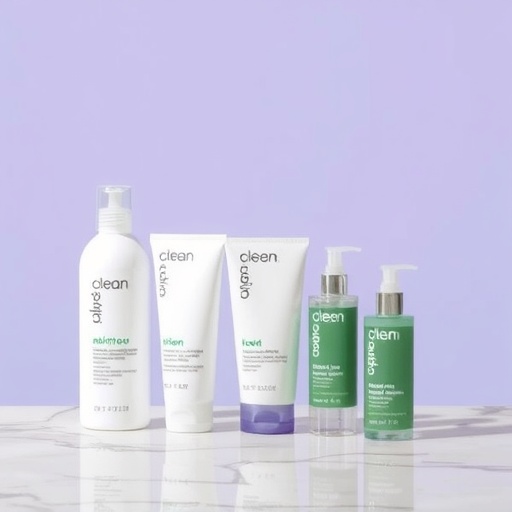
In recent years, the demand for “clean” personal care products has exploded, reflecting a growing consumer desire for transparency, natural ingredients, and reduced chemical exposure. A new study spearheaded by Madrid Larrañaga and colleagues takes a deep dive into this burgeoning market, focusing specifically on “clean” hair products formulated for textured hair. This research, conducted in a Los Angeles Target store—a representative retail environment for diverse consumer bases—offers a technical and nuanced perspective on a segment often overlooked in market analyses: products addressing the needs of individuals with textured hair seeking clean formulations. The study’s findings illuminate both progress and challenges within this domain, revealing the complex interplay of consumer expectations, ingredient standards, and regulatory frameworks.
The researchers embarked on a comprehensive survey of hair care products prominently labeled and marketed as “clean” in this particular Target store, strategically located in a culturally heterogeneous urban area. Textured hair—characterized by tight curls, coils, and waves—poses unique care requirements, particularly concerning moisture retention, frizz control, and scalp health. Yet, mainstream “clean” product narratives have historically centered on straight or wavy hair types, leaving textured hair products comparatively under-examined. By focusing on this demographic, the study addresses an important knowledge gap and underscores the implications of product ingredient choices on scalp biology and hair shaft integrity in textured hair populations.
Methodologically, the study blended qualitative and quantitative techniques. Product ingredient lists were meticulously analyzed to identify prevalent synthetic chemicals, potential allergens, preservatives, and marketing buzzwords such as “sulfate-free,” “paraben-free,” and “phthalate-free.” In parallel, the team scrutinized product packaging and marketing claims, assessing how the concept of “clean” was communicated to consumers. Ingredient frequency, concentration patterns, and potential toxicological concerns were evaluated against established databases and regulatory guidelines from agencies like the U.S. Food and Drug Administration (FDA) and Environmental Protection Agency (EPA).
One striking finding from the analysis was an inconsistent application of the term “clean.” Products labeled as such contained a broad spectrum of ingredients, ranging from naturally derived oils and botanicals to synthetic emulsifiers and preservatives. For example, many “clean” textured hair products included cetearyl alcohol, a fatty alcohol commonly derived from palm oil or coconut, which serves as a thickener and emollient but can cause irritation in sensitive individuals. This ambiguous usage of “clean” reveals a fragmentation in industry standards and highlights the absence of a universally accepted definition in personal care product labeling.
Furthermore, the study shed light on the paradox of ingredient safety versus product efficacy. Some ingredients excluded from “clean” products—for instance, sulfates—offer potent cleansing abilities, which are critical for textured hair prone to product buildup and scalp sensitivity. Their absence necessitated alternative surfactants, such as alkyl polyglucosides and cocamidopropyl betaine, which vary in their mildness and environmental impact. The researchers caution that the substitution of ingredients without comprehensive safety and efficacy data may lead to unintended consequences, including compromised scalp barrier function and increased irritant susceptibility.
Another technical aspect examined was the inclusion of preservatives. While consumers prefer the avoidance of parabens and formaldehyde donors due to potential health risks, preservatives are indispensable for product safety and shelf stability. The survey revealed a shift towards “clean” preservatives like phenoxyethanol, ethylhexylglycerin, and certain organic acids, which exhibit broad-spectrum antimicrobial activity with a lower incidence of sensitization. However, the ecological fate and potential bioaccumulation of these alternatives warrant further investigation—an area the authors emphasize as critical for an environmentally sustainable “clean” movement.
In addition to chemical composition, the study analyzed product pH levels—a factor often overlooked yet crucial for scalp and hair health. Textured hair generally thrives in slightly acidic environments (pH ~4.5-5.5), which help maintain cuticle integrity and microbial homeostasis. The majority of “clean” products surveyed adhered to this pH range, suggesting an alignment between formulation science and consumer needs. However, some products diverged significantly, raising questions about formulation consistency and potential scalp barrier disruption.
Marketing language played a pivotal role in shaping consumer perceptions. The researchers found pervasive use of terms such as “non-toxic,” “natural,” and “organic,” despite the lack of stringent regulatory definitions for these claims in personal care products. This linguistic imprecision complicates consumers’ ability to make informed choices and may obscure the true safety profiles of products. The study calls for enhanced regulatory oversight and standardized definitions to foster transparency and mitigate “greenwashing,” a marketing practice where products are deceptively portrayed as healthier or more sustainable than they truly are.
The presence of fragrance in “clean” textured hair products emerged as a contentious point. Although fragrance enhances sensory appeal, it is a known source of allergic contact dermatitis and respiratory irritation. Many “clean” products employed fragrance-free or naturally derived essential oils, yet the allergenic potentials of these botanical ingredients are not negligible. The authors recommend that formulators provide full disclosure of all fragrance components, enabling consumers—especially those with sensitive scalps—to make safer product selections.
Packaging technology also featured prominently in the analysis. Recyclability and reduced plastic footprints were increasingly prioritized by brands claiming “clean” credentials, reflecting broader environmental consciousness. However, sustainability claims were inconsistently reported, and the life-cycle analyses of packaging materials remain inadequately addressed in marketing narratives. Incorporating biodegradable materials and refill systems may represent future directions that align product integrity with circular economy principles.
One implication emphasized by the study is the need for intersectional approaches to personal care product development and evaluation. Textured hair care transcends cosmetic aesthetics to include cultural identity and health equity dimensions. By integrating consumer ethnography with rigorous chemical analysis, researchers and formulators can tailor products that respect diversity while adhering to stringent safety criteria. This approach could disrupt existing industry paradigms and catalyze innovation.
The research team also highlighted gaps in regulatory frameworks governing the personal care industry. Unlike pharmaceuticals, cosmetics are subject to less rigorous pre-market safety testing in the United States. This regulatory landscape permits a wide latitude in ingredient use and marketing claims, which can undermine consumer trust and complicate public health efforts. The study advocates for enhanced surveillance systems and pre-market transparency mandates to better safeguard consumers, particularly those with textured hair who may be disproportionately impacted by inadequate product evaluation.
Complementing chemical analyses, the investigation incorporated preliminary assessments of consumer awareness and preferences. Structured interviews and focus group discussions revealed that while many consumers are passionate about product safety and ingredient transparency, confusion and skepticism about “clean” terminology persist. Educational initiatives and clearer labeling standards surfaced as critical enablers of informed purchasing behaviors.
From a scientific perspective, this research enriches the understanding of how complex mixtures of ingredients influence both hair health outcomes and exposure risks. Advanced analytical chemistry tools, such as high-performance liquid chromatography and mass spectrometry, could further deconvolute the constituent profiles of “clean” products, enabling more precise exposure assessments. Additionally, longitudinal dermatologic studies may elucidate the chronic impacts of particular formulations on scalp microbiome composition and inflammatory pathways.
In summary, the landscape of “clean” hair care products for textured hair is multifaceted, marked by progress toward safer, more transparent formulations but also beset by definitional ambiguities, regulatory deficiencies, and scientific uncertainties. Madrid Larrañaga and colleagues provide a rigorous foundation for stakeholders—including researchers, manufacturers, regulators, and consumers—to collaboratively advance this dynamic field. Ultimately, achieving truly “clean” textured hair care products will require harmonized standards, evidence-based innovation, and a commitment to inclusivity and sustainability that transcends marketing rhetoric.
Cite Scienmag News
Ophelia Keating. (April 21, 2026). Examining Clean Haircare Products for Textured Hair. Scienmag. https://scienmag.com/examining-clean-haircare-products-for-textured-hair/
Ophelia Keating. "Examining Clean Haircare Products for Textured Hair." Scienmag, 21 April 2026, https://scienmag.com/examining-clean-haircare-products-for-textured-hair/. Accessed 3 September 2026.
Ophelia Keating. "Examining Clean Haircare Products for Textured Hair." Scienmag. April 21, 2026. https://scienmag.com/examining-clean-haircare-products-for-textured-hair/


