


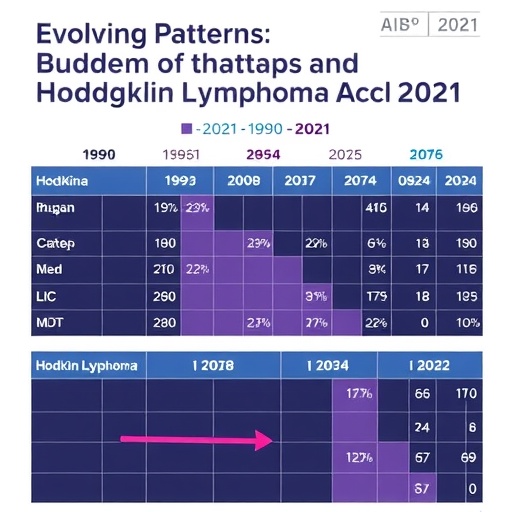
Hodgkin lymphoma, a malignancy of the lymphatic system, has been the focus of extensive research given its potential impact on global health. The recent analysis presented by Pu, Zhang, and Song offers a comprehensive overview of the changes in the burden of Hodgkin lymphoma from 1990 to 2021, using data from the Global Burden of Disease Study 2021. This timely investigation not only reveals past trends but also projects future developments in this area, making it a critical piece of research for healthcare professionals, policymakers, and researchers alike.
The study represents one of the most significant updates to our understanding of Hodgkin lymphoma prevalence and mortality rates across various demographics, geographical regions, and over time. The researchers utilized a wealth of data to identify patterns and shifts in incidence, survival rates, and disability-adjusted life years (DALYs) associated with this disease. This multidimensional approach allows for a more nuanced understanding of the factors contributing to the burden of Hodgkin lymphoma, demonstrating how societal, environmental, and healthcare-related developments have influenced outcomes.
One startling finding presented in the study is the disparity in Hodgkin lymphoma burden across different regions and countries. While some areas have witnessed an uptick in diagnosed cases, others show a downturn, indicating that interventions may not be uniformly effective or accessible. The analysis prompts a critical examination of the healthcare infrastructure and cancer prevention strategies unique to each region, revealing the need for tailored approaches that address local needs and circumstances.
An additional facet of the research highlights changes in age-standardized rates of Hodgkin lymphoma, demonstrating how incidence and mortality rates have evolved over the decades. This data is particularly valuable as it sheds light on demographic shifts, such as the aging population in many high-income countries, which affects overall cancer statistics. Understanding these dynamics is vital for predicting how Hodgkin lymphoma will influence public health in the coming years.
Moreover, the research outlines potential factors contributing to the observed trends. For instance, advances in early detection and treatment options may have led to declining mortality rates in certain populations, showcasing how improved healthcare strategies can influence long-term outcomes. Conversely, areas with limited access to medical resources and less awareness around cancer symptoms tend to report higher burdens, emphasizing the need for global health initiatives aimed at improving healthcare accessibility.
The implications of the study extend beyond mere statistics. By outlining the burden of Hodgkin lymphoma, the research calls for increased awareness and education about the disease. Understanding its signs and symptoms is crucial for early diagnosis, which can drastically improve treatment outcomes. The need for public health campaigns that target demographic groups most at risk is paramount, particularly in regions that demonstrate rising incidence rates.
In forecasting the burden of Hodgkin lymphoma towards 2035, the authors draw attention to critical trends that, if left unaddressed, could lead to significant public health challenges. The study’s projections serve as a wake-up call to stakeholders in the healthcare sector, urging them to consider how current policies and practices must adapt to mitigate future risks. As the burden of cancer continues to evolve, it is essential that the global community remains vigilant and proactive in cancer control efforts.
The study also underscores the importance of fostering collaboration across various sectors to address the multifaceted aspects influencing Hodgkin lymphoma. Researchers, healthcare providers, and policymakers must work in tandem to ensure that findings from such studies translate into actionable strategies. This collaboration is essential for evolving cancer care practices that are reflective of the latest research and tailored to meet the needs of diverse populations.
Additionally, the research acknowledges the potential role of technology and data analysis in shaping future cancer research. Innovations in artificial intelligence and machine learning could provide more granular insights into the epidemiology of Hodgkin lymphoma, enabling more accurate forecasting and targeted interventions. The integration of technological advancements with traditional epidemiological methods will likely enhance the precision of future studies.
As we move forward, it is crucial to continue monitoring and analyzing changes in cancer burdens, including Hodgkin lymphoma. These insights not only contribute to academic discourse but are also vital for driving real-world health improvements. The ongoing efforts to understand and combat Hodgkin lymphoma will remain a fundamental aspect of the broader fight against cancer globally.
It is evident that while progress has been made in understanding Hodgkin lymphoma, much work remains. Continuous research and adaptation of health policies will be necessary to address the evolving landscape of this disease. The insights gained from Pu, Zhang, and Song’s analysis will undoubtedly serve as a foundational resource for future studies and initiatives aimed at combating the burden of Hodgkin lymphoma around the world.
In summary, the research presented offers a detailed examination of Hodgkin lymphoma’s burden over the last three decades and into the future. This comprehensive analysis serves as a critical reminder of the importance of vigilance, education, and collaboration in our collective efforts to minimize the impact of this disease on individual lives and public health.
With the world of medicine constantly evolving, this research will serve as a benchmark for future studies and health improvement strategies, ensuring that Hodgkin lymphoma remains at the forefront of our healthcare discourse. Researchers and healthcare professionals must take heed of these findings to cultivate a more informed and proactive approach to cancer management globally.
Cite Scienmag News
Nathaniel Bowman. (January 27, 2026). Evolving Patterns of Hodgkin Lymphoma Burden: 1990-2021. Scienmag. https://scienmag.com/evolving-patterns-of-hodgkin-lymphoma-burden-1990-2021/
Nathaniel Bowman. "Evolving Patterns of Hodgkin Lymphoma Burden: 1990-2021." Scienmag, 27 January 2026, https://scienmag.com/evolving-patterns-of-hodgkin-lymphoma-burden-1990-2021/. Accessed 4 September 2026.
Nathaniel Bowman. "Evolving Patterns of Hodgkin Lymphoma Burden: 1990-2021." Scienmag. January 27, 2026. https://scienmag.com/evolving-patterns-of-hodgkin-lymphoma-burden-1990-2021/


