

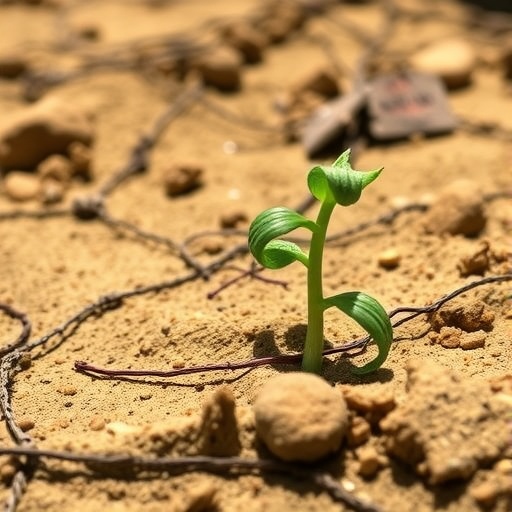
In the realm of soil microbiology, understanding the intricate dynamics of nitrogen cycling is critical, particularly in arid environments that are often subject to stress from climate change. A groundbreaking study conducted by Liu et al. sheds light on the evolutionary pathways of soil nitrogen microbial functions. This research meticulously investigates the sequential effects of nitrogen fixation, comammox (complete ammonia oxidation), and nitrate reduction, demonstrating how long-term arid conditions shape these processes. The findings could not only transform our comprehension of soil health in arid regions but also have substantial implications for agricultural practices and environmental sustainability.
In arid soils, microbial nitrogen transformation processes are significantly influenced by several factors including hydration, organic matter content, and temperature variations. Liu and colleagues highlight that in these ecosystems, water scarcity can profoundly affect microbial communities and their functional capacities. By examining soil samples from various arid regions, the researchers established a clear correlation between moisture availability and the rates of nitrogen fixation. Their data reveal that as water becomes more scarce, the efficiency of nitrogen-fixing bacteria diminishes, altering the overall nitrogen availability in these ecosystems.
The concept of comammox, or complete ammonia oxidation, is relatively novel in soil microbiology but plays an integral role in nitrogen cycling within arid soils. Liu et al. explored the evolutionary adaptation of bacterial communities capable of comammox, illustrating how these organisms have evolved to thrive in environments with limited nutrients. Their findings suggest that comammox bacteria not only contribute to nitrogen detoxification but also support plant growth by making nitrogen more readily available in nutrient-poor conditions.
However, the research does not end with just these two processes. Liu et al. meticulously detail the relationship between comammox and denitrification, a process crucial for nitrogen removal. They propose that in long-term arid conditions, as the dominance of comammox bacteria increases, the rates of denitrification may decrease. This shift can lead to an accumulation of nitrogen compounds in the soil, potentially resulting in environmental concerns such as runoff and the eutrophication of nearby water bodies.
The study employs a variety of advanced methodologies, including metagenomic analyses and stable isotope tracing, to unravel the complexity of nitrogen cycling in arid soils. By integrating molecular biology with ecological assessments, Liu and his colleagues provide depth to their findings. The use of such cutting-edge techniques not only validates their conclusions but also sets a new standard for future research in soil microbiology.
Liu et al. also emphasize the importance of habitat stability in shaping microbial community dynamics. Their research suggests that prolonged exposure to arid conditions has led to unique adaptations within soil microbial populations. These adaptations enable them to utilize available nitrogen efficiently while minimizing losses due to environmental stresses. Understanding these dynamics provides essential insights for developing strategies to enhance soil fertility without needing excessive chemical fertilizers.
Another critical takeaway from the study is the potential for these nitrogen cycling processes to be leveraged for sustainable agricultural practices in arid regions. By promoting microbial health and enhancing natural nitrogen fixation, crops can achieve better yields with reduced chemical input. Liu and his team discuss how agronomic practices can be optimized by fostering beneficial microbial communities, which could ultimately lead to more resilient farming systems that are better equipped to withstand the challenges of global warming.
Moreover, as biodiversity is often compromised in arid ecosystems, Liu et al. stress the importance of conserving microbial diversity to maintain functional resilience. Their research highlights that a diverse microbial community can better adapt to environmental fluctuations, ensuring the stability of nitrogen cycling processes. Conservation efforts that prioritize maintaining this diversity could therefore be vital in mitigating the impacts of climate change on soil health.
Investing in research that elucidates the intricate relationships between soil bacteria, nitrogen cycling, and environmental conditions is crucial not only for soil scientists but also for policymakers. Liu’s work advocates for implementing evidence-based approaches to land management that take into account the biological underpinnings of soil processes. Such measures could lead to improved soil management strategies that enhance productivity while conserving natural resources.
The findings reported by Liu et al. have far-reaching implications beyond local agricultural practices. The insights gained from their study can inform global discussions around food security, climate adaptation, and sustainable land management. Governments and organizations can leverage this research to develop frameworks that encourage sustainable agricultural innovations, particularly in vulnerable regions that are increasingly threatened by aridification and desertification.
As the scientific community continues to grapple with the effects of climate change on terrestrial ecosystems, research like Liu et al.’s serves as a beacon of hope. By unraveling the complex web of microbial interactions that govern nitrogen cycling, their work advances our understanding of soil science and provides a roadmap for future research endeavors. With their innovative approach, Liu and his colleagues have set a precedent for interdisciplinary studies that bridge microbiology, ecology, and sustainable agriculture.
In conclusion, Liu et al.’s exploration of the ultimate soil nitrogen microbial function evolution pathway—including fixation, comammox, and nitrate reduction—offers invaluable insights into the resilience of arid ecosystems. Their pioneering research not only highlights the significance of microbial functions in maintaining soil health but also underscores the necessity of protecting and enhancing these microbial communities to ensure sustainable agricultural practices in a rapidly changing world. As we move forward, it is imperative to recognize the importance of these microscopic life forms in safeguarding our environment and food systems.
Subject of Research: Evolution of soil nitrogen microbial functions in arid environments.
Article Title: Ultimate soil nitrogen microbial function evolution pathway fixation–comammox–nitrate reduction in long–term arid.
Article References:
Liu, X., Chen, Y., Lu, J. et al. Ultimate soil nitrogen microbial function evolution pathway fixation–comammox–nitrate reduction in long–term arid. Commun Earth Environ (2025). https://doi.org/10.1038/s43247-025-03085-4
Image Credits: AI Generated
DOI: 10.1038/s43247-025-03085-4
Keywords: nitrogen cycling, microbial function, arid soils, comammox, denitrification, sustainable agriculture, soil health.


