


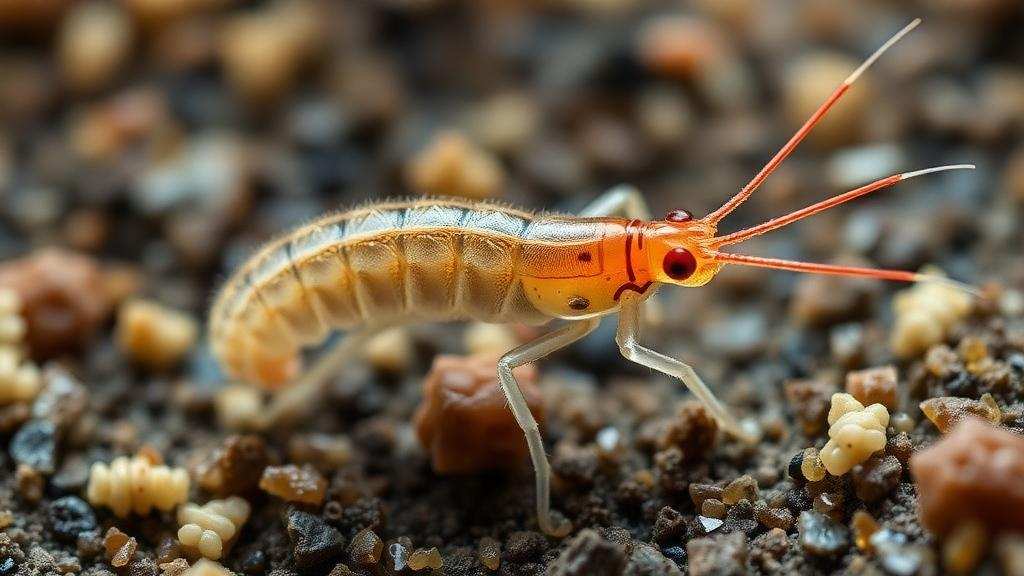
A systematic review and evidence-maturity assessment finds that the calanoid copepod Acartia tonsa has the most consistently documented technological evidence for marine fish larviculture, although the analysis does not establish that it is biologically superior to native or regionally occurring alternatives. Researchers searched the Web of Science Core Collection on June 23, 2026, using PRISMA 2020 and PRISMA-S guidance, and identified 1,499 records. After removing 342 overlapping entries, two reviewers independently screened 1,157 unique records, retaining 199 reports for direct systematic synthesis and 146 for contextual mapping, while excluding 812 through predefined criteria. The evidence was evaluated across culture, reproduction, environmental tolerance, nutrition, prey suitability, fish larviculture, scale-up and dormant-stage storage.
The review introduced the Calanoid Aquaculture Evidence Maturity Index, or CAEMI, to distinguish the amount of published attention from the strength of available technological evidence. CAEMI-A maps bibliographic coverage across taxa, while CAEMI-B scores eight dimensions from 0 to 3 using verified full-text evidence. A score of 0 denotes no qualifying documentation, 1 preliminary or indirect evidence, 2 direct, replicated or pilot evidence, and 3 multiple consistent studies or advanced operational validation. CAEMI-B was restricted to seven sufficiently documented taxa and separates evidence breadth, meaning the percentage of dimensions with any qualifying evidence, from evidence depth within those dimensions. Neither layer scores whether a copepod is native, and neither should be interpreted as a measure of biological superiority, profitability or commercial readiness.
Under equal weighting, A. tonsa scored 95.8, followed by Parvocalanus crassirostris and Pseudodiaptomus annandalei, each with 83.3. The remaining scores were 79.2 for Acartia sinjiensis, 75.0 for both Bestiolina similis and Pseudodiaptomus pelagicus, and 58.3 for Gladioferens imparipes. A Monte Carlo analysis sampled 100,000 sets of dimension weights from a Dirichlet distribution. A. tonsa ranked first in every simulation, while the positions of the other taxa shifted according to which dimensions received greater emphasis. The analysis tested mathematical sensitivity to weighting rather than identifying biologically optimal priorities or eliciting stakeholder preferences, and it did not constitute external validation of the author-developed index.
The apparent advantages of A. tonsa rest on unusually broad documentation across the production pathway. Its culture performance depends on stocking density, microalgal supply, temperature, salinity and tank configuration. In one high-density experiment, individual fecundity fell from 28 eggs per female per day at 100 adults per liter to 7 at 2,500 adults per liter, yet volumetric output peaked near 2,500 adults per liter at approximately 12,000 eggs per liter per day. Daily mortality was no more than 2.5% at densities up to 1,000 adults per liter, compared with 3.5% to 4.0% at 3,000 to 6,000 adults per liter. A staggered intensive batch system later produced an average of approximately 22 million eggs per day. These values demonstrate feasibility in the tested systems, but they do not establish that the same operating limits apply to other strains, facilities or climates.
Other taxa have reached useful operating windows under particular experimental conditions, although their evidence is less complete. P. annandalei had 98.33% naupliar survival and produced 22 ± 6.4 nauplii per female per day at 15 practical salinity units in one salinity experiment; a separate factorial study found a highest clutch size of 18.00 ± 0.58 eggs around 15 practical salinity units and 28°C. A. sinjiensis reached its highest final population of 677.2 ± 136.6 individuals from 10 initial adults after eight days at 30°C, while P. pelagicus produced 1,861 nauplii from 25 pairs near its estimated optimum of 27.5°C. For P. crassirostris, intensive culture reached 5,000 adults per liter, although sex ratios changed at densities of 7,000 or more. A 500-liter recirculating system for G. imparipes sustained 878 ± 46 nauplii per liter of culture vessel per day over 420 days, demonstrating pilot-scale production but not direct validation in fish larviculture.
Calanoid nutritional profiles offer a plausible biological basis for larval feeding, but their composition is not fixed. Under the conditions examined in one comparative study, the DHA: EPA: ARA ratios were 14:3:1 for A. sinjiensis, 20:9:1 for P. crassirostris and 25:6:1 for B. similis. Those ratios represent relative fatty-acid relationships rather than absolute nutrient concentrations and apply only to the tested stages, diets and analytical basis. Microalgal manipulation altered DHA-to-EPA ratios in A. tonsa nauplii, and adult female and naupliar P. annandalei differed in fatty-acid content. Reproducible specifications therefore require absolute fatty-acid concentrations, total lipids, lipid classes, developmental stage and culture diet to be reported together rather than treating a species-level ratio as a fixed nutritional property.
Direct fish-larviculture evidence supports the use of calanoids as targeted alternatives or supplements to rotifers and Artemia, but not as universal replacements. In Asian seabass, A. clausi feeding produced higher larval growth and survival than rotifers or Artemia under the tested conditions. Adding P. crassirostris nauplii to rotifers improved the survival, growth and development of leopard coral grouper larvae in another comparison, while responses in green mandarin fish depended on copepod availability and feeding density. Studies with Atlantic halibut associated natural copepod diets with differences in vitamin A status, pigmentation, retinal development and survival, and a recent gilthead seabream trial linked inclusion of A. tonsa during early feeding to improved digestive and skeletal ontogeny and fewer deformities. By contrast, red sea bream experiments showed growth–survival trade-offs rather than an unequivocal advantage, and clownfish performance was poorer with A. tonsa produced from long-term cold-stored eggs than with copepods from continuously maintained cultures.
The review also corrected two ratings after checking whether cited studies actually supported the assigned claim. The larviculture score for B. similis fell from 2 to 1 because its supporting publications evaluated prey capture rather than direct fish growth and survival. The corresponding score for G. imparipes fell from 1 to 0 because the cited work concerned copepod culture and included no marine fish feeding trial. This audit illustrates why prey capture, ingestion, controlled performance and hatchery-scale evidence cannot be treated as interchangeable. The wider literature includes groupers, snapper, seahorses, pipefish, snook, turbot, red sea bream and mandarin fish, but differences among species, developmental stages, prey densities, co-feeding strategies and rearing systems prevent the findings from being pooled into a universal effect estimate.
Operational constraints remain substantial even for well-studied copepods. Mass production requires control of microalgal inputs, stocking density, temperature, salinity, cannibalism, tank design and harvesting, while dormant-egg storage and synchronized hatching are available for only a subset of taxa. Regional strains may reduce the ecological risk associated with introducing a non-native organism, but local origin does not remove microbial or pathogenic hazards or prove technological readiness. The review therefore proposes a seven-stage pathway: regional candidate identification, biological screening, culture optimization, nutritional characterization, larviculture validation, pilot-scale production and hatchery implementation. Nine accompanying priorities call for selective breeding, mass-culture automation, multivariable environmental trials, dormant-stage storage, stage-resolved nutritional analysis, fish-specific feeding windows, microbiome and pathogen assessment, comparable techno-economic evaluation, and more consistent reporting of publications, experiments, experimental units and replication.
Several limitations constrain the conclusions. The Web of Science Core Collection was the sole bibliographic database, so internationally indexed research was likely favored and regional or non-indexed studies on native populations may be underrepresented. Pre-consensus screening matrices were not retained, preventing retrospective calculation of inter-reviewer agreement and the frequency of altered decisions. CAEMI-B is exploratory and has not yet undergone independent expert assessment, blind rescoring, inter-rater reliability testing or prospective application to additional taxa. Differences among species, stages, diets, systems and endpoints also precluded meta-analysis. Within those boundaries, the review’s clearest result is that promising live-prey traits, published evidence and hatchery readiness are separate questions: A. tonsa is presently the most stable evidence benchmark, whereas regional candidates require progressively documented culture, nutritional, larviculture, scale-up, biosecurity and economic evidence before their suitability can be assessed.
Subject of Research: Assessment of calanoid copepod evidence for marine fish larviculture
Article Title: Native calanoid copepods for marine fish larviculture: a systematic review and evidence-maturity assessment
Article References: Huanacuni, J. I., Presa, P., Pepe-Victoriano, R., Pérez, M., & Espinoza-Ramos, L. A. (2026). Native calanoid copepods for marine fish larviculture: a systematic review and evidence-maturity assessment. Frontiers in Marine Science, 13, Article 1989369. https://doi.org/10.3389/fmars.2026.1989369
Image Credits: AI Generated
DOI: 10.3389/fmars.2026.1989369
Keywords: calanoid copepods, marine fish larvae, live feed, evidence maturity, Acartia tonsa, larviculture, nutritional composition, copepod culture, hatchery implementation, systematic review, Native, calanoid
Cite Scienmag News
Violet Maxwell. (October 21, 2026). Evidence favors Acartia tonsa as calanoid copepod benchmark. Scienmag. https://scienmag.com/evidence-favors-acartia-tonsa-as-calanoid-copepod-benchmark/
Violet Maxwell. "Evidence favors Acartia tonsa as calanoid copepod benchmark." Scienmag, 21 October 2026, https://scienmag.com/evidence-favors-acartia-tonsa-as-calanoid-copepod-benchmark/. Accessed 21 October 2026.
Violet Maxwell. "Evidence favors Acartia tonsa as calanoid copepod benchmark." Scienmag. October 21, 2026. https://scienmag.com/evidence-favors-acartia-tonsa-as-calanoid-copepod-benchmark/


