

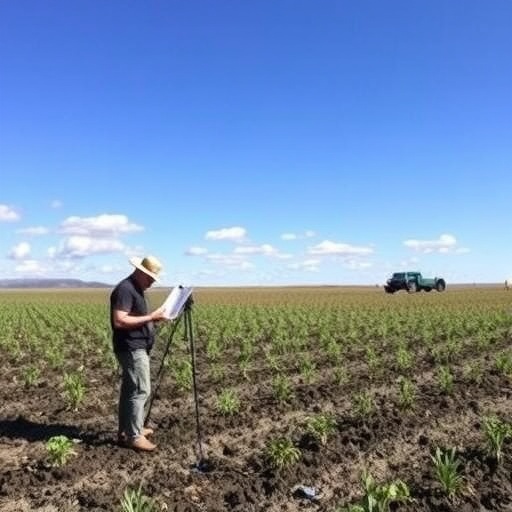
In a groundbreaking study published in the journal Environmental Monitoring and Assessment, researchers have delved into the intricate relationship between soil quality and the ecological sustainability of firebreaks constructed using Schima superba. This remarkable tree species, known for its rapid growth and resilience, plays a crucial role in controlling wildfires and protecting forest ecosystems. The study conducted by Deng, Zheng, and Tong, among others, aims to evaluate the soil quality of these firebreaks and diagnose potential constraints that could impair their effectiveness.
Firebreaks are strategically designed barriers that can help prevent the spread of wildfires, preserving both human and ecological communities. However, their efficacy largely depends on the underlying soil characteristics. This research highlights the necessity for a thorough soil quality assessment to determine how well Schima superba firebreaks can serve their purpose in mitigating fire risks. The growing frequency of wildfires due to climate change and human activities underscores the urgency of such investigations in our quest for effective environmental management solutions.
The methods employed in this study represent a sophisticated amalgamation of field surveys and advanced laboratory analyses. Researchers meticulously collected soil samples from various sites where Schima superba firebreaks have been established. By employing state-of-the-art techniques, they analyzed crucial parameters such as soil texture, nutrient composition, moisture levels, and pH. This comprehensive assessment seeks to paint a clear picture of the soil’s health and its ability to support the critical role of these firebreaks.
An integral aspect of this research is the identification of constraints that may hinder the optimal functioning of firebreaks. As environmental conditions change, certain soil qualities may degrade, leading to diminished effectiveness of these firebreaks. The findings of the study are anticipated to shed light on specific factors contributing to soil degradation, such as nutrient depletion, erosion, or compaction, thus enabling policymakers to make informed decisions regarding fire management strategies.
In the broader context of environmental sustainability, Schima superba stands out not just for its functional role in firebreaks, but also for its ecological value. The tree species offers habitat and food sources for various wildlife, contributing to biodiversity. Hence, understanding how soil quality affects the viability of Schima superba in fire management is pivotal for ensuring both human safety and ecological integrity. This dual benefit further emphasizes the significance of the current study in the face of escalating fire hazards globally.
Additionally, the study’s implications extend to land management practices. By highlighting the interplay between soil health and firebreak efficacy, the research advocates for the incorporation of regular monitoring and maintenance of soil conditions. This proactive approach could greatly enhance the resilience of firebreaks, making areas more secure against potential wildfire threats.
The results of this investigation hold great promise for advancing the science surrounding wildfire management. Forest managers and land planners could leverage the insights gleaned from this research to devise more sophisticated fire prevention strategies, aligning their practices with the ecological realities of the environments they safeguard. As climate-related challenges continue to evolve, developing an adaptable mindset is key for ensuring successful fire management.
Moreover, the research undertaken by Deng and colleagues does not merely serve a theoretical purpose; it can have practical implementation aligned with the needs of local communities facing wildfire risks. Engaging with communities and raising awareness about the importance of maintaining soil quality in firebreaks can cultivate a collective responsibility towards forest conservation and fire prevention efforts.
As society grapples with this increasing threat, integrating scientific research into policy decisions becomes more pertinent than ever. The findings from this study could inspire new regulations or guidelines focused on sustaining the health of firebreaks, ultimately contributing to more robust fire management frameworks.
Ultimately, the study encapsulates a forward-thinking approach to environmental management. The strong correlation established between soil quality and the efficacy of Schima superba firebreaks calls for more comprehensive future research endeavors that prioritize the delicate balance of protecting human life and preserving ecosystems.
In conclusion, as wildfires become a more commonplace threat amid a changing climate, the importance of studies like this cannot be overstated. They serve as a compelling reminder that collaboration between scientific inquiry and practical application is essential in our quest to navigate the complexities of environmental stewardship.
The work of Deng, Zheng, Tong, and their colleagues stands as a significant contribution to our understanding of fire dynamics and land management. The hope is that the burgeoning discourse around these findings will not only advance scientific knowledge but also lead to actionable strategies that effectively mitigate the risks associated with wildfires in the years to come.
Moreover, as future research builds upon this foundation, it is vital to continuously engage with local communities and stakeholders to ensure that findings translate into real-world benefits, fostering a sustainable coexistence with nature while safeguarding against the increasing threat of wildfires.
In a world increasingly shaped by the dynamics of climate change, studies that link soil quality and forest management practices will likely become indispensable tools in our arsenal against the growing challenges posed by wildfires and other environmental crises. By prioritizing the health of firebreaks and, subsequently, the ecosystems they protect, we move closer to a resilient and sustainable future.
Subject of Research: Soil quality assessment and constraints of Schima superba firebreaks
Article Title: Soil quality assessment and constraint diagnosis of Schima superba firebreaks.
Article References:
Deng, H., Zheng, Z., Tong, X. et al. Soil quality assessment and constraint diagnosis of Schima superba firebreaks.
Environ Monit Assess 198, 194 (2026). https://doi.org/10.1007/s10661-026-15038-1
Image Credits: AI Generated
DOI: https://doi.org/10.1007/s10661-026-15038-1
Keywords: Soil quality, firebreaks, Schima superba, wildfire management, environmental sustainability.


