


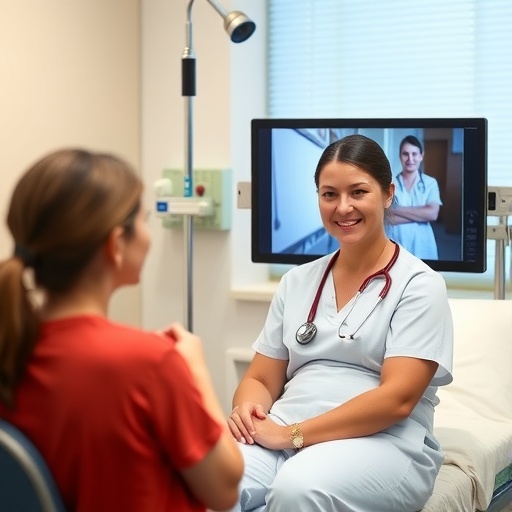
In an innovative approach to evaluating nursing competencies, recent research has shed light on the inter-rater reliability of experts versus non-experts when assessing psychomotor skills through video-based evaluations. This pilot study, conducted by a team of researchers led by Leysens, provides insights into the reliability and consistency of skill assessments within the nursing education framework. As such, these findings have the potential to refine the methodologies used in both training and assessing future nursing professionals.
Video-based assessment has emerged as a significant and effective mode of evaluating psychomotor skills, particularly in nursing education. It allows educators to capture and analyze the execution of various clinical tasks, providing an objective means of measuring competency. However, the challenge lies in ensuring that subjective evaluations made by different raters yield consistent results. This pilot study aims to bridge that gap by investigating how expert and non-expert assessors rate the same performances.
The framework of the study revolves around the fundamental premise that expertise can greatly influence the interpretation and grading of performance in clinical settings. The research team categorized raters into two groups: seasoned nurses with significant clinical experience and novice raters lacking extensive exposure to the field. By comparing the assessments made by these two groups, the researchers sought to ascertain whether expert knowledge translates into greater reliability in evaluating nursing skills.
Throughout the study, raters assessed a series of video recordings showcasing nursing students performing essential psychomotor skills. These skills included fundamental tasks such as taking vital signs, administering medication, and executing aseptic techniques. The diversity of these tasks was crucial to understanding how varied competencies might influence the assessment across different experience levels.
The researchers employed various statistical analyses to evaluate the inter-rater reliability of the skill assessments. Using established metrics—such as Cohen’s Kappa and Intraclass Correlation Coefficients—the study measured both agreement and consistency in ratings across the different groups of assessors. High levels of agreement would suggest that the evaluation process can maintain its integrity, regardless of who is assessing the skill performance.
Initial findings from the study revealed intriguing patterns in the ratings provided by experts compared to their non-expert counterparts. The experts displayed a higher degree of agreement when rating more complex psychomotor skills, indicating their refined ability to evaluate nuanced aspects of skill execution. Conversely, non-experts tended to have greater variability in their ratings, suggesting that a lack of experience may hinder their capacity to consistently identify essential competencies.
The implications of these findings are profound for nursing education programs, where the stakes are high and the need for reliable nursing assessments is critical. Educators and curriculum designers must consider the variations in assessments made by different types of raters, particularly as video-based evaluations become more integrated into educational standards. Understanding the reliability of different assessors can help inform more standardized approaches to nurse training and skill verification.
In addition to assessing the validity of the video-based evaluation system, the researchers emphasized the importance of continuous training for raters. Even experienced nurses may benefit from periodic refresher courses that highlight the critical components of skill assessments. Training can help mitigate disparities in rating and enhance the overall quality of evaluations conducted in real-world scenarios.
Moreover, the study opens the door to discussing broader implications for competency-based education within the nursing field. As nursing programs increasingly embrace competency evaluations, determining the most effective methods of assessment is paramount. This research signals a need for further studies to establish best practices in video-based evaluations, potentially leading to guidelines that could elevate the quality of nursing education globally.
The outcomes of this study serve as a reminder of the ongoing evolution in health education assessment methodologies. The use of technology, such as video recordings, can play a transformative role in how nursing skills are evaluated. It supports the transparency and objectivity needed in assessing students, which is crucial in maintaining high educational standards within nursing training.
As universities and healthcare institutions look to the future of nursing education, this pilot study serves as an important touchstone. It reinforces the idea that rigorous, evidence-based assessment strategies can impact the quality of healthcare practitioners entering the workforce. With an increasing reliance on technology and objective data in evaluations, ongoing research will be vital in refining these methods to ensure they meet the demands of the healthcare industry.
In conclusion, exploring the inter-rater reliability among different categories of assessors in nursing education presents a pathway to enhancing the reliability of evaluations in the field. Continuous research efforts and collaborative dialogues among educators and practitioners can drive improvements in how psychomotor skills are assessed, ultimately contributing to better patient care outcomes. This pilot study is just the beginning of a larger conversation that must continue to unfold in pursuit of excellence in nursing education.
Cite Scienmag News
Courtney Benton. (November 26, 2025). Evaluating Reliability in Video Assessment of Nursing Skills. Scienmag. https://scienmag.com/evaluating-reliability-in-video-assessment-of-nursing-skills/
Courtney Benton. "Evaluating Reliability in Video Assessment of Nursing Skills." Scienmag, 26 November 2025, https://scienmag.com/evaluating-reliability-in-video-assessment-of-nursing-skills/. Accessed 6 September 2026.
Courtney Benton. "Evaluating Reliability in Video Assessment of Nursing Skills." Scienmag. November 26, 2025. https://scienmag.com/evaluating-reliability-in-video-assessment-of-nursing-skills/


