


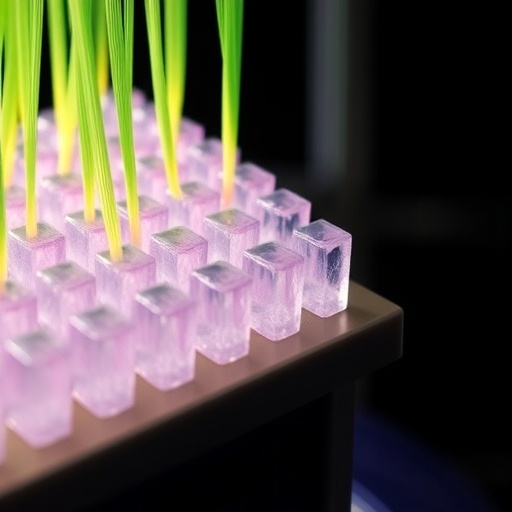
In a groundbreaking study poised to redefine regenerative medicine, researchers have unveiled the remarkable potential of a novel gel and spray designed to accelerate tissue repair and regeneration. This cutting-edge therapeutic approach could revolutionize treatment paradigms for wounds, burns, and other tissue damage, by harnessing biologically active compounds embedded within innovative delivery systems. The team’s experimental model systems have demonstrated unprecedented efficacy, illuminating new pathways toward clinical applications that promise faster and more efficient healing.
Regenerative medicine has long sought advancements in formulations that not only protect damaged tissue but actively stimulate cellular repair mechanisms. The development of this next-generation gel and spray constitutes a major leap forward by integrating bioactive ingredients known to promote cell proliferation, matrix remodeling, and inflammation control. These factors are critical in orchestrating the complex biological events necessary for restoring tissue integrity. The research, spearheaded by Bezdieniezhnykh, Lykhova, Borshchevska, and colleagues, rigorously assesses these new formulations in preclinical experimental models, laying a robust foundation for translational studies.
The innovative regenerative gel is engineered with a composition that ensures intimate contact with the wound site while providing sustained release of its therapeutically active agents. Unlike conventional topical treatments, which often suffer from rapid degradation or poor bioavailability, this gel employs a biocompatible polymer matrix that maintains a moist environment, conducive to cellular migration and proliferation. By stabilizing the microenvironment, the gel fosters enhanced collagen synthesis, angiogenesis, and epithelialization—processes that are critical in the early phases of wound healing.
Complementing the gel is a spray formulation that offers a versatile and easy-to-apply treatment option, especially suited for irregular or difficult-to-reach anatomical sites. The spray facilitates uniform coating of the affected area, ensuring consistent delivery of regenerative factors. This nebulized form maximizes surface area coverage and absorption, potentially reducing treatment time and improving patient compliance. The synergy between the gel and spray opens new avenues for combination therapies, allowing clinicians to tailor interventions based on wound characteristics.
The preclinical models utilized in this study encompass a variety of experimental systems designed to mimic human tissue injury, ranging from dermal wounds to mucosal lesions. Such comprehensive testing regimens are essential to evaluate the efficacy and safety profiles of emerging formulations before clinical translation. Across these models, the regenerative gel and spray exhibited significant acceleration of healing parameters compared to control groups, highlighting their therapeutic superiority. Histological analyses confirmed improved structural organization and reduced scarring, signaling qualitative improvements in tissue regeneration.
One of the most compelling aspects of these formulations is their multifaceted mode of action. Beyond serving as mere physical barriers, the gel and spray actively modulate key cellular signaling pathways involved in inflammation and regeneration. For instance, they enhance the recruitment and differentiation of stem/progenitor cells to the injury site, a critical step in tissue restoration. Additionally, by tempering excessive inflammatory responses, these treatments mitigate secondary tissue damage, creating a balanced microenvironment that favors repair over fibrosis.
From a molecular perspective, the formulations incorporate bioactive peptides and growth factors that serve as potent modulators of cellular behaviors. These biomolecules stimulate keratinocyte and fibroblast proliferation, promote neovascularization, and support extracellular matrix deposition. The carefully optimized release kinetics ensure sustained bioactivity, which is vital to maintain progressive stages of healing. Such biomolecular engineering underscores the sophistication of these regenerative tools, moving beyond passive treatments toward biointeractive therapeutics.
Safety is paramount in the development of any regenerative therapy. Comprehensive toxicological assessments reported in this investigation demonstrate an excellent biocompatibility profile for both the gel and spray products. No adverse inflammatory reactions or cytotoxic effects were observed in experimental assays, affirming their suitability for clinical advancement. This aspect is particularly critical given the delicate balance required to promote healing while avoiding deleterious side effects such as hypertrophic scarring or chronic inflammation.
The implications of these findings extend far beyond conventional wound care. The versatility of the gel and spray formulations suggests potential applications in surgical recovery, burn treatment, and even chronic ulcer management. Their ability to enhance tissue regeneration could also benefit reconstructive and cosmetic procedures, where rapid and high-quality healing is essential. By reducing healing times and improving outcomes, these products could significantly decrease healthcare costs and improve patients’ quality of life.
This study represents a collaborative effort integrating expertise in pharmaceutical sciences, biomedical engineering, and clinical medicine. The authors’ meticulous approach, combining innovative formulation strategies with robust experimental validation, sets a new standard for regenerative therapy research. Their work exemplifies how multidisciplinary convergence can accelerate the translation of laboratory discoveries into practical, life-changing medical products.
Looking forward, the research team plans to undertake clinical trials to evaluate the performance of these regenerative treatments in human subjects. These trials will be critical to confirm efficacy across diverse patient populations, investigate long-term effects, and optimize dosing regimens. Positive clinical outcomes could position these new gel and spray formulations as front-line regenerative therapies, widely adopted across medical disciplines.
The development of these advanced biological delivery systems reflects a broader trend in regenerative medicine—shifting from traditional symptomatic treatments toward interventions that actively engineer tissue repair. Such biomimetic approaches harness the body’s innate healing potential, fine-tuning cellular and molecular environments to achieve superior therapeutic outcomes. The study’s success highlights the transformative power of integrating pharmacological innovation with tissue engineering principles.
In conclusion, the pioneering assessment by Bezdieniezhnykh and colleagues marks a significant milestone in regenerative pharmaceutics. Their demonstration of efficient, biointeractive regenerative gel and spray in experimental models underscores a promising future where tissue regeneration treatments are safer, faster, and more effective. As this technology progresses through clinical development, it holds the potential to dramatically improve the treatment landscape for countless patients suffering from tissue injuries and degenerative conditions.
Bezdieniezhnykh, N., Lykhova, O., Borshchevska, M. et al. Assessment of the efficiency of new regenerative gel and spray in experimental model systems. BMC Pharmacol Toxicol (2026). https://doi.org/10.1186/s40360-026-01132-0
Cite Scienmag News
Ophelia Keating. (April 15, 2026). Evaluating New Regenerative Gel and Spray Efficiency. Scienmag. https://scienmag.com/evaluating-new-regenerative-gel-and-spray-efficiency/
Ophelia Keating. "Evaluating New Regenerative Gel and Spray Efficiency." Scienmag, 15 April 2026, https://scienmag.com/evaluating-new-regenerative-gel-and-spray-efficiency/. Accessed 5 September 2026.
Ophelia Keating. "Evaluating New Regenerative Gel and Spray Efficiency." Scienmag. April 15, 2026. https://scienmag.com/evaluating-new-regenerative-gel-and-spray-efficiency/


