


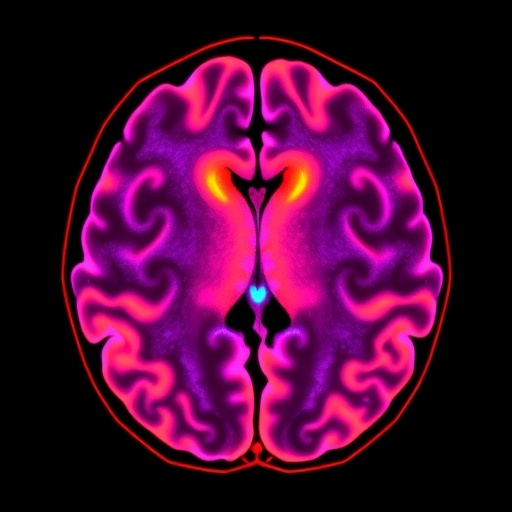
Recent advances in neuroimaging techniques have uncovered intriguing biochemical disruptions linked to the pathophysiology of Parkinson’s disease (PD), with a growing body of evidence highlighting the critical role of gamma-aminobutyric acid (GABA) dysfunction in the disease’s progression. A landmark study published in npj Parkinson’s Disease by Prasad et al. (2026) has leveraged cutting-edge in vivo proton magnetic resonance spectroscopy (¹H-MRS) to elucidate the alterations in GABAergic neurotransmission within the brains of Parkinson’s patients, providing new insights that could reshape therapeutic approaches and deepen our understanding of PD’s complex neurochemical landscape.
Parkinson’s disease, traditionally characterized by the degeneration of dopaminergic neurons in the substantia nigra pars compacta, manifests clinically with motor symptoms such as tremors, rigidity, and bradykinesia. However, this dopaminergic-centric view has been increasingly supplemented by evidence of dysfunction in other neurotransmitter systems, notably the GABAergic system, which plays a pivotal inhibitory role in the central nervous system. This recent investigation systematically explores these changes using an advanced neuroimaging modality tailored to non-invasively quantify GABA concentrations with high spatial specificity and biochemical fidelity.
The study utilized a sophisticated ¹H-MRS protocol optimized to detect subtle alterations in GABA levels in brain regions critically implicated in motor and non-motor disturbances of PD. By focusing on in vivo quantification, researchers circumvented the limitations imposed by post-mortem analyses and invasive procedures, which may not fully capture dynamic neurotransmitter fluctuations or early pathological changes preceding symptom onset. This technique’s sensitivity allows for real-time monitoring of metabolic changes associated with neurodegeneration, positioning it as an invaluable tool in both clinical and research settings.
Prasad and colleagues conducted a comprehensive comparative analysis between a cohort of diagnosed Parkinson’s patients and matched healthy controls, revealing marked reductions in GABA concentrations within the basal ganglia circuits, particularly the globus pallidus and the putamen. These regions, integral to motor control and procedural learning, exhibited alterations that parallel the severity of clinical motor symptoms, suggesting a mechanistic link between GABAergic deficits and PD’s characteristic motor impairments. Furthermore, this study highlights that GABAergic dysfunction is not merely a secondary epiphenomenon but potentially a core pathological feature contributing to disease progression.
In addition to motor circuit findings, the investigation extended to cortical areas traditionally associated with cognitive and affective functions, such as the prefrontal cortex. Here, diminished GABA levels correlated with cognitive decline and mood disturbances often observed in Parkinson’s patients, reinforcing the notion of widespread neurochemical abnormalities beyond dopaminergic pathways. This broad spectrum of involvement underscores the complexity of PD pathology and challenges the conventional single-neurotransmitter paradigm dominant in therapeutic development.
The technological prowess demonstrated in this study advances ¹H-MRS as a robust platform for biomarker discovery, enabling precise, longitudinal tracking of GABAergic changes. This capability paves the way for trials of pharmacological agents targeted at restoring inhibitory neurotransmission balance. Potential therapeutic interventions may involve agonists, reuptake inhibitors, or compounds modulating GABA receptor subunits, with the prospect of ameliorating both motor and non-motor symptoms through neurochemical normalization.
Moreover, the data presented by Prasad et al. shed light on the interplay between GABA and other neurotransmitter systems, including glutamate and dopamine. The delicate excitatory-inhibitory equilibrium disrupted in PD emerges as a key pathological hallmark, with implications for synaptic plasticity, neuronal network oscillations, and neuroinflammation. These insights advocate for a multi-target approach that addresses this neurochemical imbalance holistically rather than singular neurotransmitter replacement.
Importantly, the study highlights potential early diagnostic utility since changes in GABA levels appear in prodromal or early-stage PD, potentially preceding overt motor symptomatology. Early identification of at-risk individuals through non-invasive metabolic imaging could facilitate timely intervention, potentially altering disease trajectories. This paradigm shift toward early metabolic biomarkers represents a significant advancement over current diagnostic criteria reliant predominantly on clinical manifestations.
The correlation of GABAergic dysfunction with genetic and environmental risk factors was also touched upon, suggesting that individual variability in neurotransmitter system integrity might influence susceptibility and response to therapy. Genotype-phenotype correlations combined with metabolic imaging offer a promising avenue for personalized medicine, enabling tailored treatment regimens that optimize efficacy based on unique neurochemical profiles.
One particularly exciting prospect arising from this research is the integration of ¹H-MRS-derived biomarkers with other neuroimaging modalities such as positron emission tomography (PET) and functional MRI (fMRI). Multimodal imaging can provide comprehensive maps of structural, functional, and biochemical abnormalities, offering unprecedented resolution of the neurodegenerative cascade. This holistic approach is anticipated to deepen mechanistic understandings and guide targeted interventions.
Despite its groundbreaking contributions, the study recognizes several challenges. The quantification of GABA in vivo is inherently complex due to its low concentration and spectral overlap with other metabolites. The authors’ methodological refinements, including spectral editing and advanced acquisition sequences, address these hurdles but call for standardization across research sites to ensure reproducibility and broader applicability.
Furthermore, longitudinal studies are essential to elucidate temporal dynamics of GABAergic alterations over the disease course and in response to therapeutic interventions. While cross-sectional analyses provide critical snapshots, understanding progression and plasticity mechanisms necessitates follow-up investigations. Incorporating larger, more diverse cohorts will improve generalizability and uncover potential disease subtypes characterized by distinct neurochemical signatures.
In summary, the research presented by Prasad and colleagues profoundly enhances the understanding of Parkinson’s disease by spotlighting GABAergic dysfunction as a central player in its pathophysiology. The application of in vivo proton magnetic resonance spectroscopy emerges as a compelling approach to unravel neurochemical perturbations critical for disease manifestation and progression. This paradigm shift from dopaminergic exclusivity to a broader neurotransmitter network perspective opens new frontiers for diagnostics, biomarker development, and therapeutic innovation in Parkinson’s disease.
As the field advances, these findings encourage a reevaluation of current treatment strategies and emphasize the necessity for multi-targeted, personalized approaches integrating neurochemical insights. The nuanced comprehension of GABAergic abnormalities offers hope not only for symptom management but also for disease-modifying strategies that could markedly improve the quality of life for millions affected worldwide.
The convergence of advanced neuroimaging, neurochemistry, and clinical neurology embodied in this study exemplifies the interdisciplinary synergy essential for tackling complex neurodegenerative diseases. Future investigations building upon these results will undoubtedly refine our ability to detect, monitor, and intervene in Parkinson’s disease with unprecedented precision and efficacy.
Cite Scienmag News
Cassandra Pierce. (May 26, 2026). GABA Dysfunction in Parkinson’s Revealed by MRI. Scienmag. https://scienmag.com/gaba-dysfunction-in-parkinsons-revealed-by-mri/
Cassandra Pierce. "GABA Dysfunction in Parkinson’s Revealed by MRI." Scienmag, 26 May 2026, https://scienmag.com/gaba-dysfunction-in-parkinsons-revealed-by-mri/. Accessed 4 September 2026.
Cassandra Pierce. "GABA Dysfunction in Parkinson’s Revealed by MRI." Scienmag. May 26, 2026. https://scienmag.com/gaba-dysfunction-in-parkinsons-revealed-by-mri/


