


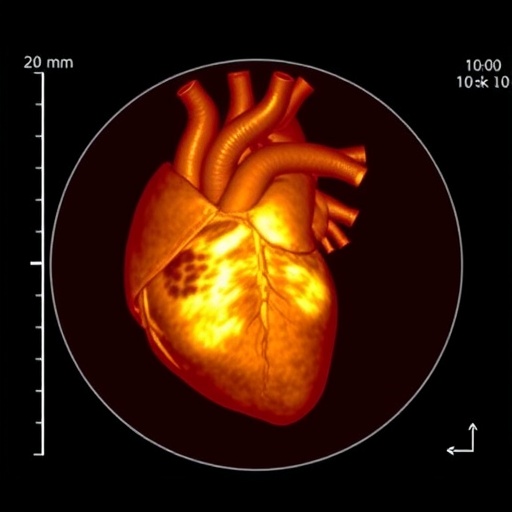
A cutting-edge study has emerged from the dynamic intersection of medical education and technological advancement, pushing the boundaries of how echocardiography training is delivered. The research, conducted by Guo, Li, Zhou, and their collaborators, presents an innovative approach to teaching echocardiography through a method known as graded progressive image-model teaching. The implications of their findings are poised to revolutionize training methodologies in this critical aspect of cardiology, potentially enhancing the learning experience while improving the competence of future healthcare professionals.
The premise of the study revolves around the concept of a learning curve as it pertains to mastering echocardiography techniques. Traditional methods that rely heavily on theoretical teaching often leave students grappling with the complexities of image interpretation and practical application. By implementing a systematized learning curve that gradually introduces students to increasingly complex cases, the researchers aim to bolster comprehension and retention among learners. The study serves as an essential inquiry into the efficacy of this approach, evaluating whether a structured model can yield better educational outcomes compared to less organized traditional methods of instruction.
At the heart of the research lies the unique grading system employed to categorize image models. Each tier of the grading system was meticulously designed to align with the learners’ evolving skill levels. The study meticulously tracked participants’ progress as they navigated through different levels of complexity in echocardiographic images. This stepwise approach not only allows learners to build confidence as they master foundational skills but also enables instructors to identify areas where students may struggle, ultimately leading to tailored support and remediation. This adaptive learning strategy marks a departure from conventional teaching techniques that often lack personalization.
The research methodology adopted by Guo and his team is robust, incorporating a comprehensive analysis of participant performance across various stages of the training process. The use of quantitative metrics to assess learning outcomes adds a layer of rigor to the findings. By employing a combination of pre- and post-training assessments, the researchers were able to gauge improvement in participants’ diagnostic skills, particularly their ability to recognize key echocardiographic features that are crucial for accurate assessments of heart health.
Significantly, the study also considers the psychological aspects of learning in the context of medical education. The gradual increase in complexity not only optimizes technical skill acquisition but also addresses anxiety often faced by students when confronted with challenging cases. By systematically guiding learners through a thoughtfully constructed framework, the researchers hypothesize that students will experience reduced performance anxiety, paving the way for a more favorable learning environment. This focus on the psychological dimension of medical education underscores an evolving recognition of the importance of emotional wellness in training clinicians.
Additionally, the researchers provide a compelling discussion on the technological tools employed in disseminating the graded teaching model. The integration of high-quality image models and the latest advancements in digital platforms is highlighted as a crucial component of the study. By ensuring that students have access to realistic and varied clinical scenarios through advanced imaging technology, the educators enhance the authenticity of the training experience. This technological support not only enriches the learning process but also aligns with the contemporary shift toward integrating technology in medical curricula.
An exploration of the varied responses from participants reveals an overwhelmingly positive reception of the graded progressive model. Feedback collected during and after the completion of the study indicates that students felt more capacitated in their abilities to interpret echocardiographic images. Many noted that the structured approach facilitated greater clarity in understanding complex concepts, which they found particularly beneficial during high-stakes assessments. This small but critically important observation reinforces the proposition that progressive teaching methods can lead to better educational outcomes.
Moreover, the implications of this research extend beyond the classrooms. If adopted widely within training programs, such methodologies have the potential to improve overall diagnostic accuracy in the field of cardiology. An enhanced understanding of echocardiographic techniques among healthcare providers could lead to earlier detection of cardiac anomalies, ultimately benefiting patient care on a larger scale. This perspective aligns with recent trends emphasizing the need for structured educational reforms in the medical discipline to keep pace with evolving healthcare demands.
Challenges remain, however, in the widespread implementation of such innovative educational methods. The transition from traditional models to more progressive frameworks necessitates a shift in both curriculum design and teaching philosophy among medical educators. Institutional barriers, including resistance to change and resource limitations, can hinder progress in fully integrating these advancements. Nevertheless, the promising outcomes depicted in this study serve as a compelling argument for educational stakeholders to re-evaluate their approach toward training future healthcare professionals.
As the field of echocardiography continues to evolve alongside technological advancement, staying ahead in training practices becomes imperative. The findings of Guo and colleagues offer a glimpse into a future where educators can maximize learning efficacy by harnessing structured, technology-driven pedagogical methods. The success of graded progressive image-model teaching could inspire similar methodologies in other areas of medical training, fostering a new era of competency-based education that prioritizes both knowledge acquisition and skill mastery.
In conclusion, the insightful research conducted by Guo, Li, Zhou, and their team provides essential contributions to the discourse on medical education, particularly within the realm of echocardiography. As we venture into a future increasingly characterized by innovation and technological integration, the evolution of teaching methodologies will undoubtedly influence how we train healthcare providers. By continuing to explore and implement progressive educational techniques, we can ensure that future generations of clinicians are equipped to meet the complex demands of patient care with confidence and competence.
The overall significance of this study cannot be overstated, as it paves the way for subsequent research and discussion around effective teaching strategies within medical education. As learning environments become more sophisticated, the hope is that studies such as these will inspire transformative changes, ultimately leading to improved patient outcomes in the critical field of cardiology.
Guo, X., Li, Y., Zhou, X. et al. Learning curve in evaluation of graded progressive image-model teaching in echocardiography.
BMC Med Educ 25, 1584 (2025). https://doi.org/10.1186/s12909-025-08191-7
Cite Scienmag News
Courtney Benton. (November 17, 2025). Evaluating Graded Progressive Image-Model Teaching in Echocardiography. Scienmag. https://scienmag.com/evaluating-graded-progressive-image-model-teaching-in-echocardiography/
Courtney Benton. "Evaluating Graded Progressive Image-Model Teaching in Echocardiography." Scienmag, 17 November 2025, https://scienmag.com/evaluating-graded-progressive-image-model-teaching-in-echocardiography/. Accessed 5 September 2026.
Courtney Benton. "Evaluating Graded Progressive Image-Model Teaching in Echocardiography." Scienmag. November 17, 2025. https://scienmag.com/evaluating-graded-progressive-image-model-teaching-in-echocardiography/


