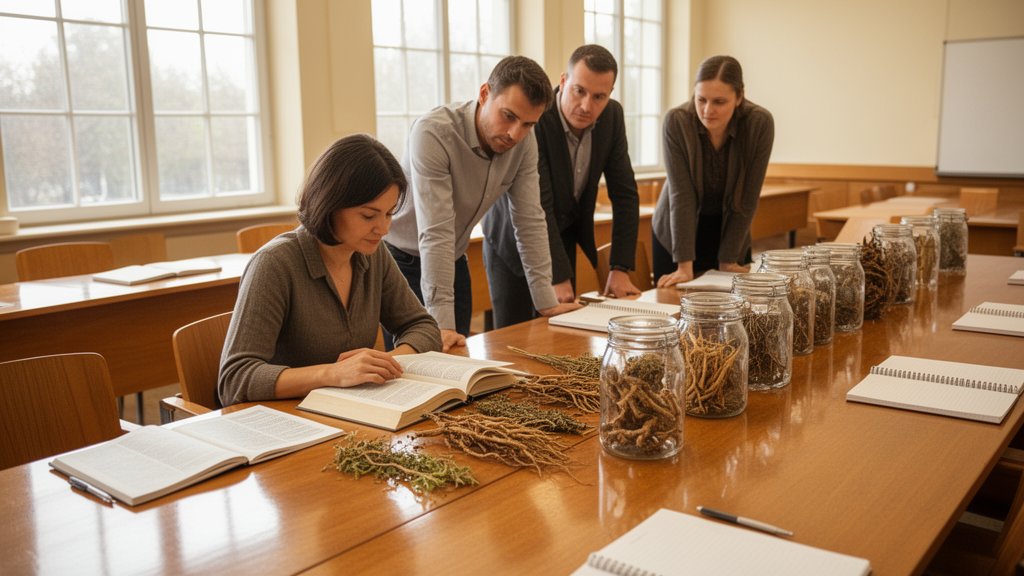
A recent study published in the Asian-Pacific Journal of Second and Foreign Language Education identifies specific knowledge thresholds that pre-service English as a Foreign Language (EFL) teachers in China must overcome to effectively interpret and teach Traditional Chinese Medicine (TCM) concepts. The research focuses on the novel “Journey to the West,” a classical text that integrates TCM ideas such as herbal remedies, qi circulation, and the Five Elements into its narrative. By examining the perceptions of 486 pre-service EFL teachers and 106 academic experts, the study highlights a significant gap between the cultural knowledge required for accurate instruction and the current pedagogical preparedness of novice teachers. The findings suggest that while teachers prioritize historical and linguistic aspects of TCM, they often undervalue the intercultural mediation skills necessary for global audiences.
The study was motivated by recent Chinese educational policies, including the 2022 Compulsory Education English Curriculum Standards, which mandate the prominent incorporation of TCM into English curricula. These policies aim to globalize Chinese cultural heritage and enhance intercultural communicative competence among future teachers. However, the authors note that previous research has largely focused on macro-level policy analysis or the translation of isolated TCM terms, leaving a gap in understanding the epistemic and intercultural challenges faced by pre-service teachers. The current study addresses this by conducting a needs analysis to categorize the specific knowledge domains necessary for mediating TCM cultural references in an English-medium context.
Utilizing a sequential explanatory mixed-methods design, the researchers combined quantitative surveys with qualitative focus group interviews. The theoretical framework integrated behaviorism, which provides a structure for measurable learning outcomes, and andragogy, which emphasizes the self-directed learning needs of adult students. This hybrid approach allowed the team to map both the granular behaviors required for TCM instruction and the broader professional contexts in which these behaviors occur. The study aimed to determine which knowledge domains pre-service teachers consider indispensable and how these perceptions align with those of teacher educators and medical academics.
The quantitative phase involved a survey administered to 486 pre-service EFL teachers from three institutions in Mianyang, Sichuan. The participants were selected through systematic random sampling from a population of 1,032 students, ensuring a representative distribution across first through fourth academic years. The survey instrument, adapted from a validated scale, measured perceived competence in interpreting TCM cultural knowledge. Results indicated that pre-service teachers rated the historical and cultural background of TCM as the most important knowledge domain, with a mean score of 4.12 on a five-point Likert scale. In contrast, cross-cultural communication skills in English were rated the lowest, with a mean of 2.98, suggesting a potential blind spot in their pedagogical priorities.
Simultaneously, the study surveyed 106 experts, including 36 teacher educators, 40 medical lecturers, and 30 medical professors, selected via purposive and snowball sampling. These experts were chosen for their specialized experience in EFL teacher training and TCM research or practice. Their responses generally aligned with the pre-service teachers’ emphasis on historical context and TCM vocabulary. However, the experts also highlighted the critical importance of translation strategies, particularly domestication and foreignization, which received a high mean rating of 4.9. This strategy involves adapting cultural references to make them accessible to the target audience while preserving their original meaning, a skill the authors argue is essential for maintaining semantic fidelity in TCM instruction.
The qualitative phase involved focus group discussions with a purposive subset of ten experts: five teacher educators, two medical lecturers, and three medical professors. These discussions aimed to explore the convergence and divergence in perceptions between pre-service teachers and academic experts. Thematic analysis revealed a three-tier knowledge taxonomy: core, secondary, and complementary. Core knowledge, described as the non-negotiable foundation, included precise bilingual terminology and an understanding of TCM’s historical context. Secondary knowledge encompassed basic TCM theories and practices, such as the four diagnostic methods, which enhance the ability to analyze TCM concepts in literary texts. Complementary knowledge included intercultural communication strategies, which participants viewed as value-added but often marginalized in practice.
A key finding from the focus groups was the tension between linguistic accuracy and cultural depth. Participants noted that while mastering TCM terms is necessary for identification, it is insufficient for effective transmission without an understanding of the deep cultural meanings behind the terms. One expert emphasized that the kidney in TCM is conceptually different from the kidney in Western medicine, requiring specific mediation strategies to bridge this epistemological gap for non-Chinese learners. This insight underscores the need for pre-service teachers to develop not just vocabulary, but the pedagogical content knowledge to explain these differences clearly and accurately.
The study also identified a discrepancy regarding herbological knowledge. Pre-service teachers tended to prioritize detailed knowledge of common TCM herbs and their properties, whereas experts deemed this level of detail less relevant for EFL contexts unless the teacher intended to become a TCM practitioner. The authors suggest this mismatch may stem from anxiety among novice teachers about content mastery, leading them to overfocus on peripheral details. By delineating clear knowledge priorities, the proposed taxonomy aims to reduce this anxiety-driven overfocus and guide curriculum design toward more pedagogically adaptive preparation.
Both groups agreed that cross-cultural communication skills were relatively undervalued, a finding that contradicts some prior research on intercultural competence. The authors argue that this undervaluation may hinder pre-service teachers’ ability to mediate complex cultural knowledge for diverse audiences. The study suggests that foregrounding complementary knowledge, such as strategies for making TCM accessible to non-Chinese learners, is urgent for improving the effectiveness of TCM-integrated EFL instruction. This layer of knowledge addresses the dilemma of possessing cultural expertise but lacking the practical skills to teach it in a cross-cultural setting.
The implications of the study extend to curriculum design and teacher education policy. The proposed core-secondary-complementary taxonomy offers a structured template for developing TCM-integrated EFL curricula that balance cultural authenticity with teachability. By identifying specific knowledge thresholds, the study provides a data-driven basis for assessment and professional standards. The authors recommend integrating explicit TCM culture into the curriculum and developing culturally responsive teaching materials that support both linguistic and intercultural competence.
Limitations of the study include its regional focus on Mianyang, Sichuan, a area with strong local TCM cultural salience, which may limit the generalizability of the findings to other regions or international contexts. The reliance on self-report measures means that the study captures perceived knowledge needs rather than actual teaching performance. Additionally, the small sample size of the focus group, while sufficient for thematic saturation, may not capture the full range of expert perspectives. The authors acknowledge these constraints and suggest future research should replicate the study in diverse geographic settings and include classroom observations to validate the practical application of the proposed framework.
Despite these limitations, the study contributes a novel framework for understanding the knowledge requirements of pre-service EFL teachers in the context of TCM instruction. It highlights the need for a balanced approach that integrates deep cultural knowledge with practical pedagogical skills. By addressing the specific obstacles in TCM integration, such as the undervaluation of cross-cultural communication and misalignment in knowledge priorities, the study offers a pathway for enhancing the quality of intercultural education in English classrooms. The findings underscore the importance of preparing teachers not just to translate TCM terms, but to mediate the cultural and philosophical underpinnings of TCM in a way that is accessible and meaningful to global learners.
Subject of Research: Knowledge thresholds and pedagogical needs of pre-service EFL teachers in interpreting Traditional Chinese Medicine within literary texts
Article Title: Knowledge thresholds of pre‑service efl teachers interpreting traditional Chinese medicine in “journey to the west”
Article References: Chen, M., Wong, W. L., Mihat, W., & Soo, R. S. (2026). Knowledge thresholds of pre‑service efl teachers interpreting traditional Chinese medicine in “journey to the west”. Asian-Pacific Journal of Second and Foreign Language Education, 11(1), Article 39. https://doi.org/10.1186/s40862-026-00415-7
Image Credits: AI Generated
DOI: 10.1186/s40862-026-00415-7
Keywords: Traditional Chinese Medicine, EFL Teacher Education, Journey to the West, Intercultural Competence, Needs Analysis, Mixed-Methods Research, Pedagogical Content Knowledge, TCM Translation Strategies, Chinese Cultural Heritage, Curriculum Design, Pre-service Teachers, Linguistic Competence, Cultural Mediation, Sichuan University Study, Adult Learning Theory
Cite Scienmag News
Courtney Benton. (November 11, 2026). Study Maps TCM Knowledge Gaps for EFL Teachers. Scienmag. https://scienmag.com/study-maps-tcm-knowledge-gaps-for-efl-teachers/
Courtney Benton. "Study Maps TCM Knowledge Gaps for EFL Teachers." Scienmag, 11 November 2026, https://scienmag.com/study-maps-tcm-knowledge-gaps-for-efl-teachers/. Accessed 11 November 2026.
Courtney Benton. "Study Maps TCM Knowledge Gaps for EFL Teachers." Scienmag. November 11, 2026. https://scienmag.com/study-maps-tcm-knowledge-gaps-for-efl-teachers/