


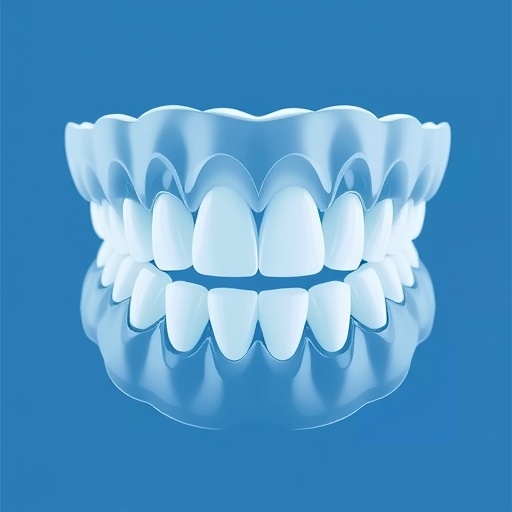
In a groundbreaking advancement that promises to transform orthodontic treatment, researchers have developed a novel digital approach to interproximal enamel reduction (IER), enhancing both precision and clinical outcomes. This innovative method leverages cutting-edge technologies including laser scanning, 3D reconstruction, virtual tooth arrangement, and stereolithographic 3D printing to achieve unparalleled accuracy in IER procedures—an essential process in modern orthodontics aimed at creating space between teeth to facilitate alignment.
Orthodontic treatment has long relied on careful enamel reduction to manage tooth size discrepancies and alleviate crowding. However, traditional IER techniques often depend on the practitioner’s manual dexterity and visual estimation, which can introduce variability and compromise treatment precision. The new digital protocol addresses these challenges by integrating virtual modeling and physical guide fabrication to standardize the enamel reduction procedure, thus marking a significant leap toward digitized orthodontic workflows.
The experimental foundation of this approach was established through the detailed investigation of a malocclusion case characterized by skeletal-class I and Angle-class I classifications. By creating a three-dimensional digital model derived from high-resolution scans of a plaster dental cast, the researchers could accurately simulate the spatial relationships between adjacent teeth. This virtual environment allowed for precise measurement of the volumetric enamel targeted for reduction, calculated through the overlapping surfaces of neighboring crowns in the reconstructed dental arch.
For the upper dentition, the team pioneered the design of a customized guide plate that conforms perfectly to the tooth surfaces and encodes the exact IER volume predetermined during the virtual planning phase. This guide plate was brought to life via stereolithography apparatus (SLA) 3D printing technology, renowned for its fine resolution and material durability. Employing this tailored guide during the clinical IER operation ensured the enamel removal precisely matched the digital blueprint, enabling clinicians to perform with confidence and enhanced control.
In contrast, the lower dentition underwent a traditional free-hand IER technique, though still informed by the digitally planned enamel reduction volume. This allowed for a direct comparison between the digitally guided and freehand methods, underpinning the study’s core objective of rigorously evaluating accuracy improvements in clinical practice.
Postoperative analysis involved superimposing pre- and post-treatment 3D dental models to quantify the deviations in enamel reduction. The findings were compelling: the standard deviation of the enamel removed using the guide plate in the upper jaw was an impressively low 0.13 millimeters. Meanwhile, the freehand method applied to the lower dentition displayed a significantly higher deviation of 0.24 millimeters, underscoring the enhanced precision afforded by the digitally fabricated guide.
This research is a seminal demonstration of how digital dentistry, combined with additive manufacturing, can transcend conventional boundaries in treatment execution. The integration of laser scanning facilitates highly accurate data capture, while virtual reconstruction and arrangement allow for interactive planning that is both patient-specific and reproducible. Most importantly, the guide plate serves as a tangible bridge between digital design and clinical application, ensuring that computational accuracy translates to real-world outcomes.
From a clinical perspective, the benefits of this approach are multifaceted. Enhanced precision reduces the risk of over- or under-reduction of enamel, which can lead to tooth sensitivity or compromised treatment efficacy if not carefully controlled. Moreover, the predictability inherent in digital planning supports better treatment case acceptance as patients can visualize treatment scenarios, and clinicians can strategize with greater confidence.
This study also highlights the broader implications for accelerating the adoption of digital workflows in orthodontic practices. The use of SLA 3D printing—a technology increasingly accessible and affordable—makes this method feasible for widespread clinical implementation. The reproducibility and customization of guide devices tailored to individual patients align perfectly with the personalized medicine paradigm that is reshaping healthcare delivery.
Crucially, this digital IER methodology addresses a persistent clinical challenge by minimizing operator-dependent variability. The enhanced accuracy demonstrated promises to reduce chair time, patient discomfort, and long-term complications. Such improvements ultimately contribute to higher patient satisfaction and optimized therapeutic outcomes, positioning this technique as a potential new standard in orthodontic enamel reduction procedures.
Looking ahead, the fusion of digital imaging, virtual modeling, and additive manufacturing forms the bedrock of innovative orthodontic interventions. Future research may explore the integration of intraoral scanners and automated reduction tools, advancing toward fully digitalized tooth preparation systems. These technological synergies foreshadow a new era where treatment precision, customization, and efficiency reach unprecedented heights.
Ultimately, this case study illuminates a promising pathway that harnesses technological innovation to enhance clinical efficacy in orthodontics. The digital IER technique not only refines a critical procedural step but also exemplifies the transformative power of combining biomedical engineering with dental science, with the potential to positively impact countless patients worldwide.
The publication of these findings in BioMedical Engineering OnLine heralds an important milestone for digital orthodontics, inviting practitioners and researchers alike to embrace and further develop these tools to create more predictable and patient-centered treatments. As technology continues to evolve, methods such as this will undoubtedly underpin the future paradigm of dental care.
—
Cite Scienmag News
Ophelia Keating. (April 15, 2025). Evaluating Digital Enamel Reduction in Orthodontics. Scienmag. https://scienmag.com/evaluating-digital-enamel-reduction-in-orthodontics/
Ophelia Keating. "Evaluating Digital Enamel Reduction in Orthodontics." Scienmag, 15 April 2025, https://scienmag.com/evaluating-digital-enamel-reduction-in-orthodontics/. Accessed 6 September 2026.
Ophelia Keating. "Evaluating Digital Enamel Reduction in Orthodontics." Scienmag. April 15, 2025. https://scienmag.com/evaluating-digital-enamel-reduction-in-orthodontics/


