

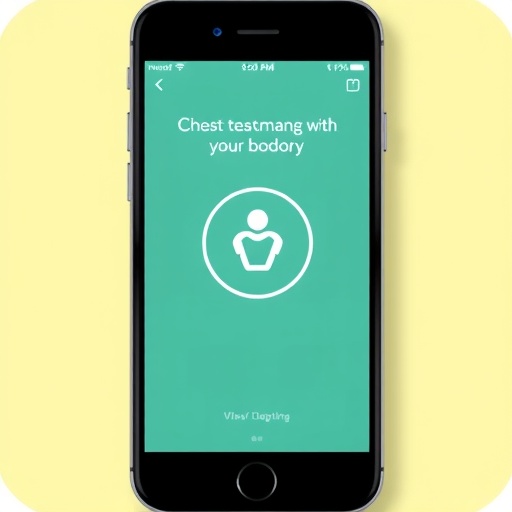
In an era where technology continuously reshapes our approach to health care, a recent study has shed light on the transformative impact of self-care mobile applications, specifically designed for chest trauma patients. Conducted by Tajbakhsh, Zakerabasali, Mahmoudzadeh-Sagheb, and their team, this interventional study rigorously evaluates the effectiveness of such an application, delivering promising insights into the enhancement of patient outcomes and the overall management of trauma care.
The mobile application developed in this study aims to empower patients coping with the often debilitating aftermath of chest trauma. Chest injuries can arise from various incidents, including vehicle accidents, falls, or sports injuries, potentially leading to severe complications if not monitored properly. Traditional post-injury care often relies heavily on clinic visits and follow-up appointments, which can present significant challenges for patients, particularly in terms of accessibility and adherence to medical advice. By harnessing mobile technology, this innovative application promises to bridge the gap between patients and healthcare systems, promoting self-management in recovery.
This study particularly emphasizes the significance of fostering patient autonomy and self-efficacy in managing their health. The mobile app serves various functions such as symptom tracking, medication reminders, and educational resources tailored specifically for individuals recovering from chest injuries. With these features, the application provides a dynamic platform for patients to engage in their recovery process actively. Moreover, it includes virtual check-ins with healthcare providers, ensuring that medical professionals can monitor patients’ progress without requiring frequent in-person consultations.
The methodology employed in this research is noteworthy, as it incorporates a robust interventional design. Participants were divided into two groups: one utilized the mobile app, while the control group received standard post-injury care. The researchers then collected and analyzed a comprehensive array of data, evaluating not merely the physical outcomes but also patients’ psychological well-being and overall satisfaction with care. Such an approach sheds light on the holistic nature of health, recognizing the interplay between physical recovery and emotional support.
Early results indicate that the self-care application significantly enhances both the physical recovery trajectories and the psychological states of users. Patients utilizing the app reported higher levels of satisfaction with their care and expressed greater confidence in managing their recovery. This sense of empowerment can be crucial, as chronic pain and psychological distress are common enduring issues for chest trauma patients, potentially complicating their healing processes. The application alleviates these worries by offering reliable information and support right at the patients’ fingertips.
Furthermore, findings suggest that the mobile app could become a crucial tool in reducing the burden on healthcare systems. By promoting self-management, it minimizes unnecessary visits to emergency departments and outpatient clinics. This is particularly invaluable in times of limited healthcare resources, where the demand for services can often outstrip availability. By aiding patients in their recovery journey while utilizing technology initially perceived as a distraction, the study champions a new era of health management that prioritizes accessibility and user engagement.
Yet, the implications of this study extend beyond the realm of chest trauma. As societies grapple with rising healthcare costs and the increasing prevalence of chronic diseases, mobile health applications can serve as scalable solutions in various contexts. With tailored interventions becoming essential for effective management, the ability to customize health applications for specific conditions stands to revolutionize patient care in diverse settings.
Critical insights drawn from the research highlight the necessity of ongoing engagement from healthcare professionals in the digital health landscape. While mobile applications can facilitate self-care, they cannot replace the important role of medical expertise. The study advocates for a collaborative ecosystem wherein technology complements traditional care models. It underlines the importance of designing user-friendly applications that actively engage patients while remaining firmly rooted in clinical realities.
The transformative potential of the developed mobile application lies in its adaptability to different healthcare environments and patient demographics. As the field of telemedicine continues to evolve, the viability of such self-care applications will depend significantly on rigorous field testing and user-centered design approaches. Engaging with patients throughout the development process is essential to ensure that the tools are not only functional but also respond to the nuanced needs of those they are designed to serve.
In conclusion, the research by Tajbakhsh and colleagues stands as a pivotal step forward in recognizing the role of technology in patient-centered care. The efficacy of the self-care mobile application for chest trauma patients underscores the necessity for healthcare systems to embrace such innovations, especially as we transition to post-pandemic realities where in-person interactions may still be compromised. This work not only contributes to the existing body of knowledge surrounding trauma recovery but also paves the way for ongoing explorations into the vast possibilities offered by mobile health technologies.
As the medical community turns its gaze towards a future of hybrid health approaches, the potential benefits of integrating mobile technology into routine care cannot be overstated. This interventional study provides compelling evidence to support the further development of such tools, illuminating the path toward enhanced patient autonomy and improved health outcomes. Future research will undoubtedly draw upon these findings to explore even broader applications and the necessity for systematic integration within standard care protocols.
By challenging existing paradigms and harnessing the power of innovation, we may soon find ourselves at the forefront of a healthcare revolution that prioritizes both physical healing and patient empowerment — an exciting prospect for patients, healthcare providers, and innovators alike.
Subject of Research: Effectiveness of a developed self-care mobile application for chest trauma patients.
Article Title: Effectiveness of a developed self-care mobile application for chest trauma patients: an interventional study.
Article References:
Tajbakhsh, F., Zakerabasali, S., Mahmoudzadeh-Sagheb, Z. et al. Effectiveness of a developed self-care mobile application for chest trauma patients: an interventional study. BMC Health Serv Res (2026). https://doi.org/10.1186/s12913-026-14054-8
Image Credits: AI Generated
DOI: 10.1186/s12913-026-14054-8
Keywords: self-care, mobile application, chest trauma, patient outcomes, interventional study.


