


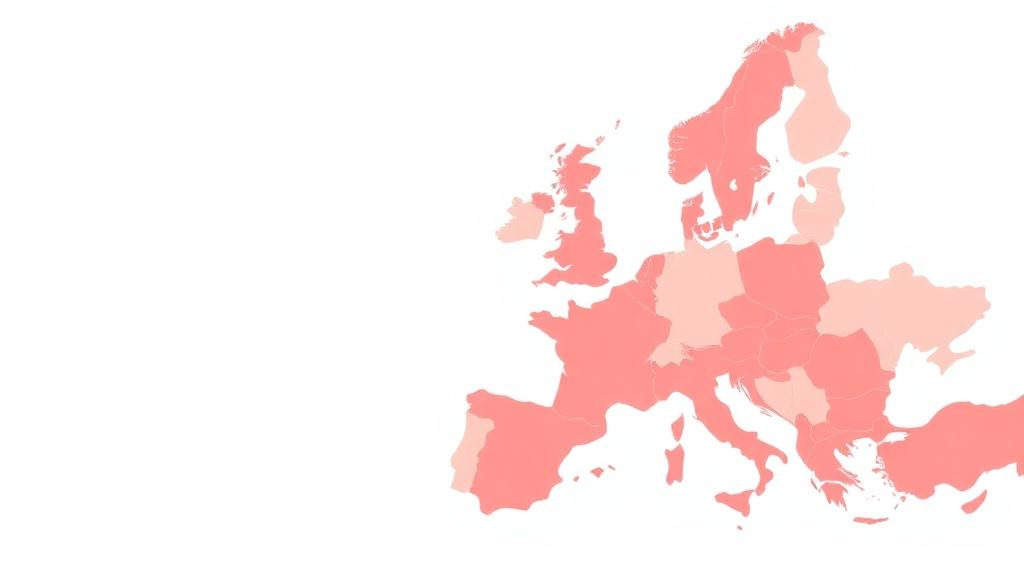
Poverty across the European Union has declined measurably over the past decade, but the pace and character of that decline differ so dramatically between member states that the bloc remains a patchwork of vulnerability and resilience. That is the central finding of a new peer-reviewed study published on September 30, 2026 in the open-access journal PLOS One by Silvia Megyesiova and Cecilia Olexova of the Bratislava University of Economics and Business in Košice, Slovak Republic. Drawing on ten internationally recognized indicators aligned with the United Nations 2030 Agenda for Sustainable Development, the researchers constructed a multidimensional portrait of poverty and social exclusion across all EU member states, dividing the analysis into three distinct windows: 2015 to 2019, the pandemic year 2020, and 2021 to 2023. Their multivariate approach reveals a union that is, on aggregate, moving in the right direction, while simultaneously exposing persistent clusters of deprivation concentrated in parts of Eastern and Southern Europe.
The scale of the global challenge the study addresses is difficult to overstate. According to figures cited by the authors, as many as 1.3 billion people were living in poverty as of 2021, with a further 240 million people classified as extreme working poor, meaning they were employed yet still unable to escape deprivation. Against this backdrop, the European Union has positioned poverty eradication as a cornerstone of its sustainable development agenda, with Sustainable Development Goal 1 serving as the analytical framework for the new research. What distinguishes this study from conventional income-based assessments is its insistence that poverty cannot be reduced to a single monetary threshold. The COVID-19 pandemic, the authors argue, made this abundantly clear, as disruptions to education, employment, healthcare access, and digital connectivity revealed how many distinct dimensions of deprivation interact to produce social exclusion.
To capture that complexity, the researchers selected ten metrics drawn directly from the indicator framework of the 2030 Agenda. Among them were the percentage of persons at risk of monetary poverty after social transfers, the housing cost overburden rate, and the severe material and social deprivation rate. Each indicator probes a different facet of vulnerability: monetary poverty measures whether social protection systems succeed in lifting households above a relative income threshold; housing cost overburden captures the squeeze of rent and utility bills on disposable income; and severe material and social deprivation registers the inability to afford basic goods and activities that most Europeans take for granted, from adequate heating to regular social contact. By combining these measures in a multivariate statistical framework, the study moves beyond the traditional headline statistic and asks which countries cluster together when the full spectrum of deprivation is considered.
The aggregate results are encouraging. Between 2015 and 2023, poverty in the European Union declined overall. The share of persons at risk of monetary poverty after social transfers fell from 17.4 percent in 2015 to 16.2 percent in 2023, a modest but meaningful improvement across a bloc of roughly 450 million people. More striking was the trajectory of severe material and social deprivation, which dropped from an average of 9.7 percent to 6.8 percent over the same period. That nearly three-percentage-point decline suggests that the most acute forms of hardship, those involving the inability to meet basic material needs, receded faster than relative income poverty, possibly reflecting the expansion of social safety nets, rising employment levels, and EU-funded cohesion programs targeting the poorest regions.
Individual countries followed broadly similar trajectories, though with notable exceptions and dramatic variation in starting points. In 2015, four countries, Spain, Lithuania, Latvia, and Romania, recorded monetary poverty rates exceeding 22 percent, placing them well above the EU average. By 2023, only Estonia and Latvia remained in that high-poverty category, a shift that reflects both genuine improvement in the original high-poverty states and a worrying deterioration in Estonia, which had previously performed better. Romania’s improvement was the most significant in absolute terms: the percentage of persons at risk of monetary poverty after social transfers declined from 25.4 percent in 2015 to 21.1 percent in 2023, a reduction of 4.3 percentage points that represents millions of individuals moving out of relative income poverty in one of the union’s largest and historically poorest member states.
Despite these gains, the multivariate clustering analysis identifies a persistent group of the most vulnerable member states in the final study period. From 2021 to 2023, Bulgaria, Greece, Romania, and Latvia formed the cluster of countries facing the greatest combined poverty and social exclusion risks, while several nations in Northern and Western Europe displayed markedly stabler and more favorable trends. This geographic pattern underscores a structural reality of the European project: the economic convergence promised by EU integration has narrowed some gaps but has not eliminated the deep-seated differences in social protection capacity, housing affordability, labor market quality, and digital infrastructure that separate the union’s wealthiest from its most fragile economies. The authors emphasize that these multidimensional poverty profiles evolve over time and do not necessarily follow traditional geographical divisions within Europe, suggesting that country-specific dynamics, rather than simple east-west or north-south narratives, drive the observed patterns.
The methodological choices behind these findings deserve attention. By isolating 2020 as a separate analytical window, the researchers acknowledged that the COVID-19 pandemic constituted a structural shock capable of distorting trends in both directions: emergency income support schemes temporarily reduced measured monetary poverty in some countries, while lockdowns, school closures, and the shift to remote work exposed deficits in digital skills and connectivity that conventional poverty metrics had long ignored. The study’s framework explicitly incorporates information literacy and digital access alongside physical infrastructure and environmental threats, reflecting a growing consensus among poverty researchers that twenty-first-century deprivation is inseparable from the digital divide. Households without adequate internet access or digital skills faced compounded exclusion during the pandemic years, and those deficits have not disappeared as economies have reopened.
The authors argue that their results carry direct implications for policy design. Because the indicators that drive vulnerability differ from country to country, with housing cost overburden dominating in some states and material deprivation or low digital skills in others, a one-size-fits-all European anti-poverty strategy is unlikely to succeed. Instead, the findings highlight the need for sustainable policy responses tailored to each country’s specific profile of need, aimed at increasing resilience and ultimately eradicating poverty in line with the 2030 Agenda. In a statement accompanying the publication, the researchers noted that poverty and social exclusion across EU countries cannot be understood through economic prosperity alone, and that looking beyond income, particularly at material deprivation, housing conditions and digital skills, provides a more complete picture of social vulnerability across the union. They added that while poverty generally declined over the analyzed period, substantial disparities between member states persisted, with Bulgaria, Romania, Greece and Latvia forming the most vulnerable cluster in the final period.
The study was published as an observational, multivariate analysis rather than a controlled experiment, meaning it identifies associations and trends across countries and time rather than causal effects of specific policies. Nevertheless, its longitudinal scope, spanning nine years and encompassing a global pandemic, an energy crisis, and an inflationary shock, gives it unusual analytical weight. The work was supported by the Ministry of Education, Research, Development and Youth of the Slovak Republic under project KEGA 020EU-4/2025, which focuses on developing innovative didactic models for green skills education at economics-focused universities; the funders had no role in study design, data collection, analysis, or manuscript preparation, and the authors declared no competing interests. The full article is freely available in PLOS One under the title Multivariate analysis of poverty and social exclusion across EU countries in the context of Sustainable Development Goal 1.
For policymakers, researchers, and citizens watching the European social model, the message of the study is twofold. The decade from 2015 to 2023 demonstrates that sustained reduction in poverty is achievable within the EU framework, with deprivation rates falling and the number of high-poverty member states shrinking. Yet the persistence of a distinct vulnerable cluster, and the emergence of new concerns such as Estonia’s elevated poverty rate, shows that progress is neither automatic nor uniformly distributed. As the union approaches the 2030 deadline for its sustainable development commitments, the study suggests that success will depend less on aggregate statistics and more on the willingness of European institutions and national governments to confront the specific, measurable dimensions of deprivation, housing, material hardship, and digital exclusion, that continue to define life for millions of Europeans living in the bloc’s most vulnerable regions.
Subject of Research: Multidimensional poverty and social exclusion trends across European Union member states from 2015 to 2023
Article Title: Poverty in the EU declined in the last decade, but disparities persist among nations
Article References: Poverty in the EU declined in the last decade, but disparities persist among nations. (n.d.). Original publication
Image Credits: AI Generated
DOI: Not provided
Keywords: European Union, poverty, social exclusion, Sustainable Development Goal 1, PLOS One, multivariate analysis, material deprivation, monetary poverty, housing cost overburden, digital skills, Bulgaria, Romania
Cite Scienmag News
Courtney Benton. (October 1, 2026). EU Poverty Falls Over a Decade, Yet Sharp Divides Persist Between Member States. Scienmag. https://scienmag.com/eu-poverty-falls-over-a-decade-yet-sharp-divides-persist-between-member-states/
Courtney Benton. "EU Poverty Falls Over a Decade, Yet Sharp Divides Persist Between Member States." Scienmag, 1 October 2026, https://scienmag.com/eu-poverty-falls-over-a-decade-yet-sharp-divides-persist-between-member-states/. Accessed 4 October 2026.
Courtney Benton. "EU Poverty Falls Over a Decade, Yet Sharp Divides Persist Between Member States." Scienmag. October 1, 2026. https://scienmag.com/eu-poverty-falls-over-a-decade-yet-sharp-divides-persist-between-member-states/


