


Over the past quarter-century, the management of sports-related concussions has undergone a transformative evolution. Once relegated to the sidelines as minor nuisances warranting minimal rest, concussions are now understood as potential traumatic brain injuries (TBIs) demanding meticulous clinical assessment and a carefully monitored recovery period, which typically averages around thirteen days before individuals can safely return to play. This paradigm shift reflects layers of scientific advancement and growing awareness about the profound neurological consequences that such injuries can impose if improperly handled.
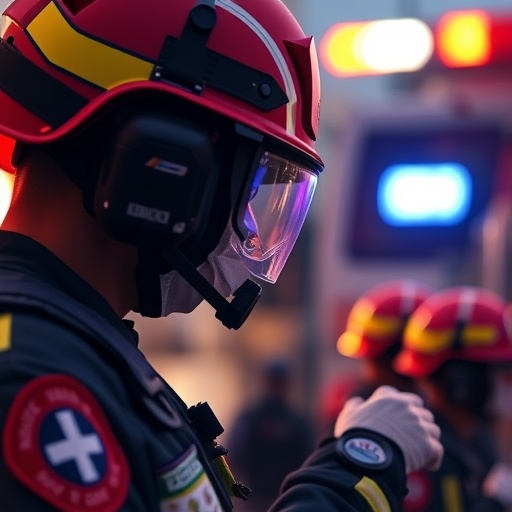
Building upon the extensive research conducted with student-athletes and military personnel, a new frontier is emerging: the recognition and management of traumatic brain injuries within first responder populations. These individuals—including law enforcement officers, firefighters, corrections staff, and emergency medical technicians (EMTs)—face unique occupational hazards that necessitate a tailored approach to TBI evaluation and rehabilitation. The complexity of their roles, combined with the possibility of prior sports or military-related injuries, challenges clinicians and researchers to refine diagnostic and therapeutic protocols suited to this demanding workforce.
The driving force behind this emergent focus is an international cohort of nearly sixty experts who convened at The Ohio State University to forge evidence-based guidelines most suitable for recognizing, managing, and facilitating the return to duty of first responders who have sustained brain injuries. This landmark initiative involved dissecting six critical domains: institutional policy, injury prevention strategies, detection challenges, clinical diagnosis and treatment, mental health surveillance, and structured reintegration into the workforce, comprehensively addressing the multifaceted nature of TBI in these professionals.
Jaclyn Caccese, an associate professor at Ohio State’s School of Health and Rehabilitation Sciences (HRS), emphasizes the public safety implications of prioritizing brain health among first responders. Working shoulder-to-shoulder with co-host James Oñate—who bridges clinical expertise as interim director of HRS and the College of Medicine—this initiative situates itself at the nexus of neurological science and occupational health, aiming to bolster not only physical recovery but also cognitive functionality and quality of life for injured personnel.
The workshop culminated in a consensus-building process, with researchers sharing data and voting on a comprehensive set of recommendations. These guidelines, slated for early publication in the Journal of Head Trauma Rehabilitation, promise to standardize clinical pathways and workplace practices surrounding TBI in first responders. The data informing these conclusions paints a stark picture: an estimated 60% of law enforcement and corrections officers have suffered at least one TBI across their lifetime, with 17% incurring these injuries in the line of duty. Firefighters report even higher prevalence, while data gaps persist regarding EMTs, underscoring the urgent need for expanded epidemiological research.
The conference’s revelations underscore the inadequacy of treating first responders as a monolithic group. As Oñate articulates, “We’re going to stop lumping first responders together,” recognizing the heterogeneity of exposure risks and injury manifestations among different professional subsets. This paradigm shift lays the groundwork for nuanced approaches that respect the distinct operational realities of each cadre.
Survey data from Ohio law enforcement officers further elucidate the link between head injuries and mental health sequelae. Analysis reveals that 74% of respondents reported at least one lifetime head injury, with 30% occurring occupationally. More crucially, these injuries correlate with heightened rates of post-traumatic stress disorder and depressive symptomatology, highlighting an often-overlooked facet of TBI’s impact on psychological well-being and functional capacity in high-stress professions.
Among the core principles shaping forthcoming guidelines are the standardization of TBI recognition and treatment methodologies, alongside rigorous assessment frameworks to determine readiness to resume duty. There is pronounced consensus on safeguarding first responders from punitive repercussions when reporting or recovering from brain injuries—a consideration paramount in cultures where a “mission-first” ethos can suppress disclosure and complicate care pathways.
Injury prevention also features prominently, particularly in designing training protocols that mitigate exposure to blast injuries and blunt force trauma. Equally, the education of institutional leaders, frontline personnel, families, and healthcare providers constitutes a linchpin of this initiative, aimed at dismantling stigma, raising awareness about TBI prevalence, and elucidating the potentially lingering effects of untreated or undertreated brain trauma.
The interplay between personal experiences and scientific inquiry adds human dimensions to the discourse. Panel discussions involving law enforcement officers who sustained TBIs reveal a spectrum of debilitating symptoms, from double vision and dizziness to chronic migraines, memory deficits, speech difficulties, and transient paralysis. These firsthand accounts elucidate the complexity of navigating recovery amid occupational pressures and illuminate systemic gaps in support structures—ranging from medical care obstacles to the tragic consequences of job loss following injury.
The involvement of first responders in the working groups attests to the initiative’s commitment to realism and practicability. Their perspectives ensure that recommended policies resonate with existing workplace cultures and operational exigencies, increasing the likelihood of successful adoption and implementation.
Looking beyond TBIs, researchers such as Oñate are expanding investigations into musculoskeletal health, physical performance metrics, and cardiovascular wellness within first responders, aiming to establish a comprehensive health profile for this vital yet vulnerable population. Elevated evidence standards and improved communication strategies remain priorities to align scientific findings with community needs effectively.
This pioneering endeavor has garnered significant support from the Department of Defense’s Traumatic Brain Injury and Psychological Health Research Program and Ohio State’s academic infrastructure, including the Center for Brain Injury Recovery & Discovery. The collaborative engagement between government agencies, academic scientists, and first responder stakeholders marks a decisive step toward transforming occupational health paradigms for those who serve at the frontline of public safety.
In essence, this emerging framework situates brain health not merely as an individual medical concern but as a critical factor in workforce readiness and societal well-being. By elevating the scientific rigor around TBI recognition and management in first responders, it lays a foundation for policy reform, enhanced clinical training, and, ultimately, safer communities served by empowered, well-supported frontline professionals.
News Publication Date: Expected early next year (from March 2024 conference)
Web References:
– Journal of Head Trauma Rehabilitation: https://journals.lww.com/headtraumarehab/pages/default.aspx
– Ohio State University Faculty Directory for Jaclyn Caccese: https://hrs.osu.edu/faculty-and-staff/faculty-directory/caccese-jaclyn
– Ohio State University Faculty Directory for James Oñate: https://hrs.osu.edu/faculty-and-staff/faculty-directory/onate-jimmy
– Ohio State Human Performance Collaborative: https://hpc.osu.edu/
– Center for Brain Injury Recovery & Discovery: https://cbird.osu.edu/
– Related News Report on Law Enforcement TBI Study: https://news.osu.edu/in-law-enforcement-a-link-between-head-injuries-and-depression-ptsd/
Cite Scienmag News
Cassandra Pierce. (April 6, 2026). Establishing Care Standards for Brain Injuries in First Responders. Scienmag. https://scienmag.com/establishing-care-standards-for-brain-injuries-in-first-responders/
Cassandra Pierce. "Establishing Care Standards for Brain Injuries in First Responders." Scienmag, 6 April 2026, https://scienmag.com/establishing-care-standards-for-brain-injuries-in-first-responders/. Accessed 5 September 2026.
Cassandra Pierce. "Establishing Care Standards for Brain Injuries in First Responders." Scienmag. April 6, 2026. https://scienmag.com/establishing-care-standards-for-brain-injuries-in-first-responders/


