

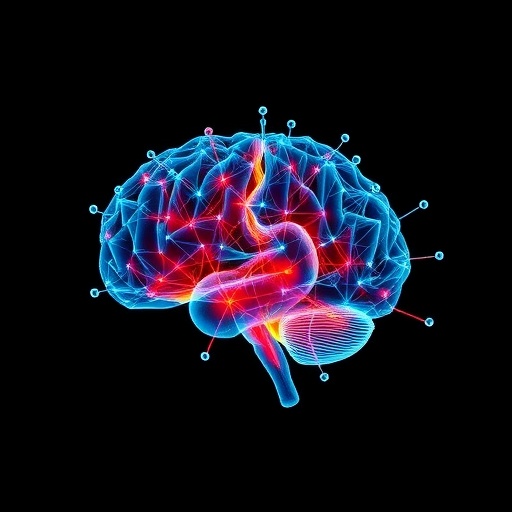
In a groundbreaking exploration into the intersections of neuroscience, psychiatry, and oncology, a recent study illuminates how the brain’s intricate functional networks underlie the rapid antidepressant effects of esketamine administered during the perioperative period in breast cancer patients. This pioneering research leverages cutting-edge resting-state functional magnetic resonance imaging (fMRI) alongside advanced graph theory methodologies to unravel the neural correlates predictive of esketamine’s efficacy, offering new hope and mechanistic insights into mood disorder interventions within vulnerable populations.
Depression remains a pervasive comorbidity among breast cancer patients, compounding the physical and psychological burdens during treatment. The urgency for effective, fast-acting antidepressant therapies intensifies in the perioperative context, where patients confront not only the trauma of cancer diagnosis but also the acute stress of surgery and recovery. Esketamine, an N-methyl-D-aspartate (NMDA) receptor antagonist, has been championed for its rapid onset of antidepressant action, contrasting with conventional serotonergic agents that often require weeks to manifest efficacy. However, the neural substrates mediating these swift mood improvements remained elusive until now.
Utilizing a double-blind randomized controlled trial design, the study enrolled breast cancer patients slated for surgical intervention, administering esketamine or placebo during the perioperative timeframe. Participants underwent resting-state fMRI scans both prior to and following esketamine administration. This imaging modality captures spontaneous brain activity by measuring blood oxygen level-dependent (BOLD) signals, providing a window into intrinsic functional connectivity. Such imaging is invaluable for detecting alterations in brain network topology linked to psychiatric disorders and pharmacological modulation.
The authors employed graph theory, a mathematical framework adept at characterizing the complex web of brain connectivity. By conceptualizing the brain as a network composed of nodes (distinct brain regions) and edges (functional connections), graph metrics such as modularity, centrality, and efficiency were extracted. These metrics furnish detailed quantifications of how well information is integrated or segregated across networks, illuminating alterations in brain organization that might underpin clinical responses.
Crucially, the study identified specific alterations within key brain networks implicated in emotional regulation, cognitive control, and affective processing. Modulations in the default mode network (DMN), the salience network, and prefrontal-limbic circuits emerged as significant correlates of esketamine’s antidepressant effect. The DMN, often hyperactive in depressive states and linked to rumination, displayed reconfiguration patterns suggesting normalization post-treatment. Similarly, the salience network, involved in detecting and filtering relevant stimuli, showed connectivity adjustments predictive of mood improvement.
Importantly, the research went beyond correlation to predictive modeling, demonstrating that baseline functional connectivity profiles could forecast individual patient responses to esketamine. This prognostic capacity heralds personalized therapeutic approaches, whereby neuroimaging biomarkers guide clinical decision-making, optimizing treatment efficacy and minimizing unnecessary exposure to the drug.
Mechanistically, these findings align with the hypothesis that esketamine induces neuroplastic changes, rapidly recalibrating dysfunctional circuits implicated in depression. By transiently inhibiting NMDA receptors, esketamine facilitates glutamatergic signaling cascades, including enhanced synaptic potentiation and dendritic spine growth in the prefrontal cortex. The observed network-level modifications likely reflect these synaptic adaptations manifesting at a systems neuroscience scale.
This study also addresses the unique challenges faced by breast cancer patients, who often endure compounded neuropsychological distress stemming from diagnosis, chemotherapy, and surgical stress. The identification of neurofunctional predictors of antidepressant response in this context not only enhances mechanistic understanding but also opens avenues for integrating neuropsychiatric care seamlessly within oncology protocols.
Moreover, by focusing on the perioperative period, the research highlights a critical yet underexplored therapeutic window wherein rapid-acting antidepressants like esketamine may exert maximal benefit. Surgery constitutes a pronounced physiological and psychological insult, and mitigating depressive symptoms during this phase could profoundly influence recovery trajectories and long-term quality of life.
While the findings are compelling, the study acknowledges limitations including sample size constraints and the need for longitudinal follow-up to ascertain the durability of brain network changes and clinical outcomes. Future research directions may encompass larger cohorts, multi-center trials, and integration of multimodal imaging and molecular biomarkers to enrich the neurobiological narrative.
Clinically, this work underscores the transformative potential of integrating neuroimaging and computational neuroscience tools in precision psychiatry. Functional connectomics may soon serve as a cornerstone in tailoring antidepressant strategies, especially amidst complex medical co-morbidities. The capacity to map and modulate brain networks holds promise not only for pharmacological interventions but also for adjunctive neuromodulation techniques.
In sum, this study pioneers a detailed neurofunctional characterization of esketamine’s perioperative antidepressant effects in breast cancer patients. By marrying resting-state fMRI with graph theoretical analysis, the researchers provide a nuanced depiction of the brain network dynamics underlying rapid mood improvement, fostering the emergence of biomarker-driven, individualized mental health interventions in oncological care.
With depression profoundly impacting cancer survival and recovery outcomes, this research marks a pivotal step toward unraveling the neurobiological substrates for targeted, effective treatments. Esketamine’s capacity to swiftly remodel brain connectivity offers a beacon of hope, while emerging computational methodologies illuminate the complex orchestra of neural circuits orchestrating mood, cognition, and resilience amid adversity.
By advancing our understanding of the brain’s functional architecture in the context of cancer and depression, this study not only enriches scientific knowledge but also carries profound implications for clinical practice. The future of psychiatric care for cancer patients may well be shaped by such integrative neuroscience approaches, bringing us closer to a new era where precision antidepressant therapies are informed by the real-time topology of the living brain.
Subject of Research:
Perioperative antidepressant effects of esketamine and their neural correlates in breast cancer patients.
Article Title:
Brain functional network correlates and predictors of the perioperative antidepressant effect of esketamine in breast cancer patients: a double-blind randomized controlled trial using resting-state fMRI and graph theory.
Article References:
Zhu, H., Wei, Q., Xu, S. et al. Brain functional network correlates and predictors of the perioperative antidepressant effect of esketamine in breast cancer patients: a double-blind randomized controlled trial using resting-state fMRI and graph theory. Transl Psychiatry (2026). https://doi.org/10.1038/s41398-026-03929-3
Image Credits: AI Generated


