


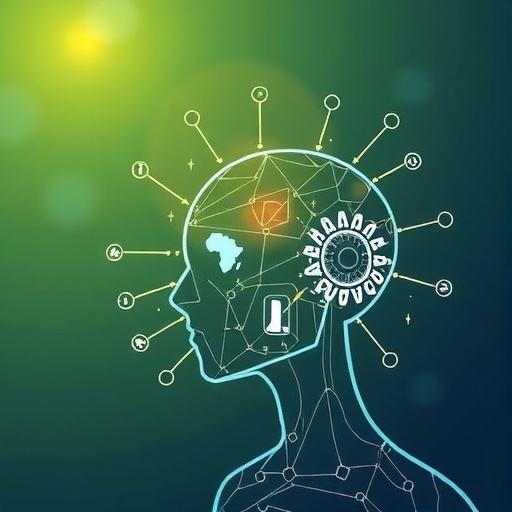
As generative artificial intelligence (GenAI) continues its extraordinary evolution, the landscape of higher education stands at a critical crossroads. A recent groundbreaking study published in Frontiers of Digital Education on September 15, 2025, titled “Preparing Students for an AI-Driven World: Generative AI and Curriculum Reform in Higher Education,” delivers an urgent call for comprehensive academic transformation. This research emphatically underscores how higher education institutions must rapidly realign their curricula and pedagogical approaches to meaningfully prepare students for the multifaceted realities of an AI-permeated future.
At the heart of this innovative study is the recognition that traditional educational models, centered largely on rote memorization and narrowly defined disciplinary boundaries, are increasingly incompatible with the dynamic, interdisciplinary challenges presented by generative AI technologies. To address this, the authors propose a meticulously constructed framework built on three foundational pillars: interdisciplinary AI literacy, a fundamental pedagogical shift toward problem-solving and active learning, and agile curriculum update mechanisms responsive to the rapid innovations characteristic of AI.
The first pillar stresses the necessity of developing tiered, interdisciplinary AI literacy courses that traverse foundational concepts, applied practices, and advanced technical skills. This tiered approach envisions students not only learning the underlying algorithms and architectures powering GenAI but also understanding its ethical ramifications and practical deployment across diverse sectors. The curriculum foundational layer equips learners with core technical competencies such as machine learning fundamentals, neural network design, and data ethics, thereby fostering a comprehensive grasp beyond superficial tool usage.
The second tier delves deeper into applied uses, where students engage with real-world applications of GenAI—ranging from natural language processing and computer vision to automated design and creativity augmentation. Here, the curriculum integrates case studies and project-based learning strategies, encouraging learners to experiment with state-of-the-art tools and frameworks. The most advanced tier focuses on sophisticated and emergent AI techniques, including fine-tuning large language models, reinforcement learning paradigms, and the interpretability of AI decision-making processes. This comprehensive curricular gamut ensures mastery across technical depth, practical experience, and contextual awareness.
However, the study asserts that advancing content alone is insufficient. There is an imperative pedagogical shift from passive knowledge absorption towards active, student-centered learning models. By embedding methodologies such as problem-based learning and interdisciplinary collaboration within the academic culture, students develop critical thinking, creative problem-solving skills, and adaptability—hallmarks of an AI-competent workforce. This evolution moves education away from memorization and test-taking toward dynamic engagement with ill-structured, authentic AI challenges.
Implementing these changes requires flexible mechanisms for curriculum renewal. The study highlights the importance of establishing continuous feedback loops between academia and industry to ensure curricular relevance amid the swiftly changing AI landscape. Modular course design is suggested as a key strategy to permit iterative content updates without necessitating wholesale curricular overhauls. Moreover, fostering student autonomy through self-directed learning opportunities supports lifelong learning—essential for navigating future AI developments.
The research further identifies several critical dimensions that institutions must address to facilitate effective GenAI integration into educational curricula. Faculty development emerges as a central focus: educators require comprehensive training programs to build AI literacy themselves and to adopt innovative teaching paradigms. Resource allocation must likewise be recalibrated, involving investments in updated lab facilities, AI software tools, and infrastructure capable of supporting sophisticated experimental learning.
Ethical considerations occupy a pivotal role throughout the study. The pervasive influence of GenAI raises profound questions about bias, privacy, and academic integrity that demand proactive institutional policies. As AI exhibits inherent risks of perpetuating systemic bias and privacy violations, curriculum frameworks must embed ethics education explicitly and rigorously. Furthermore, assessment models necessitate redesign to prioritize higher-order cognitive skills such as analysis, synthesis, and evaluation—as contrasted with traditional fact-recall examinations—which better reflect the competencies required in AI-augmented professional environments.
Maintaining academic honesty in the era of GenAI also presents complex challenges. The authors argue for a multifaceted approach, combining technological detection tools, honor codes adapted for digital contexts, and pedagogical designs that minimize opportunities for AI-generated plagiarism. Such approaches should encourage genuine learning and creativity while mitigating abuse of generative technologies.
In outlining future research pathways, the article advocates for longitudinal studies to evaluate the effectiveness of curriculum reforms and pedagogical changes in diverse institutional contexts. Moreover, interdisciplinarity is emphasized further, with calls to integrate cognitive science, social sciences, and humanities perspectives into AI literacy education, thereby equipping students to navigate AI’s societal and cultural impacts with nuance and empathy.
Ultimately, the study conveys an overarching sense of urgency. Educational institutions worldwide confront an unprecedented imperative: to proactively harness GenAI’s potential while embedding ethical, equitable, and adaptive principles. This demands bold leadership, sustained investment, and courageous curricular innovation. For students to thrive in an increasingly AI-driven global economy, higher education must evolve from a static repository of knowledge to an agile, interdisciplinary incubator of critical insight, ethical judgment, and creative problem-solving.
As this research vividly illustrates, the future of education and the future shaped by AI are inextricably linked. By reimagining curricula to embed generative AI at their core, universities can empower generations of learners to not just survive but flourish amid technological disruption, contributing meaningfully to a more equitable and innovative society.
News Publication Date: 15-Sep-2025
Web References: 10.1007/s44366-025-0067-6
Cite Scienmag News
Courtney Benton. (November 15, 2025). Equipping Students for an AI-Powered Future: Generative AI Sparks Curriculum Innovation in Higher Education. Scienmag. https://scienmag.com/equipping-students-for-an-ai-powered-future-generative-ai-sparks-curriculum-innovation-in-higher-education/
Courtney Benton. "Equipping Students for an AI-Powered Future: Generative AI Sparks Curriculum Innovation in Higher Education." Scienmag, 15 November 2025, https://scienmag.com/equipping-students-for-an-ai-powered-future-generative-ai-sparks-curriculum-innovation-in-higher-education/. Accessed 4 September 2026.
Courtney Benton. "Equipping Students for an AI-Powered Future: Generative AI Sparks Curriculum Innovation in Higher Education." Scienmag. November 15, 2025. https://scienmag.com/equipping-students-for-an-ai-powered-future-generative-ai-sparks-curriculum-innovation-in-higher-education/


