


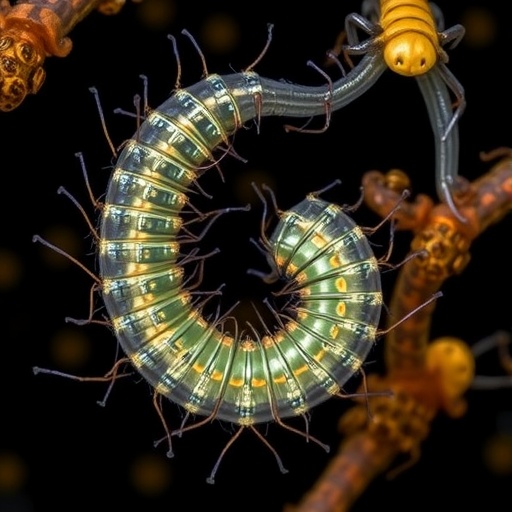
In the intricate tapestry of ecosystems, entomopathogenic nematodes (EPNs) weave a crucial thread, occupying a unique niche within trophic dynamics. These microscopic, soil-dwelling roundworms are renowned for their relationship with insects, acting as natural biocontrol agents against various pests. Recent research conducted by Adeshina et al. reveals the distribution of these nematodes across selected insect species in the Osogbo local government area of Osun State, Nigeria. This groundbreaking study illuminates not only the prevalence of EPNs but also their potential application in sustainable agriculture.
EPNs thrive in diverse habitats, showcasing remarkable adaptability to different environmental conditions and host insects. Their life cycle begins when these nematodes seek out insect hosts, often utilizing chemical cues to locate potential prey. Upon finding a host, EPNs penetrate the exoskeleton and enter the insect’s body, where they release symbiotic bacteria that rapidly multiply, leading to the host’s demise. Understanding the distribution of these nematodes is vital, as it opens doors to utilizing them as sustainable pest management solutions in agriculture.
The study focuses on specific insect species prevalent in the Osogbo region, providing vital insights into the ecological roles played by EPNs. The targeted insect species were chosen based on their economic significance and vulnerability to pest outbreaks, making the research particularly relevant for local farmers. As crop yields remain threatened by invasive pest species, the investigation into EPN distributions serves as a beacon of hope for regenerative agricultural practices.
One of the standout findings of the research is the correlation between soil characteristics and nematode distribution. The study reveals that certain soil types, moisture levels, and organic matter content significantly influence the presence of EPNs. This relationship underlines the importance of soil health in supporting biodiversity and raises awareness of the need for sustainable land management practices. Healthy soil, rich in organic materials, not only supports EPNs but also enhances overall ecosystem services.
Furthermore, the research indicates that climate factors, including temperature and rainfall patterns, play a crucial role in shaping EPN populations. As climate change continues to affect weather patterns globally, understanding these dynamics becomes increasingly critical. The findings highlight the importance of adapting agricultural practices to fit the evolving climate, thereby ensuring that crucial biocontrol agents like EPNs can thrive and support pest management efforts.
In addition to enhancing agricultural sustainability, this study also contributes to the broader understanding of biodiversity in Nigeria. The country, rich in diverse ecosystems, faces numerous environmental challenges, including habitat loss and degradation. By uncovering EPN distributions, researchers are contributing to efforts aimed at conserving biological diversity and promoting ecosystem resilience. The findings emphasize the interconnectedness of species and the need for maintaining ecological balance to support agricultural and environmental health.
While the study primarily focuses on nematodes in crop pest management, the implications extend beyond agriculture. EPNs play a significant role in natural ecosystems by regulating insect populations, thereby maintaining food webs and supporting species diversity. This research serves as a reminder of the invaluable role that microorganisms, including nematodes, play in ecological health and sustainability.
The findings from Adeshina et al. offer an optimistic outlook for integrated pest management strategies. By harnessing the natural abilities of entomopathogenic nematodes, farmers can reduce their dependency on chemical pesticides, promoting a healthier environment for both crops and the surrounding ecosystems. In turn, this reinforces the need for continued research into biological control methods as viable alternatives to synthetic chemicals that often lead to environmental degradation.
Moreover, as the interest in organic farming rises, the study’s insights into EPN distributions could be pivotal in developing organic pest management systems. The ability to identify which nematodes are present in local insect populations allows for tailored pest management strategies that align with organic farming standards. This not only fosters sustainable agriculture but also engages consumers who are increasingly concerned with the environmental impact of their food choices.
On a broader scale, awareness and education surrounding the use of entomopathogenic nematodes can inspire new generations of ecologists and agricultural scientists. As students and professionals alike become more attuned to the benefits of biological pest control, the potential for innovation in sustainable practices grows exponentially. This wave of interest can lead to new discoveries and methodologies, propelling research into the realm of ecosystem services offered by these tiny organisms.
The implications of this research are profound, urging stakeholders—ranging from local farmers, policymakers, to researchers—to consider the role of biodiversity in agricultural productivity and sustainability. As we further our understanding of entomopathogenic nematodes and their function in ecosystems, we unlock pathways toward enhancing agricultural resilience in the face of evolving environmental challenges.
Adeshina et al.’s investigation into EPNs interjects a refreshing chapter in entomological research and sustainable practices in Nigeria. Their contributions resonate beyond local borders, inspiring a global audience to appreciate and incorporate the benefits of these organisms into agricultural frameworks. A newfound recognition of the positive impacts of biodiversity and biocontrol agents like EPNs must take center stage in global discourses on food security and sustainable agriculture.
As we contemplate the future, the studies that shine light on our natural allies in pest control emphasize the importance of a harmonious relationship between agriculture and biodiversity. By championing practices that encourage natural pest regulation through EPNs, we can work toward a model of agriculture that thrives in sync with the surrounding environment, establishing a foundation for future generations to cultivate resilience and sustainability.
The ongoing research and excitement surrounding entomopathogenic nematodes promise a hopeful path toward enhancing not only productivity in Osogbo but also the ecological integrity of farming systems in Nigeria and beyond. The collaboration between ecologists, agriculturalists, and policymakers will be fundamental in translating these findings into tangible impacts, ultimately enriching our understanding of the delicate balance within agricultural ecosystems.
In examining the nuances of EPN distributions and their ecological roles, it becomes increasingly clear that these minuscule nematodes hold the key to unlocking novel solutions for sustainable pest management and preserving the delicate fabric of biodiversity. The journey of discovery has just begun, and the potential for these organisms to transform our agricultural landscapes into sustainable ecosystems is boundless.
Adeshina, Q.O., Rufai, A.M., Surakat, O.A. et al. Distribution of entomopathogenic nematodes in some selected insect species in Osogbo local government area of Osun state, Nigeria.
Discov Anim 2, 94 (2025). https://doi.org/10.1007/s44338-025-00115-5
Cite Scienmag News
Gavin Prescott. (November 25, 2025). Entomopathogenic Nematodes Found in Insects of Osogbo. Scienmag. https://scienmag.com/entomopathogenic-nematodes-found-in-insects-of-osogbo/
Gavin Prescott. "Entomopathogenic Nematodes Found in Insects of Osogbo." Scienmag, 25 November 2025, https://scienmag.com/entomopathogenic-nematodes-found-in-insects-of-osogbo/. Accessed 4 September 2026.
Gavin Prescott. "Entomopathogenic Nematodes Found in Insects of Osogbo." Scienmag. November 25, 2025. https://scienmag.com/entomopathogenic-nematodes-found-in-insects-of-osogbo/


