

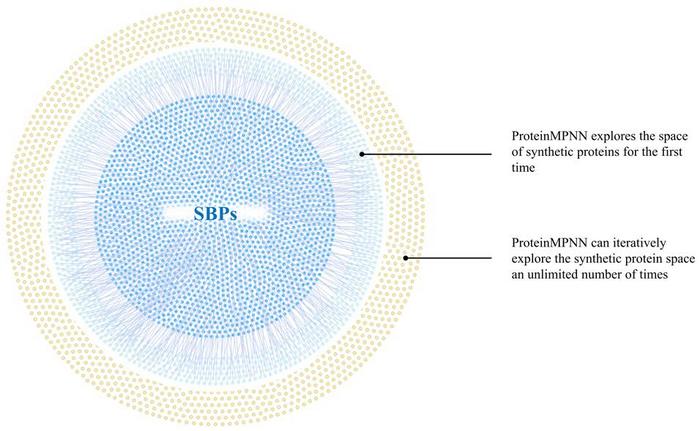
Protein engineering has long faced significant challenges in effectively designing proteins that can play a crucial role in treating various human diseases. The traditional methods such as site-directed mutagenesis have inherent limitations, primarily due to their dependency on the existing physiological properties and the structure of the parental protein. This often limits the exploration of viable therapeutic options. Moreover, directed evolution traditionally allows the exploration of sequence space only within the vicinity of natural proteins, restricting the potential for novel solutions.
The landscape of protein design has been transformed with the advent of advanced computational techniques. Notably, the introduction of deep learning-based frameworks has revolutionized the way researchers can predict protein behavior and design new proteins. One such breakthrough is the ProteinMPNN framework, which has shown remarkable promise in expanding the sequence space available for synthetic binding proteins (SBPs). Unlike traditional approaches that rely heavily on energy functions to predict stability and folding, ProteinMPNN utilizes machine learning methodologies that may enhance the accuracy of these predictions significantly.
Recent research conducted by a team led by Dr. Weiwei Xue from Chongqing University has successfully harnessed the capabilities of ProteinMPNN to explore new territories in protein design. This research was detailed in a publication in the esteemed journal “Frontiers of Computer Science.” The team’s findings suggest that proteins engineered with ProteinMPNN not only outperform those developed through conventional techniques but also exhibit better solubility and stability.
A significant aspect of this research lies in the comprehensive bioinformatics analysis performed as part of the project. The analysis revealed that the novel protein sequences produced by ProteinMPNN exhibited enhanced properties compared to the original synthetic binding proteins. Surprisingly, a finding emerged indicating that sequences derived from monomeric structures demonstrated superior solubility and stability. In contrast, when sequences were designed based on complex structures, they yielded higher calculated binding energies, shedding new insights into the design parameters that govern protein behavior.
Through an exhaustive screening process, the research team identified eight scaffolds characterized by markedly improved solubility and stability. This triumvirate of properties is vital for the functionality of synthetic binding proteins. The identified scaffolds included Neocarzinostatin-based binders, diabodies, CI2-based binders, single-chain variable fragments (scFv), repebodies, Fabs, affilins, and evibodies. Each of these scaffolds presents unique attributes that may help in addressing a variety of clinical challenges, including targeted drug delivery and precision medicine.
The integration of deep learning into protein design is a critical step that could lead to more personalized therapies. By leveraging extensive databases and computational power, ProteinMPNN can identify patterns that are often undetectable by traditional methods. This capability marks a paradigm shift in how scientists view protein engineering and therapeutic development.
Furthermore, the potential impact of these findings extends far beyond mere academic interest. The ability to design synthetic binding proteins with attributes tailored for specific applications could accelerate the development of treatments for diseases that currently have limited therapeutic options. This innovative method could potentially lead to breakthroughs in treating various forms of cancer, autoimmune disorders, and infectious diseases, which can often be resistant to conventional therapies.
In a domain where the need for innovative solutions is ever-present, the ProteinMPNN framework stands out as a testament to the power of interdisciplinary collaboration. The convergence of deep learning technology with molecular biology illustrates the transformative possibilities that arise when expertise from varied fields combine to tackle complex biological challenges. The implications of this research are vast, paving the way for further advancements that future studies might uncover.
As this area of research continues to evolve, the scientific community is keenly aware of both the opportunities and the challenges that lie ahead. The need for rigorous validation and the ongoing refinement of predictive models will be vital in ensuring that the promises of this technology are realized in practical applications. Future studies will undoubtedly focus on expanding the dataset used for training these models, which will be critical in enhancing accuracy and applicability.
In closing, the work by Dr. Weiwei Xue and colleagues represents a bold step forward in protein design. The potential to drastically improve the performance of synthetic binding proteins through an advanced framework like ProteinMPNN signifies a remarkable juncture in biochemical research. Not only does this broaden the horizons for therapeutic applications, but it also holds the promise of ushering in a new era of precision medicine tailored to the unique genetic profiles of individuals. As the field moves forward, the excitement surrounding these advancements continues to grow, with researchers eagerly anticipating the transformative impacts they may yield in the near future.
Subject of Research: Protein design and engineering
Article Title: Expanding the sequence spaces of synthetic binding protein using deep learning-based framework ProteinMPNN
News Publication Date: 15-May-2025
Web References: https://journal.hep.com.cn/fcs/
References: https://doi.org/10.1007/s11704-024-31060-3
Image Credits: Yanlin LI, Wantong JIAO, Ruihan LIU, Xuejin DENG, Feng ZHU, Weiwei XUE
Keywords
Applied sciences, Engineering, Computer science


