

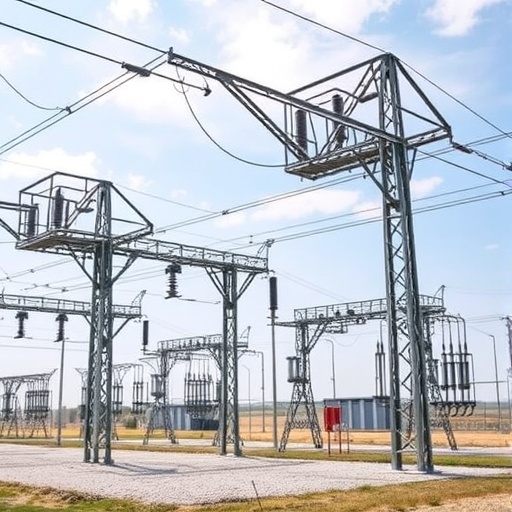
In a groundbreaking study that promises to significantly enhance the resilience of electrical substations against seismic activities, researchers Guo-Dai, Fu, and Li have presented an innovative approach to the design and evaluation of substations equipped with various electrical configurations. This research, which is set to be published in the upcoming edition of Earthquake Engineering and Engineering Vibration, outlines the effects of seismic interactions on substation equipment and proposes improved design methodologies to mitigate potential risks. The research holds profound implications not only for electrical infrastructure but also for the broader contexts of civil engineering and disaster management.
Substations play a vital role in the power distribution network, transforming high-voltage electricity to lower voltage levels suitable for consumer use. However, their structural integrity is often tested during seismic events, which can lead to devastating service interruptions and economic losses. The study meticulously examines the vulnerabilities of substation equipment under seismic loads, presenting a detailed analysis that sheds light on the complex interactions between seismic forces and electrical configurations.
The authors utilized advanced computational models to simulate seismic events and assess the performance of substations. This modeling approach allowed for comprehensive assessments of how equipment responds differently under varying seismic intensities and configurations. The results indicate that traditional design methods often fail to account for the dynamic interactions occurring within multivariate systems, leading to potential failure during actual seismic events. The implications of these findings go beyond mere theoretical insights; they could redefine the standards by which substations are designed and evaluated globally.
One of the hallmarks of this research is its focus on innovative design methodologies. The researchers advocate for a shift away from conventional practices to more dynamic approaches that incorporate comprehensive seismic design criteria. This may involve redefining safety factors as well as utilizing modern materials that exhibit enhanced durability and flexibility. By integrating new technologies such as seismic isolation bearings and energy dissipation devices, substations can be significantly more resilient to seismic activities.
Furthermore, the study emphasizes the importance of multi-disciplinary collaboration in addressing the challenges posed by seismic risks. Engineers, seismologists, and safety experts need to work together to create holistic designs that recognize the interplay between electrical configurations and seismic forces. The findings from Guo-Dai et al. encourage a proactive approach, urging industry stakeholders to prioritize integration and collaboration in the design process.
Field tests in various geologically diverse regions have also been part of the research’s expansive methodology. These tests not only validate the computational models used but also serve as a benchmark for the newly proposed design paradigms. The combination of theoretical modeling and practical experimentation creates a robust framework that enhances the credibility of the research’s findings. This vital connection between theory and practice is what sets this work apart.
As the global frequency of seismic events increases due to geological and climatic changes, the need for resilient power infrastructure becomes more pressing. The potential economic consequences of inadequate substantiation during seismic events range from minor disruptions to catastrophic failures that affect large urban populations. By adopting the recommendations put forth in this research, urban planners and electrical engineers can significantly minimize these risks.
Additionally, the authors addressed the regulatory implications of their findings. Current building codes may not sufficiently address the complexities associated with electrical configurations under seismic loading. This research calls for a reevaluation of existing guidelines, highlighting the need for policies that reflect the realities of modern infrastructure requirements. By influencing policy and regulatory frameworks, this research could catalyze a much-needed evolution in industry standards.
Another key aspect of the research is its emphasis on educational outreach. The authors recognize that industry professionals need continuous education and training to adapt to the evolving challenges presented by seismic risks. As a result, they advocate for the development of comprehensive training programs that incorporate the latest findings and design methodologies in seismic engineering for substations. This will ensure that current and future engineers are equipped with the knowledge necessary to design resilient systems.
Public awareness of seismic risks and the respective infrastructure’s preparedness is crucial. This study underscores the significance of community engagement and communication regarding electrical resilience. By informing communities about the measures being taken to enhance the safety and robustness of their electrical infrastructure, stakeholders can build trust and foster a greater public understanding of the importance of resilient structures.
In conclusion, Guo-Dai and his colleagues have made substantial contributions to the field of seismic engineering, specifically in the domain of electrical substations. Their work highlights the importance of rethinking and redesigning critical infrastructure assets to withstand the increasing threat of seismic events. The implications of this research extend beyond mere academic interest; they offer practical solutions that pave the way for a more resilient and secure future.
The outcomes of this innovative study are a clarion call for urgent action among design professionals, urban planners, and policymakers alike. With the recommendations grounded in extensive research and practical validation, the opportunity to significantly improve the safety and reliability of electrical substations presents itself. Communities worldwide stand to benefit from these advancements, making this research an essential catalyst for progress in the sphere of seismic resilience.
As we move forward, it is essential that this research initiates broader discussions about infrastructure preparedness. Ongoing advancements in engineering and materials science will undoubtedly play a crucial role in shaping how we design and implement resilient systems capable of standing firm in the face of nature’s unpredictability. Adaptation and innovation will be the keys to safeguarding our electrical systems and, by extension, our communities.
This study is expected to spark not only conversations but also actionable plans to integrate these newly defined methodologies into the standard practice of engineering. The future of electrical substations, made resilient against seismic threats, is not just an aspiration—it is becoming an attainable reality.
Subject of Research: Seismic interaction and design methodologies for electrical substations.
Article Title: Seismic interaction and improved design method of substation equipment with multiple electrical configurations.
Article References:
Guo-Dai, E., Fu, X., Li, G. et al. Seismic interaction and improved design method of substation equipment with multiple electrical configurations.
Earthq. Eng. Eng. Vib. 24, 565–581 (2025). https://doi.org/10.1007/s11803-025-2321-9
Image Credits: AI Generated
DOI: 10.1007/s11803-025-2321-9
Keywords: seismic resilience, electrical substations, design methodology, disaster management, engineering collaboration.


