


In an era defined by pressing environmental challenges, the quest for efficient water treatment methodologies has never been more critical. A recent study conducted by researchers Muchaonyerwa, Oyawoye, and Odindo delves into innovative solutions for treating wastewater, particularly focusing on the effluent from anaerobic baffled reactors (ABR). This research highlights the remarkable potential of the aquatic plant Lemna minor, commonly known as duckweed, in removing nitrogen and phosphorus from contaminated water bodies. Furthermore, the study explores the fertilizing potential of biomass generated from this treatment process, especially regarding its application in ryegrass production.
As nitrogen and phosphorus nutrients accumulate in water bodies, they lead to eutrophication, a detrimental process characterized by excessive algal blooms that can severely affect aquatic ecosystems. The challenge lies in effectively removing these nutrients from wastewater before it returns to natural water systems. Traditional wastewater treatment methods often fall short, not just in efficiency but also in sustainability. This is where the study of Lemna minor offers a transformative approach.
Lemna minor stands out due to its rapid growth rate, minimal resource requirements, and ability to thrive in a range of aquatic environments. This small, floating plant can absorb significant amounts of nitrogen and phosphorus, making it an ideal candidate for bioremediation strategies. The researchers utilized an anaerobic baffled reactor, which allows for a more controlled and efficient biological treatment process. It provides a conducive environment for the anaerobic digestion of organic matter, thus producing effluent rich in nutrients that can then be treated using Lemna minor.
The study’s findings demonstrate that Lemna minor can significantly reduce nitrogen and phosphorus levels in ABR effluent, achieving removal efficiencies that are commendable compared to conventional treatment methods. This results from the plant’s prolific biomass production, which serves as a sink for excess nutrients. Researchers observed that, over a specified duration, Lemna minor thrived in the ABR effluent, showcasing its capacity to not only survive but flourish in nutrient-rich conditions. The biomass generated from this process holds immense potential, and the study further investigates its value as a fertilizer.
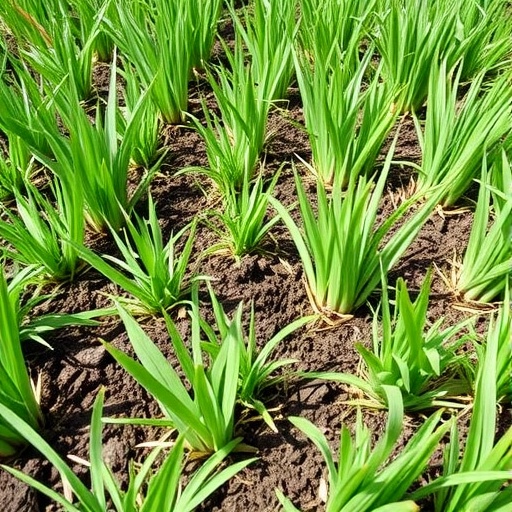
The implications of this research extend beyond mere nutrient removal. By exploring the fertilizer potential of the duckweed biomass, the researchers identified that it could be utilized to enhance ryegrass production. Ryegrass, a key forage and turfgrass species, benefits from nutrient-rich fertilizers. Incorporating duckweed biomass into agricultural practices can provide an eco-friendly and sustainable alternative to conventional synthetic fertilizers that often lead to soil degradation and water pollution.
To assess the fertilization effectiveness, the researchers conducted field trials where ryegrass was cultivated using varying amounts of duckweed biomass. The results were compelling, indicating that the addition of duckweed improved not only the yield of ryegrass but also its nutritional profile. Higher nitrogen and phosphorus levels in the soil, complemented by the organic matter contributions from duckweed, resulted in robust plant growth, enhanced root systems, and increased resilience against pathogens.
Furthermore, this study posits a significant reduction in the reliance on chemical fertilizers, which is crucial in transitioning towards sustainable agricultural practices. The environmental burden associated with synthetic fertilizers, including greenhouse gas emissions from their production and the leaching of nutrients into water systems, can be substantially mitigated. By repurposing waste products from wastewater treatment, this research underscores an innovative circular economy approach that promotes resource recovery while addressing pressing environmental concerns.
In addition to the environmental benefits, the economic feasibility of using Lemna minor as a treatment and fertilization alternative offers real-world applicability. The cultivation of duckweed requires vastly fewer resources compared to conventional crops. Its rapid growth cycle allows for multiple harvests within a single growing season, providing farmers with a consistent supply of organic fertilizer. This could significantly reduce costs associated with chemical fertilizers, leading to an economically sustainable farming model that benefits both producers and consumers.
The researchers highlight the necessity of further fieldwork to optimize conditions for maximizing nitrogen and phosphorus removal by utilizing Lemna minor in various environments. Future studies should explore the interactions of duckweed with different wastewater types and the potential for symbiotic relationships with other aquatic plants to enhance bioremediation outcomes. They advocate for a more integrated approach, combining advanced treatment technologies with biological systems to ensure a comprehensive solution for nutrient management.
Amidst the growing urgency of climate change and environmental degradation, the sustainable strategies outlined in this research stand to provide viable solutions. By transforming wastewater treatment through the use of Lemna minor, we can envisage a future where agricultural practices and wastewater management are not opposing forces but rather intertwined components of a resilient ecosystem.
In conclusion, the work by Muchaonyerwa, Oyawoye, and Odindo serves as a beacon of hope and innovation in addressing two significant global challenges: water pollution and sustainable agriculture. The adaptability of Lemna minor provides a dual benefit by reducing nutrient loads in wastewater while simultaneously creating a valuable resource for crop production. As more research surfaces and these methodologies gain traction, it presents an achievable pathway toward enhanced environmental health and agricultural sustainability.
Muchaonyerwa, P., Oyawoye, A.A. & Odindo, A.O. Nitrogen and phosphorus removal from anaerobic baffled reactor effluent using Lemna minor and fertiliser value of the biomass for ryegrass production.
Environ Monit Assess 197, 1188 (2025). https://doi.org/10.1007/s10661-025-14592-4
Cite Scienmag News
Violet Maxwell. (October 9, 2025). Enhancing Ryegrass Growth: Nutrient Recovery with Lemna. Scienmag. https://scienmag.com/enhancing-ryegrass-growth-nutrient-recovery-with-lemna/
Violet Maxwell. "Enhancing Ryegrass Growth: Nutrient Recovery with Lemna." Scienmag, 9 October 2025, https://scienmag.com/enhancing-ryegrass-growth-nutrient-recovery-with-lemna/. Accessed 3 September 2026.
Violet Maxwell. "Enhancing Ryegrass Growth: Nutrient Recovery with Lemna." Scienmag. October 9, 2025. https://scienmag.com/enhancing-ryegrass-growth-nutrient-recovery-with-lemna/


