


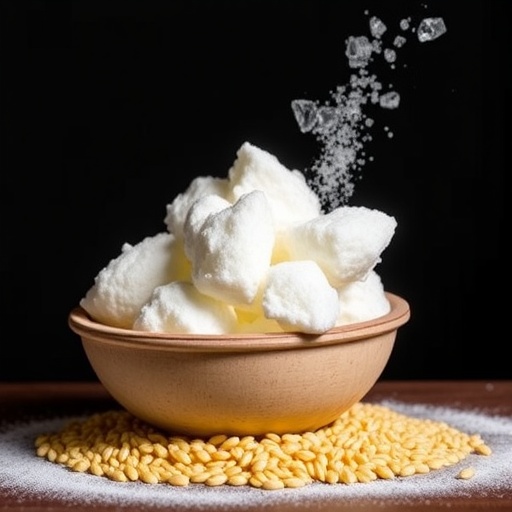
In an era where sustainability is more critical than ever, researchers are constantly seeking innovative ways to optimize resources and minimize waste. One of the most promising directions is the valorization of agricultural by-products, particularly the incorporation of corn distillers grains into polyurethane foams. Recent studies have shed light on how these by-products can enhance the properties of materials, making them more sustainable and efficient.
Polyurethane foams have long been utilized in various industries, including construction, furniture, and automotive manufacturing. They are prized for their versatility, lightweight nature, and excellent thermal insulation properties. However, traditional polyurethane production typically relies on petroleum-based raw materials, which raises environmental concerns. As a result, researchers and manufacturers are increasingly looking towards renewable resources to reduce their carbon footprint.
Corn distillers grains, a by-product from the ethanol production process, have emerged as a valuable resource in this context. Composed primarily of protein, fiber, and carbohydrates, these grains are often underutilized, leading to significant waste. Yet their potential in enhancing the properties of polyurethane foams could revolutionize the material industry. By integrating corn distillers grains, manufacturers can formulate new foams that not only retain their desirable characteristics but also offer improved mechanical properties and reduced environmental impact.
The blending of corn distillers grains with polyurethane foams can increase the material’s durability and resistance to common degradation factors. This enhancement is particularly beneficial for applications where materials are subject to harsh conditions, such as in construction or automotive parts. Additionally, the incorporation of these by-products can potentially lower production costs, offering a dual benefit of increased sustainability and economic feasibility.
Moreover, the use of agricultural by-products can contribute to a circular economy. By reintroducing waste material into the production process, companies can decrease their reliance on virgin materials and reduce overall waste generation. This shift not only aligns with global sustainability goals but also promotes innovation within the industry, pushing boundaries to develop new, eco-friendly products.
Research has indicated that the mechanical properties of polyurethane foams can significantly improve with the right formulation and processing conditions involving corn distillers grains. Factors such as particle size distribution, moisture content, and processing temperature play a crucial role in determining the extent of these improvements. Controlled experiments have shown that optimizing these variables can lead to foams with enhanced compressive strength, which is crucial for many structural applications.
Additionally, the incorporation of corn distillers grains can influence the thermal properties of polyurethane foams. With rising energy costs and an increasing emphasis on energy-efficient building materials, having insulative foams can be a game changer. Research findings suggest that foams containing these grains exhibit better thermal stability compared to conventional variants. This characteristic makes them suitable for insulation applications, further enhancing their value in the construction industry.
In summary, the valorization of agricultural by-products, particularly corn distillers grains, represents a significant step forward in the development of sustainable materials. Emphasizing both economic and environmental benefits, such research aligns well with contemporary trends toward circularity and resource efficiency. By addressing potential challenges such as processing techniques and material compatibility, further advancements in this field could pave the way for broader implementation of these innovative solutions.
As the conversation around sustainability and resource optimization progresses, this research could serve as a precursor to future innovations. The potential that lies in integrating agricultural by-products into various material applications is vast, and while challenges remain, the path forward appears promising. As industries seek to adapt to changing market demands and regulatory frameworks, exploring such avenues will undoubtedly play a vital role in shaping tomorrow’s materials landscape.
Advancements in this area are not only crucial for reducing environmental impacts but also for inspiring a new generation of engineers and scientists. By showcasing practical applications of sustainability, this research paves the way for educational initiatives aimed at promoting green technologies within academia and industry alike. As a result, it fosters a culture of innovation that prioritizes environmental stewardship, fundamentally transforming how materials are conceived and utilized.
Ultimately, the implications of this research transcend the realm of material science; they speak to a broader narrative about responsibility and sustainability in an ever-evolving world. The maximization of agricultural by-products like corn distillers grains holds the potential to reshape industries, drive economic growth, and promote environmental health, all while ensuring quality and performance in materials. This theme resonates deeply as we collectively strive toward building a more sustainable future.
Embracing the power of innovation and sustainability, researchers and industries are positioned to harness resources to their fullest potential. Through continued exploration and commitment to integrating by-products like corn distillers grains into materials, we can forge a path that not only meets the needs of the present but also safeguards the integrity of our planet for future generations.
The journey of valorizing agricultural by-products is just beginning. As we stand on the brink of significant advancements in sustainable materials, the message is clear: embracing sustainability and innovation will define the next chapter in material science. With ongoing research and development focusing on maximizing the potential of such by-products, the future holds much promise for creating materials that are not only functional but also ecologically responsible.
Such developments could lead to a transformative shift in how industries approach material production. Enhanced collaboration between researchers, manufacturers, and policymakers will be crucial in advancing this vision. By fostering an environment that encourages experimentation and adoption of sustainable practices, we can collectively move toward a more resilient and sustainable economy.
In conclusion, as we reflect on the implications of integrating corn distillers grains into polyurethane foams, the insights gained serve as a valuable reminder of the untapped potential within agricultural waste. With each innovation, we step closer to realizing a more sustainable future, where the lines between waste and resource blur, leading to a better, more sustainable world for all.
Bartczak, P., Domańska, A., Ejm, W. et al. Valorization of Agricultural By-Products in Polyurethane Foams: The Role of Corn Distillers Grains in Enhancing Material Properties.
Waste Biomass Valor (2025). https://doi.org/10.1007/s12649-025-03326-9
Cite Scienmag News
Denise Maddox. (September 25, 2025). Enhancing Polyurethane Foam with Corn Distillers Grains. Scienmag. https://scienmag.com/enhancing-polyurethane-foam-with-corn-distillers-grains/
Denise Maddox. "Enhancing Polyurethane Foam with Corn Distillers Grains." Scienmag, 25 September 2025, https://scienmag.com/enhancing-polyurethane-foam-with-corn-distillers-grains/. Accessed 3 September 2026.
Denise Maddox. "Enhancing Polyurethane Foam with Corn Distillers Grains." Scienmag. September 25, 2025. https://scienmag.com/enhancing-polyurethane-foam-with-corn-distillers-grains/


