


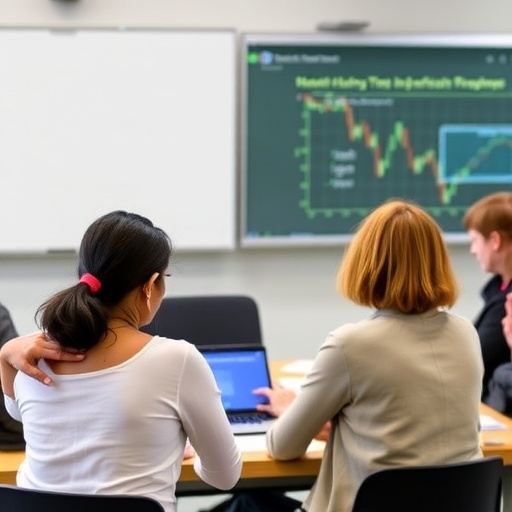
In the evolving field of educational technology, the integration of various teaching methodologies is becoming increasingly paramount. A recent study conducted by Shu and Li sheds light on the application of an improved clustering algorithm in the realm of mixed teaching, a blend that includes both traditional classroom instruction and digital learning. This work is particularly relevant as educational institutions worldwide continue to adapt to the challenges brought forth by technological advancements and the need for flexible educational models.
The mixed teaching paradigm emphasizes the importance of combining face-to-face teaching interactions with digital modalities. Such an approach not only facilitates personalized learning experiences but also enables students to learn at their own pace. However, understanding the contours of effective mixed teaching requires robust analytical frameworks that can assess and optimize learning processes. This is where improved clustering algorithms come to the forefront.
Clustering algorithms, designed to categorize data into meaningful groups, have been effectively utilized across various domains, including but not limited to machine learning, data mining, and artificial intelligence. The study conducted by Shu and Li enhances the traditional methodologies surrounding clustering algorithms, making them more applicable to the educational landscape. By refining these algorithms, the researchers aim to provide educators with powerful tools to analyze student engagement and performance metrics more efficiently.
In this research, the authors crafted an improved clustering technique that identifies distinct learning patterns among students. The analysis encompassed a multitude of variables, spanning demographic information to academic performance records. By employing this enhanced clustering algorithm, educators can effectively identify subsets of students with similar learning needs and experiences, thus paving the way for tailored educational interventions.
Furthermore, the study underscores the critical importance of data-centric approaches in contemporary education. With the digital transformation of learning environments, a wealth of data is generated. This data, when analyzed through refined algorithms, can yield insights into student behaviors and preferences, enabling educators to curate customized learning experiences. The implications for educational technology are profound, suggesting that we are on the cusp of a data-informed teaching revolution.
The findings of Shu and Li also resonate with the concept of learner-centered education. The enhanced clustering algorithm not only assists teachers in understanding their students better but also helps in making informed decisions that can significantly impact student retention and engagement. For example, understanding which students struggle with specific concepts allows for targeted support that can transform their learning experiences.
Moreover, this study lays the groundwork for future research in educational data mining, highlighting how improved clustering can be a pivotal component in developing adaptive learning systems. These systems can continuously learn and evolve based on the real-time data received from users, thus creating a dynamic educational environment that responds to the individual needs of students.
As the education sector moves forward, the challenges of integrating technology in a meaningful way continue to grow. However, research like this offers a beacon of hope, suggesting that with the right analytical tools, educators can harness the power of technology to enrich learning experiences and outcomes. By creating an environment where students flourish, institutions can not only enhance academic performance but also prepare students for a future that demands adaptability and critical thinking.
In conclusion, the work of Shu and Li presents an innovative contribution to the ongoing conversation surrounding educational technology. The application of improved clustering algorithms in mixed teaching contexts not only enhances our understanding of student learning patterns but also suggests a pathway forward in utilizing data to create more effective educational experiences. As we embrace the future of education, it is evident that leveraging technology through intelligent data analysis will be key to unlocking the potential of each learner.
This research piece is a significant stride towards bridging the gap between traditional and modern educational frameworks. Through the lens of enhanced algorithmic analysis, educators are empowered to build responsive, engaging, and ultimately more successful learning environments. Indeed, the journey of educational technology innovation is just beginning, but with studies like these, we are forging ahead into uncharted—and promising—territory.
Shu, L., Li, G. Application of improved clustering algorithm in mixed teaching of modern educational technology. Discov Artif Intell 5, 195 (2025). https://doi.org/10.1007/s44163-025-00393-8
Cite Scienmag News
Denise Maddox. (September 1, 2025). Enhancing Mixed Teaching with Advanced Clustering Algorithms. Scienmag. https://scienmag.com/enhancing-mixed-teaching-with-advanced-clustering-algorithms/
Denise Maddox. "Enhancing Mixed Teaching with Advanced Clustering Algorithms." Scienmag, 1 September 2025, https://scienmag.com/enhancing-mixed-teaching-with-advanced-clustering-algorithms/. Accessed 3 September 2026.
Denise Maddox. "Enhancing Mixed Teaching with Advanced Clustering Algorithms." Scienmag. September 1, 2025. https://scienmag.com/enhancing-mixed-teaching-with-advanced-clustering-algorithms/


