


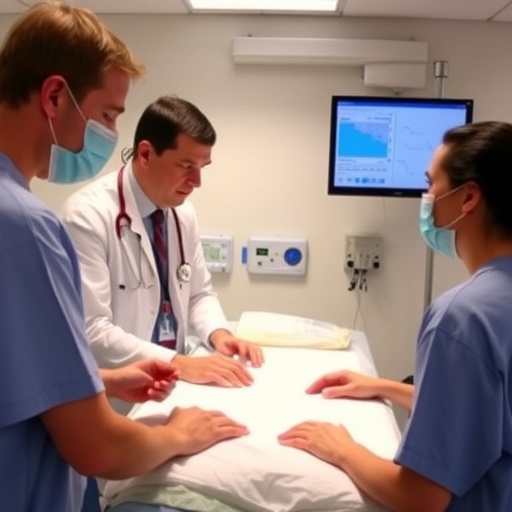
In the realm of modern medical education, the integration of interprofessional collaboration through simulation-based training has emerged as a pivotal educational strategy. The latest research by Almomani, Tobin, Fernandes, and their colleagues introduces an innovative approach aimed at enhancing this training via a reflective learning conversation debriefing model. This groundbreaking framework is designed to improve the learning outcomes of healthcare professionals during interprofessional education (IPE) simulations. The study, set to be published in BMC Medical Education, emphasizes the significance of reflective practice in fostering an enriched educational environment for future healthcare providers.
The interprofessional simulation experiences provide medical, nursing, pharmacy, and allied health students with essential collaborative skills. However, the effectiveness of these simulations largely depends on the quality of the debriefing that follows. Traditional debriefing methods often fail to engage students actively or facilitate meaningful discussions. In response to this limitation, the study proposes a reflective learning conversation model that encourages participants to contemplate their experiences, articulate their thoughts, and engage in critical dialogue. This enhanced engagement is expected to cultivate deeper learning and improve retention of skills acquired during simulated scenarios.
One of the key aspects of the proposed debriefing model is its structured approach to reflection. Participants are guided through a series of conversational prompts that encourage them to express their thoughts on the simulation experience. These prompts are designed to foster a safe and open environment where students can discuss their feelings, identify areas for improvement, and explore the dynamics of interprofessional collaboration. By creating a supportive space, the model aims to break down the barriers that often hinder candid discussions among profession-specific learners.
Moreover, the reflective learning conversation debriefing model actively promotes metacognitive skills among participants. Metacognition, or the awareness and regulation of one’s thought processes, plays a crucial role in learning. By engaging students in reflective conversations, the model encourages them to evaluate their own performance, recognize their learning needs, and seek feedback from their peers. This process not only enhances individual learning but also reinforces the importance of team-based reflection—a vital component in interprofessional healthcare practices.
The significance of teamwork in healthcare cannot be overstated. As patient care becomes increasingly complex, the ability for various healthcare disciplines to collaborate effectively is essential. The new model seeks to instill these collaborative competencies early in a student’s career, ensuring that they are better equipped for the demands of modern healthcare environments. By enhancing communication and teamwork skills through structured debriefing, the research aims to mitigate the risks associated with fragmented care caused by siloed professional training.
As part of the study, the researchers conducted a thorough evaluation of the debriefing model’s effectiveness through qualitative analysis of participant feedback and outcomes. Preliminary results indicate that students who engaged in the reflective learning conversation model reported higher levels of satisfaction with their debriefing experience. They expressed feeling more prepared to handle real-world situations and highlighted the importance of having an avenue to voice their thoughts and learn from their peers. These findings point toward a promising future for IPE and suggest that this model might redefine debriefing practices across various educational programs.
Furthermore, the study contributes to the literature on best practices in interprofessional education. With a growing emphasis on collaborative practice in medical training, the researchers draw upon existing theories of adult learning and reflection to underpin their model. The theoretical framework not only supports the implementation of this innovative approach but also places it within a broader context of advancing healthcare education.
In light of the findings, it is clear that adopting the reflective learning conversation model could lead to significant advancements in simulation-based education. Institutions are encouraged to consider this approach as an integral part of their training programs. By fostering a culture of reflective practice, educators can not only enhance the learning experiences of their students but also ultimately improve patient care outcomes.
The impact of this research extends beyond academia; it speaks to the very core of patient safety and quality care. As healthcare systems worldwide face unprecedented challenges, such as staff shortages, burnout, and increasing patient complexity, preparing future healthcare professionals with the skills to navigate these issues is paramount. By equipping students with robust debriefing methods grounded in reflection and collaboration, the research aligns with global health initiatives aimed at improving delivery systems.
In conclusion, the work of Almomani and colleagues exemplifies the innovative spirit of contemporary medical education. By introducing a reflective learning conversation model for debriefing in interprofessional simulation-based education, they challenge existing paradigms and push the boundaries of how we approach training in healthcare settings. The potential benefits of this model not only promise to elevate educational experiences but also to enhance the effectiveness of healthcare teams in practice. As this research continues to garner attention, it stands as a testament to the power of collaboration and reflection in shaping the future of healthcare education.
Almomani, E., Tobin, J., Fernandes, S. et al. A reflective learning conversation debriefing model for interprofessional simulation based education.
BMC Med Educ 25, 1434 (2025). https://doi.org/10.1186/s12909-025-07765-9
Cite Scienmag News
Courtney Benton. (October 20, 2025). Enhancing Interprofessional Education: Reflective Learning in Simulation. Scienmag. https://scienmag.com/enhancing-interprofessional-education-reflective-learning-in-simulation/
Courtney Benton. "Enhancing Interprofessional Education: Reflective Learning in Simulation." Scienmag, 20 October 2025, https://scienmag.com/enhancing-interprofessional-education-reflective-learning-in-simulation/. Accessed 3 September 2026.
Courtney Benton. "Enhancing Interprofessional Education: Reflective Learning in Simulation." Scienmag. October 20, 2025. https://scienmag.com/enhancing-interprofessional-education-reflective-learning-in-simulation/


