


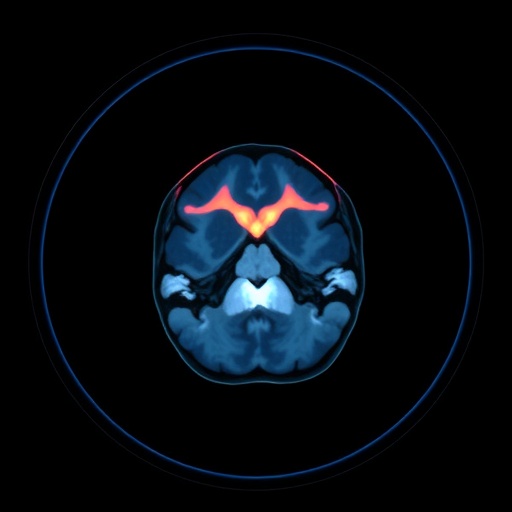
In a groundbreaking study set to be published in the esteemed journal Pediatric Radiology, a team of researchers led by Aldraihem et al. has unlocked significant advancements in the realm of infant magnetic resonance imaging (MRI). This pioneering work explores the efficacy of a Deep Learning-assisted feed-and-wrap technique as a compelling alternative to traditional general anesthesia for infants under 4 months. The implications of this research could be transformative, changing how pediatric care professionals approach imaging in very young patients.
Infants, particularly those who are under 4 months old, pose unique challenges for medical imaging. Their inability to remain still during scanning sessions can often result in blurred images and subpar diagnostic outcomes. Traditionally, general anesthesia has been standard practice for ensuring that these patients remain immobile. However, this approach harbors its own set of risks and complications, which has prompted the search for safer and more efficient alternatives.
The research team utilized state-of-the-art deep learning algorithms in their feed-and-wrap technique. By employing these advanced computational methods, they were able to analyze real-time imaging data, ensuring optimal positioning and minimal movement during MRI scans. This deep learning model was trained on a vast dataset, allowing it to predict the ideal wrap position that minimizes infant motion while delivering high-quality images akin to those obtained under anesthesia.
The feed-and-wrap technique works by using specialized fabric and calming strategies to soothe infants, promoting a state of stillness conducive to clearer imaging. This method capitalizes on the natural calming mechanisms of swaddling while integrating technology to further enhance patient compliance. The novelty lies in how deeply integrated technology can alleviate the need for anesthesia, which is particularly significant for vulnerable populations like infants.
Initial findings suggest that the implementation of the feed-and-wrap technique is not only as effective as general anesthesia but may also enhance overall patient safety. General anesthesia carries a risk of respiratory complications, pharmacological reactions, and extended recovery times. By circumventing the use of anesthetic agents, the deep learning-assisted approach significantly reduces these risks, thus presenting a compelling case for its wider adoption in pediatric radiological practices.
Moreover, the deep learning model was not just a computational tool; it was designed to work dynamically. As the imaging session progresses, it continues to adjust its predictions and recommendations for the optimal wrap position. This allows for real-time corrections, enhancing imaging quality while ensuring the continued safety and comfort of the infant.
Aldraihem and his colleagues contextualized their study within the broader challenges facing pediatric imaging. They highlighted that despite advancements in imaging technology, the integration of innovative operational techniques remains crucial for improving outcomes in sensitive age groups. The intersection of deep learning and practical imaging techniques signifies a groundbreaking leap forward, potentially setting a new standard in how healthcare providers approach MRI preparations.
The research not only opens up new avenues for the treatment of infants but also serves as a framework for future studies. It poses essential questions about how technology can be harmonized with traditional medical practices to improve patient care. The inflection point set by this research could inspire further investigations into the fusion of machine learning, medical imaging, and patient experience, enhancing the quality of care across the board.
Furthermore, this investigation aligns with the increasing shift towards minimizing interventionist approaches in pediatric care. By prioritizing non-invasive techniques, healthcare providers can ensure that young patients are subjected to fewer risks while receiving the necessary diagnostic imaging. The feed-and-wrap technique embodies this philosophy, offering a gentle and effective alternative that potentially enhances infant well-being.
As hospitals increasingly prioritize efficiency and safety, the potential benefits of the deep learning-assisted feed-and-wrap technique become even more pronounced. Imagine a future where infants can undergo vital MRI scans with minimal distress and no pharmacological interventions. This possibility is now on the horizon, thanks to the innovative work of Aldraihem et al. Their findings promise to shift paradigms in pediatric radiology, aligning with broader trends towards patient-centered care.
Moreover, the implications extend beyond individual patient outcomes. This work could significantly impact healthcare policies surrounding pediatric imaging, encouraging institutions to rethink their operational protocols and invest in advanced training for radiologists and technicians. The adoption of such methods could streamline workflows, reduce costs associated with anesthesia, and ultimately create a more supportive environment for both infants and their families during the diagnostic process.
The ripple effects of this study are bound to resonate throughout the medical community. As professionals begin to recognize the potential of integrating deep learning into clinical practices, we may witness an evolution in how practitioners approach not only MRI imaging but also other areas of pediatric healthcare. By fostering an environment where technological innovation meets compassionate care, this research stands as a testament to the ongoing evolution of medical practice.
In conclusion, the work by Aldraihem et al. is not just another study; it represents a pivotal moment in the field of pediatric radiology. By challenging the necessity of general anesthesia through innovative techniques powered by deep learning algorithms, the researchers are paving the way for a future where infants can receive necessary diagnostic imaging safely and efficiently. As these findings make their way into clinical practice, the prospects for improving outcomes in pediatric care appear more promising than ever before.
Aldraihem, A., Almaimani, M., Bayoumi, M. et al. Optimizing infant magnetic resonance imaging efficiency: Deep learning-assisted feed-and-wrap technique versus general anesthesia using an infant magnetic resonance imaging stabilizer in infants under 4 months.
Pediatr Radiol (2025). https://doi.org/10.1007/s00247-025-06437-6
Cite Scienmag News
Harold Sullivan. (November 6, 2025). Enhancing Infant MRI: Deep Learning vs. Anesthesia. Scienmag. https://scienmag.com/enhancing-infant-mri-deep-learning-vs-anesthesia/
Harold Sullivan. "Enhancing Infant MRI: Deep Learning vs. Anesthesia." Scienmag, 6 November 2025, https://scienmag.com/enhancing-infant-mri-deep-learning-vs-anesthesia/. Accessed 4 September 2026.
Harold Sullivan. "Enhancing Infant MRI: Deep Learning vs. Anesthesia." Scienmag. November 6, 2025. https://scienmag.com/enhancing-infant-mri-deep-learning-vs-anesthesia/


