


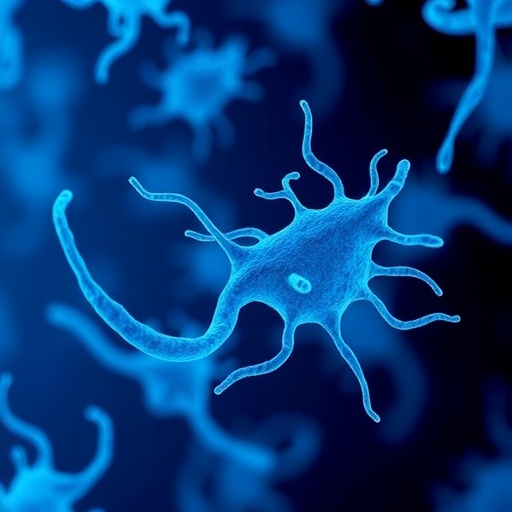
In the relentless battle against antibiotic-resistant bacteria, researchers have taken a significant leap forward by harnessing the power of bacteriophages, viruses that infect and kill bacteria. A recent groundbreaking study has demonstrated how the directed evolution of phages within biofilms can amplify their capacity to target and neutralize the notoriously resilient pathogen Pseudomonas aeruginosa. This advancement not only sheds light on microbial warfare at the microscopic level but also opens promising therapeutic avenues for combating persistent bacterial infections that have long challenged modern medicine.
Biofilms, the complex communities of bacteria encased in a protective matrix, pose a formidable obstacle for traditional antimicrobial treatments, often leading to chronic infections and increased resistance. Within these biofilms, P. aeruginosa thrives, leveraging its structural defenses to evade antibiotics and immune attacks. Recognizing this, scientists focused on evolving bacteriophages directly within these biofilm environments to naturally select for viral strains that could better penetrate and disrupt the bacterial fortress.
The process of directed evolution employed by the researchers mimics natural selection but in a controlled laboratory setting. By repeatedly exposing phage populations to biofilms, the team enriched variants capable of enhanced binding and infectivity. Notably, the evolved phages exhibited superior recognition of lipopolysaccharides (LPS), vital components of the P. aeruginosa outer membrane that serve as key receptors for phage attachment. This increased affinity translates into more efficient bacterial targeting and lytic activity, essential for therapeutic success.
What sets this study apart is the specificity of phage adaptation to biofilm-associated bacterial states, as opposed to planktonic, or free-floating, bacterial cells. Biofilm environments induce genetic and phenotypic changes in bacteria that alter their surface structures, including modifications in LPS profiles. Conventional phages evolved in planktonic cultures often fail to recognize these altered receptors, limiting their efficacy against biofilm-embedded bacteria. By evolving phages within biofilms, the researchers ensured the selection of viral mutations compatible with the unique biofilm-contextual changes, effectively overcoming a critical barrier in phage therapy.
Genomic sequencing of the evolved phages revealed a suite of mutations concentrated in genes encoding tail fiber proteins, which mediate receptor binding. These molecular adaptations highlight the intricate co-evolutionary dance between phages and bacteria, where slight modifications at the nanoscale level yield profound implications for host specificity and infection dynamics. The successful fine-tuning of phage receptor recognition underscores the potential of leveraging evolutionary principles to meet therapeutic challenges in real time.
Beyond molecular insights, this research demonstrated tangible clinical potential. In vitro experiments confirmed that evolved phage populations significantly reduced P. aeruginosa biofilm biomass compared to their ancestral counterparts. Moreover, the evolved phages curtailed bacterial regrowth over extended periods, suggesting sustainable therapeutic effects. These outcomes signal a promising future for phage therapy, particularly for infections where biofilms thwart current antimicrobial interventions.
The implications of this study extend into the realm of personalized medicine. Phage therapy, often criticized for its variable efficacy and narrow host ranges, can be revitalized through directed evolution strategies tailored to patient-specific bacterial strains and biofilm profiles. This adaptive approach may overcome the traditional one-size-fits-all paradigm in infectious disease treatment, shifting towards precision-designed phage cocktails that dynamically counter evolving bacterial defenses.
Importantly, the study navigated potential safety concerns by thoroughly characterizing the evolved phages to ensure no undesirable traits, such as increased lysogeny or horizontal gene transfer capabilities, were acquired throughout the evolutionary experiments. This attention to biosafety reinforces the feasibility of integrating evolved phages into clinical pipelines without exacerbating existing antimicrobial resistance problems.
The decision to focus on P. aeruginosa, a notorious culprit behind hospital-acquired infections and chronic wounds, underscores the urgency and clinical relevance of this work. The World Health Organization lists P. aeruginosa among the top priority pathogens due to its multidrug resistance and capacity to form persistent biofilms. Enhancing phage efficacy against this formidable bacterium could revolutionize treatment paradigms for ventilator-associated pneumonia, cystic fibrosis-related lung infections, and diabetic foot ulcers.
Technological innovations played a critical role in this research. The combination of adaptive laboratory evolution, high-throughput sequencing, and advanced microscopy enabled a comprehensive understanding of the evolutionary trajectories and functional enhancements of phages. This integrated methodology exemplifies the power of converging disciplines—microbiology, evolutionary biology, genomics, and bioengineering—to tackle complex biomedical challenges.
Furthermore, the study contributes to the broader understanding of phage-host interactions within heterogeneous microbial communities. As biofilms represent one of the most common bacterial lifestyles in natural and clinical environments, insights from this research pave the way to explore phage adaptations in diverse ecosystems, such as the human microbiome or environmental biofilms, where bacterial survival strategies differ markedly.
Looking ahead, several critical questions emerge. Can directed evolution protocols be optimized for rapid and scalable production of customized phage therapeutics? What are the long-term evolutionary dynamics when such evolved phages face the adaptive countermeasures of bacteria within the host environment? Addressing these issues will be pivotal in translating laboratory successes into safe and effective clinical applications.
Moreover, this research ignites optimism about circumventing the escalating global threat of antimicrobial resistance. By revitalizing a century-old concept—phage therapy—through modern techniques of synthetic biology and evolutionary engineering, scientists demonstrate that the microbial arms race is not a lost cause but an opportunity for ingenuity-driven intervention.
In summary, the directed evolution of phages within biofilms to enhance Pseudomonas aeruginosa control represents a compelling fusion of evolutionary principles and therapeutic innovation. This study compellingly illustrates that tailoring viral predators to the complex biofilm milieu can dramatically improve their bactericidal performance. As antibiotic pipelines dwindle, such phage-based modalities may soon become indispensable weapons within the antimicrobial arsenal, ushering in a new era of precision-guided, evolution-informed infection control strategies.
Cite Scienmag News
Gavin Prescott. (November 20, 2025). Enhanced Phage Evolution Boosts Pseudomonas Biofilm Control. Scienmag. https://scienmag.com/enhanced-phage-evolution-boosts-pseudomonas-biofilm-control/
Gavin Prescott. "Enhanced Phage Evolution Boosts Pseudomonas Biofilm Control." Scienmag, 20 November 2025, https://scienmag.com/enhanced-phage-evolution-boosts-pseudomonas-biofilm-control/. Accessed 5 September 2026.
Gavin Prescott. "Enhanced Phage Evolution Boosts Pseudomonas Biofilm Control." Scienmag. November 20, 2025. https://scienmag.com/enhanced-phage-evolution-boosts-pseudomonas-biofilm-control/


