

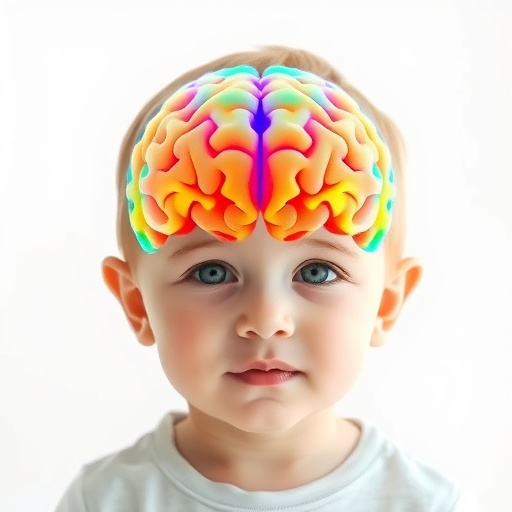
In a groundbreaking study published in Pediatric Radiology, researchers have unveiled a revolutionary deep learning model that dramatically enhances the accuracy of brain age prediction in infants under two years old. This innovative model harnesses myelination and attention mechanisms, optimizing the process of predicting developmental milestones in young children, thereby providing essential insights into their neurological health.
The significance of brain age prediction cannot be overstated. Early detection of abnormal brain maturation can lead to timely interventions, potentially improving outcomes for children at risk of neurodevelopmental disorders. The researchers, led by Dr. M. Li and accompanied by colleagues including J. Liu and M. Yang, have taken a significant step forward in this arena. Their studies indicate that precise brain age assessments could become a staple in pediatric radiology practices in the near future.
Traditionally, brain age assessments have relied heavily on manual evaluations and subjective interpretations of imaging data. Radiologists would assess various brain structures through MRI scans, but these processes are often time-consuming and prone to human error. The advent of artificial intelligence (AI) technologies, particularly deep learning, offers a more reliable and efficient approach. The newly developed model by Li and colleagues leverages advancements in AI to automate the determination of brain age with unparalleled accuracy.
Myelination, the process by which nerve fibers are insulated with a fatty sheath, is crucial for efficient neural communication. In young children, myelination progresses rapidly and is intimately linked to cognitive development. Understanding the phases and rates of myelination can provide vital clues to a child’s neurological status, making it a central focus in the researchers’ model. By integrating this biological process into their deep learning framework, the researchers achieved a more nuanced understanding of brain maturation.
Attention mechanisms, also incorporated into the model, are functions that allow the AI to focus on particular parts of an image. This mirrors the human cognitive process of prioritizing certain stimuli based on their relevance. By employing attention mechanisms, the deep learning model effectively highlights key regions in MRI scans that are more representative of true brain maturity. This dual approach—combining myelination and attention—sets this model apart from existing methodologies.
The research team rigorously trained their model using a vast dataset of MRI scans from infants and toddlers, ensuring that the system learned to recognize patterns associated with normative brain development. The training process involved the model analyzing thousands of scans in varying conditions, allowing it to adapt and improve its predictive capabilities significantly. As a result, the model can now predict brain age with an accuracy that surpasses traditional methods.
The implications of this research extend beyond mere academic interest. Pediatricians and neurologists could soon leverage this technology in clinical settings, enhancing the monitoring of developmental milestones in children. If a child shows discrepancies between their chronological age and predicted brain age, healthcare providers can intervene more proactively, tailoring their approaches to meet individual needs effectively.
Moreover, the potential for such technology to scale is enormous. Using cloud-based systems, various healthcare facilities could have access to this deep learning model, democratizing advanced pediatric care regardless of geographic location. By making sophisticated analysis tools available broadly, the disparities in healthcare access could significantly diminish, leading to better monitoring and care for children across different backgrounds.
Furthermore, the implications of this research might also touch on preventive medicine. When pediatricians are equipped with precise brain age assessments, they can implement early interventions, potentially mitigating the risks for developmental disorders. As brain age forecasting becomes routine, future generations of children may benefit from a healthcare system that prioritizes their developmental trajectories.
The journey of this research doesn’t end with the current model. The research team has plans to refine their model further to cater to specific populations, including premature infants or those with a history of birth complications, who may experience different patterns of brain maturation. As knowledge in this field expands, so too will the capabilities of deep learning in pediatric neuroimaging.
In summary, this innovative research represents a transformative leap in pediatric neurology. By employing myelination and attention-empowered deep learning, the findings herald a new era in brain age prediction for children under two years old. As the medical community begins to adopt these technologies more widely, the benefits for early diagnosis and treatment promise to reshape the landscape of pediatric care.
As with any scientific endeavor, the team acknowledges the need for continued research. They emphasize the importance of validating their model across diverse populations to ensure its robustness and reliability in varied clinical contexts. The horizon for AI-driven medical diagnostics looks promising, with this study paving the way for future discoveries.
In conclusion, the integration of deep learning in evaluating critical aspects of child development stands as a testament to the future of healthcare. As these technologies evolve, they will undoubtedly enhance the standard of care, allowing for early detection and intervention that can change lives.
Subject of Research: AI-driven brain age prediction in infants.
Article Title: Myelination-attention-empowered deep learning model improved brain age prediction in children below 2 years of age.
Article References:
Li, M., Liu, J., Yang, M. et al. Myelination-attention-empowered deep learning model improved brain age prediction in children below 2 years of age.
Pediatr Radiol (2025). https://doi.org/10.1007/s00247-025-06495-w
Image Credits: AI Generated
DOI: 10.1007/s00247-025-06495-w
Keywords: pediatric radiology, deep learning, brain age prediction, myelination, attention mechanisms, neurodevelopmental disorders, MRI scans, AI in healthcare.


