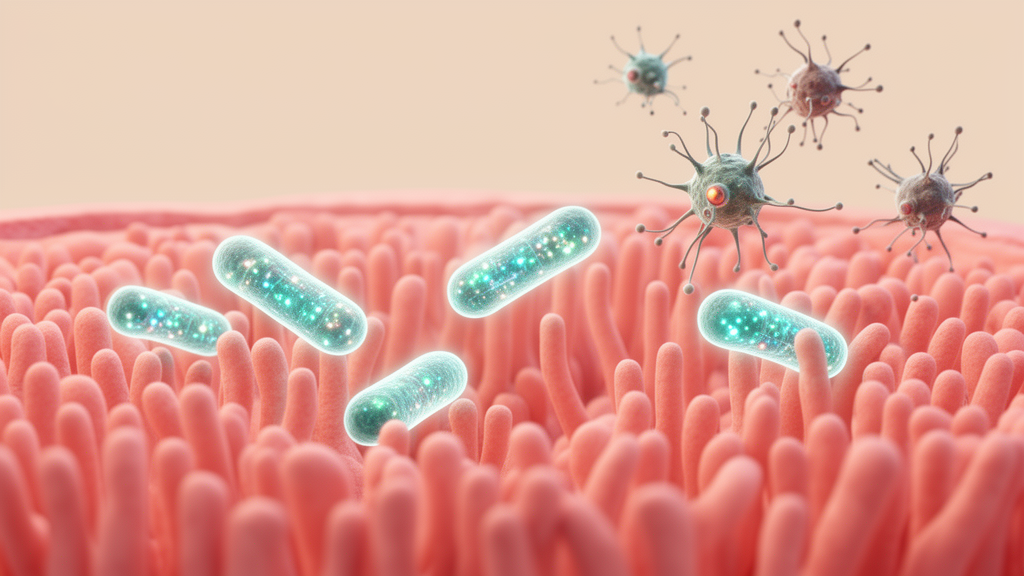
Engineered probiotics could one day serve as living vaccines that are swallowed or sprayed into the nose, priming the immune system at the very surfaces where many pathogens first make contact. That is the central argument of a new Perspective article published on 29 October 2026 in Frontiers in Gastroenterology, in which researchers from Italian institutions lay out a translational roadmap for turning modified probiotic bacteria into clinically testable mucosal vaccine products. The authors, led by Irene Palenca of the Santa Lucia Foundation in Rome together with colleagues at Sapienza University of Rome, Nextbiomics and the University of Naples Federico II, are careful to frame the work as a design framework rather than a demonstrated vaccine.
Most established vaccines are injected and are optimized primarily to induce systemic immunity. Yet many clinically relevant pathogens, from respiratory viruses to enteric bacteria, first encounter the host at gastrointestinal or respiratory surfaces. Mucosal vaccination aims to place immune priming closer to those anatomical entry points, ideally generating secretory IgA antibodies locally as well as systemic responses. Engineered probiotics are attractive candidates for this role because a single living vector could combine mucosal delivery, transient biological persistence, microbial immune signals and programmable antigen presentation within one platform.
The article builds on the authors’ own experimental system, in which the probiotic bacterium Escherichia coli Nissle 1917, widely known as EcN, was modified using a plasmid platform called pAIDA to display SARS-CoV-2 Spike protein on its surface. AIDA-I is the autotransporter machinery that mediates outer-membrane display, and the specific construct, pAIDA1-SP, assigns a programmable surface antigenic identity to a biologically active mucosal chassis. The authors stress that the transferable principle is not the SARS-CoV-2 construct itself but this display logic, which could in principle be adapted to other antigens.
The experimental evidence so far is a bounded proof of concept. In the oral study, repeated administration of the engineered EcN induced systemic anti-Spike IgG together with antigen-specific IgA in stool, intestinal lavage and bronchoalveolar lavage, with antibody avidity increasing over time. In a separate intranasal study, the same construct induced bronchoalveolar IgA and circulating IgG, and pre-immunized mice showed better preservation of lung morphology and lower inflammatory activation after Spike challenge. Anti-Spike IgG in serum and IgA in bronchoalveolar lavage fluid were detectable two weeks after the initial administration and peaked on day 35.
Crucially, the authors draw a sharp line between immunogenicity and protection. The oral study involved no live-virus challenge, so it demonstrates mucosal and systemic immunogenicity but not protection against infection. The intranasal work used a protein-mediated lung injury model rather than infection with replicating SARS-CoV-2, meaning it supports functional biological activity in that model but not antiviral protection or clinical efficacy. The authors also caution that the phrase long-term immunization in one original study title refers to the kinetics of the measured antibody response within the observation period, not to persistence of the bacterial vector itself, which was never directly quantified.
SARS-CoV-2 serves as an informative experimental bridge because, despite its dominant respiratory manifestations, it can involve intestinal epithelial cells and gastrointestinal mucosal immunity. Intestinal epithelial cells express the ACE2 receptor, gastrointestinal symptoms and fecal viral detection are documented, and intestinal mucosal immune responses participate in the host-virus interaction. The authors use the virus not as a surrogate for classical enteric pathogens but as a model illustrating the continuity of mucosal compartments. They argue that the stronger future test will be direct adaptation to bona fide enteric targets such as norovirus, rotavirus, enterotoxigenic E. coli and Shigella, with antigen choice, mucosal correlates of protection and challenge models defined for each pathogen.
A key conceptual contribution is the idea of an effective mucosal antigen dose. For a living vaccine, the administered number of viable bacteria, measured in colony-forming units, and the antigen exposure actually available to immune-inductive sites are not interchangeable. The latter depends on the fraction of bacteria expressing or displaying antigen, antigen density per cell, orientation and surface accessibility, expression stability, antigen degradation, bacterial viability, residence time and access to immune-sampling pathways. The authors propose that product development should report the percentage of antigen-positive bacteria, antigen density, batch-to-batch expression stability, genetic retention without selection pressure and viability after formulation and storage, rather than treating CFU alone as a sufficient potency surrogate.
The gut-associated lymphoid tissue, or GALT, is the immunological target of oral delivery. M cells overlying Peyer’s patches transport luminal material toward subepithelial immune compartments, where dendritic cells and other antigen-presenting cells process antigen and activated T cells support B-cell class switching and differentiation toward IgA-producing plasma cells. But the same pathways carry a risk: repeated intestinal exposure can promote oral tolerance rather than productive vaccination. Antigen dose, localization, duration, bacterial innate signals, inflammatory context and dosing frequency can all shift the balance between immune priming and hyporesponsiveness. An engineered probiotic vaccine should therefore be optimized for an immunogenic exposure window rather than maximal persistence or maximal antigen production.
Safety and containment receive extensive attention. EcN is attractive because it survives gastrointestinal transit, interacts with mucus and shapes dendritic-cell cytokine responses, but the authors emphasize that parental probiotic use cannot be taken as evidence of safety for an engineered vaccine strain. Genetic modification can alter growth, surface properties, metabolism, persistence and host interactions, so each engineered product requires phenotypic re-characterization. EcN also carries the pks/colibactin genomic locus, a potential safety concern; preclinical work has shown that deleting this region preserves growth, gastrointestinal fitness and engineered therapeutic function, supporting chassis de-risking as a rational strategy, though the deletion’s effects on fitness and vaccine performance must be re-evaluated for each product. The current plasmid-based system is a liability for clinical use, and the authors call for stable chromosomal integration, marker-free editing and multilayered biocontainment combining auxotrophy, programmed lysis, environment-responsive kill switches, CRISPR-assisted containment or genetic entanglement. No single mechanism is failure-proof, and the optimal combination has not yet been established for this platform.
The Perspective also situates the platform within a broader comparative landscape. Lactococcus and Lactobacillus systems have extensive preclinical experience, and engineered Lactococcus lactis has a human phase I precedent as an intestinal protein-delivery vehicle, though not as a vaccine efficacy precedent. Gram-negative carriers including probiotic E. coli and Salmonella-derived systems support surface display, secretion or lysis-mediated release, while Bifidobacterium approaches have been used to target antigen toward Peyer’s patches. Non-living platforms such as outer-membrane vesicles avoid bacterial replication and allow directly measurable antigen doses but cannot produce antigen in situ. No head-to-head comparison between pAIDA-EcN and OMV-based delivery has been performed, and the authors claim no superiority. They conclude that several critical quantities remain deliberately unresolved, including the optimal chromosomal insertion site, the numerical relationship between administered CFU and mucosally available antigen, the duration of vector persistence, the horizontal gene transfer frequency and comparative efficacy against non-living carriers. These, they argue, are explicit experimental milestones that must be measured before any claim of clinical translation, since protection requires appropriate pathogen-challenge models and clinical efficacy ultimately requires human trials.
Subject of Research: Engineering probiotic bacteria as living mucosal vaccine vectors, using the pAIDA-E. coli Nissle 1917 system as a proof of concept
Article Title: Engineering probiotics for mucosal vaccination: from the Escherichia coli Nissle 1917 paradigm to a translational vaccine platform
Article References: Palenca, I., Esposito, G., Pesce, M., & Sarnelli, G. (2026). Engineering probiotics for mucosal vaccination: from the Escherichia coli Nissle 1917 paradigm to a translational vaccine platform. Frontiers in Gastroenterology, 5, Article 1980209. https://doi.org/10.3389/fgstr.2026.1980209
Image Credits: AI Generated
DOI: 10.3389/fgstr.2026.1980209
Keywords: engineered probiotics, mucosal vaccination, Escherichia coli Nissle 1917, GALT, secretory IgA, SARS-CoV-2, pAIDA, biocontainment, oral vaccine, intranasal vaccine, genetic stability, live biotherapeutic products
Cite Scienmag News
Kristina Jarvis. (October 29, 2026). Engineered probiotics could teach the gut immune system, framework argues. Scienmag. https://scienmag.com/engineered-probiotics-could-teach-the-gut-immune-system-framework-argues/
Kristina Jarvis. "Engineered probiotics could teach the gut immune system, framework argues." Scienmag, 29 October 2026, https://scienmag.com/engineered-probiotics-could-teach-the-gut-immune-system-framework-argues/. Accessed 31 October 2026.
Kristina Jarvis. "Engineered probiotics could teach the gut immune system, framework argues." Scienmag. October 29, 2026. https://scienmag.com/engineered-probiotics-could-teach-the-gut-immune-system-framework-argues/