

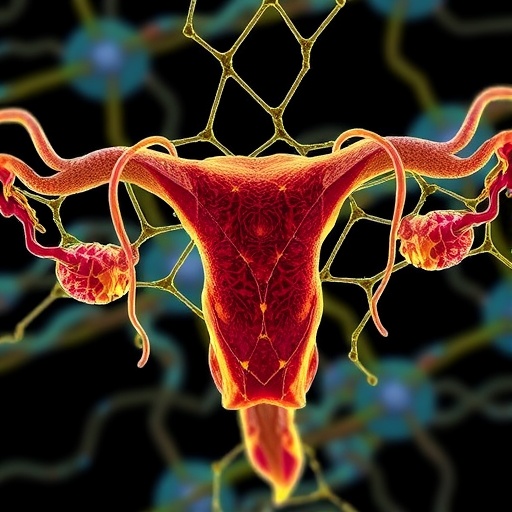
Recent advancements in the field of reproductive health and tissue engineering have illuminated the complex mechanisms underlying various gynecological conditions. One intriguing area of research focuses on endometriosis, a debilitating disorder where the tissue similar to the lining inside the uterus, called endometrium, begins to grow outside the uterus. This abnormal growth can lead to a host of complications, including severe pain, infertility, and other systemic issues. The exploration of innovative therapeutic approaches for managing endometriosis has garnered significant attention in scientific communities, leading to groundbreaking findings.
A frontier study conducted by Azimzadeh and colleagues presents compelling evidence that human endometriosis scaffolds can enhance cell seeding and engraftment in both in vitro and in vivo conditions. The research offers promising insights into potential applications for treating endometriosis via regenerative medicine. Traditionally, treatment options have ranged from hormonal therapies to extensive surgeries, which may not provide a lasting solution for all patients. Therefore, the exploration of novel scaffolding techniques presents a transformative approach to manage and potentially reverse the progress of this ailment.
The study meticulously details the methodology employed to create human endometriosis scaffolds, carefully derived from affected tissues. The researchers aimed to establish a scaffold system that could mimic the natural extracellular matrix, providing a conducive environment for cellular activities. The scaffolds were designed to allow the attachment and proliferation of relevant cell types, ultimately facilitating improved tissue integration. Understanding the intricacies of cellular interactions within this scaffold is crucial to unraveling how the body can better assimilate transplanted tissues.
In their in vitro studies, the researchers conducted a series of experiments to assess how the human endometriosis scaffolds influenced the behavior of various cell types. By seeding different cell populations onto the scaffolds, they were able to closely monitor cell adhesion, migration, and proliferation over time. The results were striking, as there was a definitive enhancement in cell engraftment compared to traditional scaffolding methods. These observations underscore the scaffolds’ potential in revolutionizing cell-based therapies, particularly in treating complex diseases like endometriosis.
Transitioning from in vitro to in vivo studies, the team employed rodent models to evaluate the practical applicability of these findings. This phase was particularly critical, as it allowed for the observation of biological interactions within a living organism. The scaffolds were implanted in appropriate sites, following which the researchers conducted rigorous assessments to gauge the scaffolds’ efficacy in supporting cellular integration and functional tissue restoration. The outcomes not only affirmed the scaffolds’ safety but also suggested that they might enhance the healing process associated with endometriosis lesions.
One of the standout features of this research is its potential impact on fertility restoration in women afflicted with endometriosis. By providing a more favorable environment for cell growth and tissue regeneration, the possibility of reversing infertility associated with endometriosis looms large. The implications of harnessing regenerative medicine strategies in managing endometriosis are vast, as they could reshape treatment paradigms and significantly improve the quality of life for countless women.
Furthermore, the investigation sheds light on another dimension—understanding the molecular pathways altered by the presence of endometrial tissue outside the uterus. By analyzing gene expression profiles from the implanted scaffolds, researchers are beginning to piece together the underlying mechanisms driving endometriosis. This knowledge is paramount for developing targeted therapies that can directly address the root causes, rather than merely alleviating symptoms.
While the findings are undoubtedly promising, researchers emphasize the importance of further studies to validate and refine these approaches. It is crucial to conduct larger clinical trials that might evaluate the long-term outcomes and durability of the response to such scaffold-based treatments in human subjects. Patients grappling with endometriosis deserve access to innovative and efficient therapeutic solutions, and the scientific community is inching closer to that realization.
Moreover, one cannot overlook the commitment to interdisciplinary collaboration fostered by such research initiatives. Engaging with bioengineers, reproductive biologists, and clinicians enriches the research landscape, ensuring comprehensive explorations of potential treatments. This collaboration extends not only to understanding endometriosis but to mobilizing efforts towards a broader range of reproductive health challenges.
In conclusion, the exploration of human endometriosis scaffolds unveils a sensational horizon in the management of this chronic condition. The study led by Azimzadeh et al. serves as a beacon of hope toward integrating innovative tissue engineering and regenerative therapies in gynecological health. As researchers bolster their efforts and align their findings with clinical applicability, the vision of enhanced treatments for endometriosis becomes increasingly tangible.
The forthcoming years promise to be pivotal for reproductive medicine, particularly as researchers continue to engage with emerging technologies and methodologies. With ongoing commitment and groundbreaking studies such as this one, the relentless journey toward understanding and managing endometriosis takes a significant leap forward, potentially transforming the lives of those affected by this complex disorder.
Future investigations will undoubtedly build upon these foundational findings, striving to optimize scaffold design and functionality while advancing toward clinical translation. The challenge remains extensive, but the progress demonstrated thus far underscores the potential for regenerative medicine in reshaping treatment landscapes historically dominated by limited options.
As awareness about endometriosis continues to grow, efforts to destigmatize and promote research in women’s health will only amplify. The real-world impacts of these innovative solutions stand to empower patients, providing them with the tools and knowledge necessary to navigate their health challenges. With the scientific community rallying behind this cause, the calls for improved therapies for endometriosis echo louder and more fervently, driving progress and patient advocacy alike.
Subject of Research: Endometriosis and regenerative medicine
Article Title: Human Endometriosis Scaffold Can Enhance Cell Seeding and Engraftment; an In Vitro and In Vivo Study
Article References:
Azimzadeh, A., Sahmani, R., Mohammadi Ganjaroudi, N. et al. Human Endometriosis Scaffold Can Enhance Cell Seeding and Engraftment; an In Vitro and In Vivo Study.
Reprod. Sci. (2025). https://doi.org/10.1007/s43032-025-02032-0
Image Credits: AI Generated
DOI: https://doi.org/10.1007/s43032-025-02032-0
Keywords: Endometriosis, tissue engineering, regenerative medicine, cell seeding, scaffold technology, reproductive health.


