


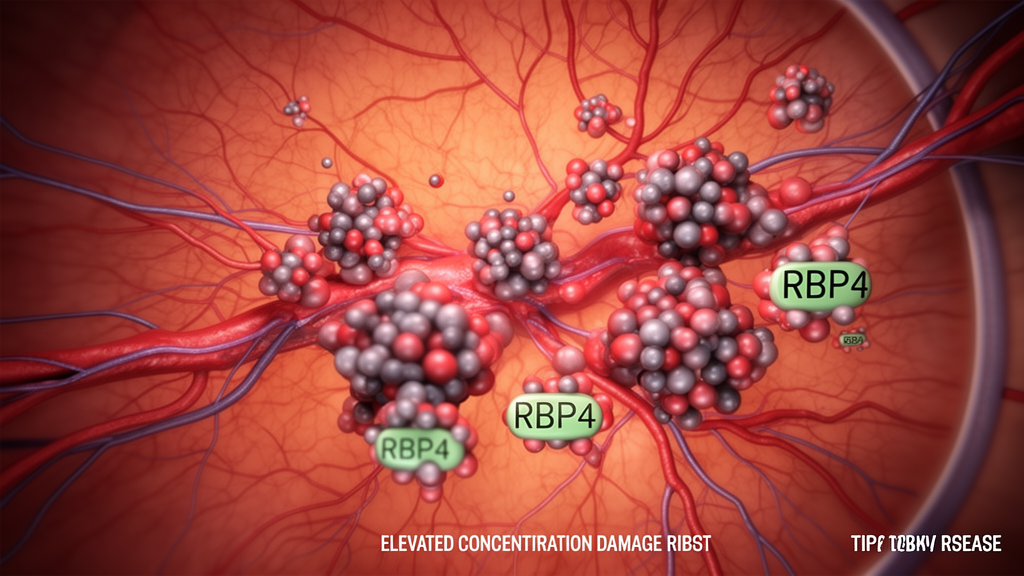
A real-world cross-sectional study conducted at Lishui People’s Hospital in Zhejiang investigated the complex interplay between serum retinol-binding protein 4 (RBP4) levels, the age at onset of type 2 diabetes mellitus (T2DM), and the subsequent risk of developing diabetic retinopathy (DR). This research, which analyzed data from 6,996 adults with T2DM between 2018 and 2023, aimed to determine if RBP4 serves as a potential biomarker for DR risk and whether the risk profile is modified by whether T2DM developed before or after the age of 65. Diabetic retinopathy (DR) was assessed through standardized digital fundus imaging using ETDRS criteria by two independent ophthalmologists, and logistic regression models were used to estimate odds ratios (ORs) and 95% confidence intervals (CIs).
All methods were performed in accordance with the Strengthening the Reporting of Observational Studies in Epidemiology (STROBE) guidelines. Participants were stratified by serum RBP4 levels (< 40 vs. ≥ 40 pg/mL) and age at diabetes onset (< 65 vs. ≥ 65 years). Baseline characteristics revealed that the majority of participants experienced T2DM onset before the age of 65. Those with later onset were notably older at baseline and presented with a less favorable cardiovascular and renal profile, characterized by higher systolic blood pressure and significantly reduced estimated glomerular filtration rate (eGFR) compared to the younger onset group. Furthermore, participants diagnosed with T2DM at age 65 or older exhibited a substantially shorter duration of diabetes (5.73 years) compared to those with earlier onset (8.39 years), a difference that was statistically significant (P < 0.001).
The primary objective of the investigation was to assess the association between elevated RBP4 and DR across these age-at-onset strata. The results indicated that higher RBP4 concentrations were consistently associated with increased odds of DR within both the younger and older age-at-onset groups. Specifically, among participants with T2DM onset before age 65, RBP4 levels ≥ 40 pg/mL were associated with higher odds of DR compared to those with RBP4 < 40 pg/mL. In the fully adjusted logistic regression model, the adjusted OR was 1.28, with a 95% CI of 1.12–1.45. Similarly, among participants with T2DM onset at age 65 or older, the corresponding adjusted OR was 1.43 (95% CI 0.96–2.12). While this latter estimate did not reach conventional statistical significance, the direction of the association remained consistent, and the confidence intervals substantially overlapped.
Interaction analyses were performed to assess effect modification by age at type 2 diabetes onset. Effect modification by age at diabetes onset was evaluated by including an interaction term between the RBP4 category and the age-at-onset category. However, the formal interaction based on the categorical grouping of age at T2DM onset (< 65 vs. ≥ 65 years) was not statistically significant (P for interaction = 0.58). This suggests that the categorical age-at-onset did not materially modify the association between RBP4 and DR in this dataset. Nevertheless, the study did identify other interactions; specifically, diabetes duration showed a statistically significant interaction with RBP4 (P for interaction = 0.01). This finding indicates that while the categorical age groups showed no significant interaction, the duration of diabetes itself demonstrated a more complex relationship with RBP4 and retinopathy risk, particularly when age was modeled continuously.
The biological plausibility for this observed association is rooted in the known roles of RBP4 in metabolic dysregulation and diabetic complications. Elevated RBP4 has been linked to insulin resistance, inflammation, and endothelial dysfunction, all of which are central to the pathogenesis of DR. RBP4 is known to impair insulin signaling pathways, which can exacerbate systemic hyperglycemia and intensify the retinal microvascular exposure to glucotoxic stress. Furthermore, RBP4 upregulation is associated with increased expression of adhesion molecules on endothelial cells, promoting leukocyte adhesion and subsequent microvascular injury. This metabolic dysregulation can lead to endothelial dysfunction, which is a critical early event in diabetic microangiopathy, increasing vascular permeability and amplifying local inflammatory responses.
The study’s findings support the candidacy of serum RBP4 as a potential biomarker for DR risk, even when considering the influence of age at T2DM onset. The observed lower burden of DR in the later-onset group is plausibly attributed to the shorter duration of diabetes in that cohort, rather than chronological age itself, as longer diabetes duration is a well-established determinant of retinopathy. In the sensitivity analysis, generalized propensity score weighting (PSW) was applied to assign weights to participants to balance the distribution of diabetes duration across exposure groups, and weighted logistic regression was used to estimate odds ratios and 95% confidence intervals.
Despite the promising associations, the researchers acknowledged several limitations inherent to the study design. As a cross-sectional study, causal inference cannot be established, and the convenience sampling from a single institution may limit generalizability due to regional variations in genetics or healthcare practices. Additionally, the reliance on self-reported behavioral data introduces potential reporting bias. Detailed information regarding the specific types, doses, and durations of modern therapies like GLP-1 receptor agonists, SGLT2 inhibitors, and statins was lacking, meaning their confounding influence on both RBP4 levels and retinopathy risk could not be fully excluded. Future longitudinal studies with repeated RBP4 measurements and standardized retinopathy grading are necessary to evaluate temporality and reduce the possibility of reverse association.
In conclusion, this real-world study demonstrates that higher serum RBP4 is associated with increased odds of prevalent DR in adults with T2DM. While the categorical age-at-onset did not significantly modify this association, the data strongly suggest that diabetes duration is a more critical factor when interpreting the relationship between RBP4 and retinopathy risk. However, these clinical implications must be interpreted cautiously given the cross-sectional nature of the research.
Subject of Research: Association between serum retinol-binding protein 4 and the risk of diabetic retinopathy in patients with type 2 diabetes.
Article Title: Age at type 2 diabetes onset, retinol binding protein 4 and risks of diabetic retinopathy: a real-world cross-sectional study
Article References: Zhou, Q., Li, J., Fan, M., Shao, H., & Ni, L. (2026). Age at type 2 diabetes onset, retinol binding protein 4 and risks of diabetic retinopathy: a real-world cross-sectional study. Scientific Reports, 16(1), Article 34032. https://doi.org/10.1038/s41598-026-54860-y
Image Credits: AI Generated
DOI: 10.1038/s41598-026-54860-y
Keywords: Diabetic Retinopathy, Retinol-Binding Protein 4, Type 2 Diabetes, Metabolic Syndrome, Cross-sectional Study, Biomarker, Diabetic Complications, Endothelial Dysfunction, type, diabetes, onset, retinol
Cite Scienmag News
Phoebe Ingram. (October 28, 2026). Elevated RBP4 Linked to Higher Risks of Diabetic Retinopathy in T2DM Patients. Scienmag. https://scienmag.com/elevated-rbp4-linked-to-higher-risks-of-diabetic-retinopathy-in-t2dm-patients/
Phoebe Ingram. "Elevated RBP4 Linked to Higher Risks of Diabetic Retinopathy in T2DM Patients." Scienmag, 28 October 2026, https://scienmag.com/elevated-rbp4-linked-to-higher-risks-of-diabetic-retinopathy-in-t2dm-patients/. Accessed 4 November 2026.
Phoebe Ingram. "Elevated RBP4 Linked to Higher Risks of Diabetic Retinopathy in T2DM Patients." Scienmag. October 28, 2026. https://scienmag.com/elevated-rbp4-linked-to-higher-risks-of-diabetic-retinopathy-in-t2dm-patients/




