


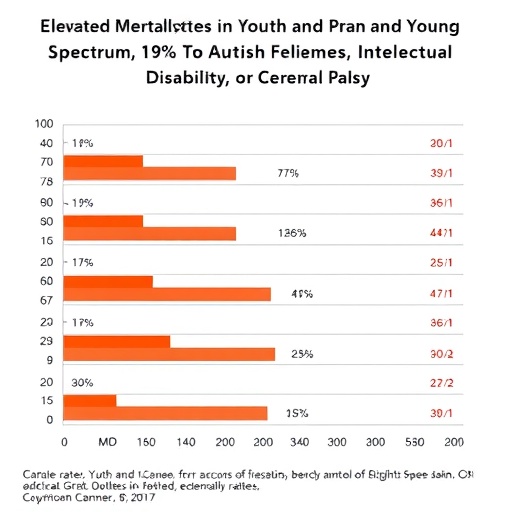
A recent comprehensive study published in JAMA Pediatrics reveals critically elevated mortality rates among youth and young adults diagnosed with autism spectrum disorder, intellectual disability, or cerebral palsy. This research highlights significant health disparities that have remained underrecognized due to limitations in death certificate data, particularly the underreporting of developmental disabilities using standard ICD-10 diagnostic codes. These findings underscore the urgent need for refined public health strategies to address preventable mortality within these vulnerable populations.
The research team conducted an extensive analysis comparing mortality outcomes in individuals with developmental disabilities relative to the general population. Their nuanced approach accounted for an array of mortality causes, uncovering that these groups confront a disproportionally higher risk of premature death during youth and early adulthood. The traditional reliance on death certificates alone appeared insufficient in capturing the true burden of mortality among these individuals, primarily due to the infrequent notation of ICD-10 codes associated with autism, intellectual disability, and cerebral palsy.
This methodological challenge complicates epidemiological surveillance and obscures clear understanding of mortality trends within developmental disability cohorts. The absence of explicit coding impairs accurate mortality ascertainment, creating gaps in public health data that have delayed recognition of underlying health inequities. By integrating alternative data sources and refined classification methods, the study succeeded in generating a more comprehensive mortality profile, emphasizing the profound vulnerability of this demographic.
One of the pivotal revelations of the study is the heterogeneity of mortality causes affecting individuals with autism, intellectual disability, and cerebral palsy. Causes spanned not only natural disease processes but also preventable external factors, suggesting multifactorial contributors to excess mortality. The interplay of complex comorbidities, social determinants of health, and barriers to healthcare access exacerbates risks. These multifaceted dynamics warrant targeted, multidisciplinary interventions aimed at mitigating mortality risk.
Furthermore, the authors elucidated how the intersection of developmental disability with young life stages creates unique vulnerabilities. Adolescents and young adults experience critical transition periods in healthcare delivery, where continuity of care may lapse, and specialized support diminishes. This transition phase potentially increases exposure to adverse health outcomes, underscoring the importance of tailored health system responses that bridge pediatric and adult care services for these populations.
Clinicians and public health professionals must recognize the limitations of current diagnostic coding and reporting frameworks, as these shortcomings impede effective monitoring and intervention efforts. The study advocates for integrating developmental disability indicators into health information systems more systematically, enabling better detection of mortality risks and more informed policy formulation. Enhanced data infrastructure would facilitate granular surveillance, helping to track intervention impacts over time.
The implications of these findings extend beyond clinical practice to encompass health equity considerations. The elevated mortality rates among individuals with developmental disabilities reflect broader systemic inequities in healthcare accessibility, social support, and public resource allocation. Addressing these root causes requires policy-level commitment to inclusive health programs, disability-aware health promotion, and comprehensive preventive care strategies designed to reduce suffering and prolong life.
Importantly, this study contributes to the ongoing discourse on the epidemiology of developmental disabilities, pushing the field toward a more precise understanding of life course health outcomes. It challenges researchers and policymakers to reconsider how mortality data are gathered and utilized, advocating for innovative methodologies that capture the lived realities of affected individuals. The enhanced awareness could fuel transformative outcomes in both research priorities and clinical practice guidelines.
As public health responses evolve, the research team emphasizes the value of interdisciplinary collaboration in crafting solutions. Integrating expertise from neurology, developmental psychology, epidemiology, and health services research will be critical. Such collaboration can help design interventions sensitive to the complex needs of these individuals, ensuring that health systems do not overlook this high-risk population in their disease prevention and health maintenance efforts.
The study also highlights the necessity of engaging caregivers and communities in developing health strategies. Their firsthand knowledge of the challenges faced by individuals with developmental disabilities can inform culturally competent and pragmatic approaches to care delivery. Empowering families and advocacy groups to participate in health planning may bridge gaps between clinical knowledge and real-world barriers, fostering environments conducive to better health outcomes.
Overall, this pioneering research sheds light on a previously underexplored facet of mortality surveillance by revealing the hidden excess mortality among youth and young adults with autism spectrum disorder, intellectual disability, and cerebral palsy. It calls for a paradigm shift in how mortality data are recorded and acted upon, underpinning future efforts to eliminate disparities and optimize the longevity and quality of life for individuals affected by developmental disabilities.
The corresponding author, Dr. Kelly A. Shaw of the CDC, is available for further inquiries via email at nrb7@cdc.gov. This study represents a major advance in pediatric epidemiology and public health, providing a vital foundation for subsequent investigations and policy enhancements aimed at improving health equity for developmentally disabled populations.
News Publication Date: Information not provided
Web References: Information not provided
References: (doi:10.1001/jamapediatrics.2025.6120)
Cite Scienmag News
Phoebe Ingram. (February 10, 2026). Elevated Mortality Rates in Youth and Young Adults with Autism Spectrum Disorder, Intellectual Disability, or Cerebral Palsy. Scienmag. https://scienmag.com/elevated-mortality-rates-in-youth-and-young-adults-with-autism-spectrum-disorder-intellectual-disability-or-cerebral-palsy/
Phoebe Ingram. "Elevated Mortality Rates in Youth and Young Adults with Autism Spectrum Disorder, Intellectual Disability, or Cerebral Palsy." Scienmag, 10 February 2026, https://scienmag.com/elevated-mortality-rates-in-youth-and-young-adults-with-autism-spectrum-disorder-intellectual-disability-or-cerebral-palsy/. Accessed 4 September 2026.
Phoebe Ingram. "Elevated Mortality Rates in Youth and Young Adults with Autism Spectrum Disorder, Intellectual Disability, or Cerebral Palsy." Scienmag. February 10, 2026. https://scienmag.com/elevated-mortality-rates-in-youth-and-young-adults-with-autism-spectrum-disorder-intellectual-disability-or-cerebral-palsy/


