

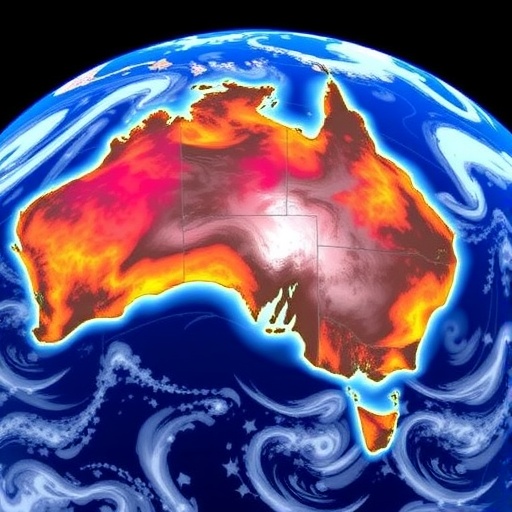
The El Niño–Southern Oscillation (ENSO) is a powerful climate phenomenon that significantly influences the weather patterns and ecological landscapes of Australia. Recent findings underscore the complexity and variability of ENSO’s impact on the Australian climate, moving beyond the simplistic notions that have long characterized this relationship—that El Niño events lead to dry conditions while La Niña phases bring rainfall. A comprehensive understanding of these intricate mechanisms is vital for tackling the socio-economic challenges posed by varying climatic conditions associated with ENSO.
Research suggests that the most pronounced influence of ENSO occurs during the austral spring, a pivotal time when approximately 25% of rainfall variability across extensive regions of eastern Australia can be attributed to this phenomenon. Interestingly, La Niña events have been documented to provoke more significant alterations in precipitation patterns compared to El Niño periods. This finding lends weight to the argument that the impacts of these two opposing climate phases are not symmetrical, which may surprise many who have relied on conventional wisdom in climatology.
As the intricacies of ENSO become better understood, regional variations in its impact reveal even more nuanced relationships. The Central Pacific El Niño events, for instance, have consistently demonstrated a stronger correlation with adverse climatic effects on Australia than their Eastern Pacific counterparts. Alarmingly, these changes tend to be magnified when ENSO episodes persist over extended periods, resulting in prolonged adverse weather conditions and heightened ecological stress.
The interplay between land-atmosphere feedback mechanisms and surrounding sea surface temperatures plays a critical role in shaping these effects. Local climatic processes, combined with the interactions between ENSO and other climate oscillations such as the Indian Ocean Dipole (IOD) and the Southern Annular Mode (SAM), add layers of complexity. Positive IOD and negative SAM conditions exacerbate the drying effects during El Niño events, while conversely, negative IOD and positive SAM conditions enhance rainfall during La Niña occurrences.
Despite advancements in predicting ENSO patterns due to improved observational techniques and sophisticated dynamical forecasting models, obstacles remain in accurately anticipating the subsequent socio-economic impacts of these climate fluctuations. One major challenge stems from the substantial internal variability of the atmosphere, which can mask or alter the expected outcomes associated with El Niño and La Niña phases. This unpredictability poses risks for agricultural sectors, water resources management, and disaster preparedness, all reliant on accurate climate forecasting.
Furthermore, climate scientists are increasingly concerned about ongoing changes in the characteristics of ENSO itself. Research indicates that the warm ocean temperatures in the Pacific, possibly exacerbated by anthropogenic factors, may influence the frequency and intensity of El Niño and La Niña events. This evolving dynamic underscores the necessity for strategic research initiatives aimed at deepening our understanding of these shifts.
Continuous in-situ monitoring is critical to accurately gauge the nuances of ENSO’s impact on Australia. Although our forecasting models are becoming more adept at predicting climatic trends, they still suffer from inherent biases that could lead to miscalculations in expected weather patterns. As researchers strive to refine these models, they emphasize the importance of integrating localized data to paint a clearer picture of how various factors converge to influence climate outcomes.
The implications of deepening our understanding of ENSO are profound, not just for scientific inquiry but also for practical applications in climate adaptation strategies. Stakeholders in agriculture, urban planning, and disaster management need to harness this information, developing responsive and resilient systems that can withstand the unpredictable forces presented by climate change and their associated phenomena.
Importantly, the conversation around ENSO’s impacts is not merely academic; it is deeply entwined with the lived experiences of Australian communities, particularly those in vulnerable regions. The ability to anticipate shifts and prepare accordingly can significantly mitigate risks of drought, flooding, and other climate-related disasters that threaten livelihoods and ecosystems.
As ongoing studies illuminate the links between climate change and ENSO, we must remain vigilant in our monitoring efforts and committed to proactive adaptation measures. The stakes are high, and the urgency for action is underscored by the past decade’s increasingly erratic weather patterns and the undeniable toll they exact on both society and nature.
The evolution of our understanding of ENSO’s broader implications serves as a catalyst for dialogue among scientists, policymakers, and the public alike. As we continue to unearth the complexities of the ENSO phenomenon, it is imperative to foster collaborative approaches that incorporate diverse perspectives, ensuring that adaptation strategies are equitable and effective across the board.
In summary, the profound effects of the El Niño–Southern Oscillation on Australian weather and climate cannot be overstated. As research unveils new layers of complexity beyond traditional assumptions, the interplay of various climatic forces must be accounted for in predicting outcomes and preparing for the future. The road ahead involves not just understanding these patterns but actively engaging in strategies that will shape a resilient Australian landscape in the face of an uncertain climatic future.
Subject of Research: The influence of El Niño–Southern Oscillation (ENSO) on Australian climate and its socio-economic impacts.
Article Title: Climate impacts of the El Niño–Southern Oscillation on Australia.
Article References: Taschetto, A.S., McGregor, S., Dommenget, D. et al. Climate impacts of the El Niño–Southern Oscillation on Australia. Nat Rev Earth Environ (2025). https://doi.org/10.1038/s43017-025-00747-x
Image Credits: AI Generated
DOI:
Keywords: El Niño, La Niña, Australia, climate variability, socio-economic effects, weather patterns, climate adaptation, ENSO mechanisms.


