


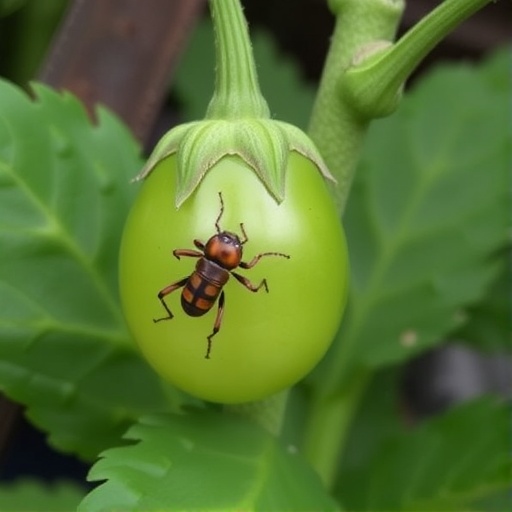
In an era where agricultural sustainability is paramount, researchers have turned their focus towards understanding the intricate mechanisms of plant resistance against pests. A novel study published in Discover Plants by Kafy et al. sheds light on the morphological and biochemical traits that contribute to the resilience of eggplant genotypes against the notorious pest Leucinodes orbonalis, commonly known as the eggplant borer. The findings have the potential to reshape breeding practices and enhance crop yield in the face of pest challenges.
Eggplant, or Solanum melongena, is a staple in numerous cuisines globally, contributing significantly to food security and agricultural diversity. However, its cultivation is frequently undermined by Leucinodes orbonalis, which poses substantial risks to harvests. The devastating impact of this pest necessitates the urgent exploration of resistant eggplant varieties. Kafy and colleagues embarked on this research with the objective of elucidating how specific traits in eggplant can deter pest infestation, thereby offering a viable avenue for pest management.
The study meticulously assesses several eggplant genotypes, comparing their susceptibility levels to Leucinodes orbonalis. The researchers employed a systematic approach, evaluating various morphological characteristics such as leaf thickness, trichome density, and overall plant architecture. These traits have long been correlated with a plant’s ability to resist various pests, thus paving the way for the identification of potential resistance markers.
Furthermore, the research delves deep into the biochemical aspects of resistance mechanisms. Kafy et al. discovered that certain genotypes exhibit heightened levels of defensive compounds, such as phenolics and flavonoids. These compounds not only deter pests through their bitter taste but also play a critical role in thwarting pest feeding and reproduction. By shedding light on these biochemical pathways, the research offers vital insights that can enhance breeding programs focused on developing pest-resistant eggplant cultivars.
One intriguing finding of the study is the variation in resistance levels among different genotypes. Some plants exhibited remarkable resilience, showcasing thicker leaves and a robust network of trichomes that physically impede pest access. In contrast, more susceptible genotypes revealed thinner foliage and lower trichome density, emphasizing the importance of selecting the right varieties in breeding efforts. This gradation in resistance highlights the importance of adopting a nuanced approach in selecting genotypes for agricultural practices, particularly in regions heavily infested by Leucinodes orbonalis.
The study further emphasizes the necessity of adopting integrated pest management strategies, which combine cultural practices with biological resistance. Farmers can glean significant benefits from these findings by selecting resistant genotypes, thereby reducing reliance on chemical pesticides that can harm the ecosystem. The research aligns with global sustainability goals, advocating for practices that not only protect crop yields but also support environmental health.
In addition to morphological and biochemical evaluations, the research employed modern genomic techniques to understand the genetic underpinnings of resistance mechanisms. By integrating genomic data with phenotypic observations, Kafy et al. opened new avenues for molecular breeding programs. Identifying specific genes linked to pest resistance can expedite the development of targeted breeding strategies, ultimately leading to faster turnaround times in the production of resilient eggplant varieties.
Furthermore, the implications of these findings reverberate beyond the realm of eggplant cultivation. The methodologies and insights gained can be applied to a range of crops facing similar pest pressures. This broader perspective encourages a holistic approach to pest management, one that embraces genetic diversity and harnesses nature’s arsenal against agricultural threats.
As the global population continues to surge, the pressure on agricultural systems intensifies. The findings from Kafy et al. signal a step forward in combating the challenges posed by pests like Leucinodes orbonalis. By harnessing the natural resistance found in certain eggplant genotypes, farmers can improve their yield and sustainability in an economically viable manner.
In conclusion, the research highlights a promising frontier in agricultural science where understanding plant resistance can significantly mitigate pest-related losses. The insights gleaned from the morphological and biochemical characterization of eggplant genotypes pave the way for innovative breeding strategies. As the agricultural community continues to seek solutions that harmonize food production with environmental stewardship, studies like this become increasingly critical in shaping the future of sustainable agriculture.
This work forms a vital piece of the puzzle in understanding plant pest interactions, reinforcing the foresight needed to tackle future agricultural challenges. The prospect of developing resilient crop varieties not only ensures food security but also reinforces the commitment to environmental sustainability, making this area of research essential for future agricultural innovations.
The comprehensive analysis conducted by Kafy et al. not only answers pressing questions but also lays down a framework for future studies aimed at unraveling the complexities of plant resistance. It is evident that through interdisciplinary research and collaboration, the agricultural sector can stride confidently towards a more resilient and sustainable future, ensuring that both farmers and consumers benefit from scientific advancements. The evolution of plant resistance research continues to be an inspiring endeavor with profound implications for global agriculture.
Cite Scienmag News
Alan Morgan. (November 2, 2025). Eggplant Genotypes’ Resistance Mechanisms Against Leucinodes orbonalis. Scienmag. https://scienmag.com/eggplant-genotypes-resistance-mechanisms-against-leucinodes-orbonalis/
Alan Morgan. "Eggplant Genotypes’ Resistance Mechanisms Against Leucinodes orbonalis." Scienmag, 2 November 2025, https://scienmag.com/eggplant-genotypes-resistance-mechanisms-against-leucinodes-orbonalis/. Accessed 3 September 2026.
Alan Morgan. "Eggplant Genotypes’ Resistance Mechanisms Against Leucinodes orbonalis." Scienmag. November 2, 2025. https://scienmag.com/eggplant-genotypes-resistance-mechanisms-against-leucinodes-orbonalis/


