


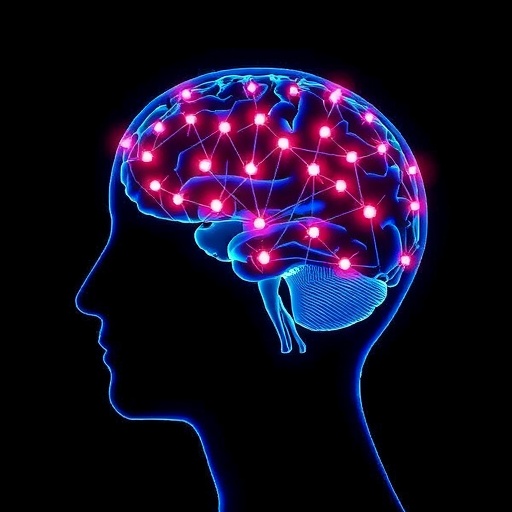
A groundbreaking study emerging from the intersection of neuroscience and computational optimization is revolutionizing the way personalized brain stimulation is tailored for individuals suffering from major depressive disorder (MDD). This innovative research harnesses resting-state EEG data and employs advanced network controllability theories combined with multi-objective optimization algorithms to identify precise stimulation targets, offering new hope in a domain historically hindered by one-size-fits-all treatment models.
Major depressive disorder remains one of the most complex and pervasive mental health challenges worldwide. Traditional treatment modalities, including pharmacotherapy and psychotherapy, often fall short, compelling scientists to explore neuromodulation techniques such as noninvasive brain stimulation (NIBS). While NIBS presents a promising alternative, its clinical efficacy has been limited by the absence of individualized targeting approaches that account for the vast functional and topological diversity of brain networks implicated in depression.
Central to this study is the utilization of electroencephalography (EEG) to capture the dynamic patterns of electrical activity across brain networks in both healthy individuals and those diagnosed with MDD. Analyzing resting-state EEG from 30 healthy controls and 34 patients, the researchers examined functional connectivity across five frequency bands by applying sophisticated measures such as phase locking value (PLV), amplitude envelope correlation (AEC), and weighted phase lag index (wPLI). These complementary metrics provide a nuanced depiction of interaction styles within the brain, encompassing both linear and nonlinear coupling properties.
The researchers integrated spectral graph embedding techniques with structural controllability theory to reveal key nodes within the brain’s network architecture that are pivotal for exerting influence over neural dynamics. This approach allowed them to map the brain’s control points particularly relevant to the aberrant network configurations observed in MDD. Spectral graph embedding distills complex connectivity matrices into interpretable low-dimensional representations, facilitating the identification of candidate stimulation sites based on their potential for modulating network behavior.
To optimize stimulation parameters, including site selection, frequency band, and stimulation amplitude, a cutting-edge multi-objective evolutionary algorithm known as NSGA-II was employed. This algorithm balances competing objectives such as minimizing the energy required to control targeted brain states, maximizing improvements in global network efficiency, and achieving structural restoration aligned with healthy controls. By formalizing these objectives, the study delivers tailored stimulation protocols that attempt to rectify the underlying network dysfunction characteristic of depression.
The validation of these targeted interventions was conducted through Kuramoto-based neural simulations that model the synchronization dynamics among coupled neuronal oscillators. Such simulations enable in-silico experimentation of stimulation effects, measuring critical network properties like global synchrony, modularity, and local efficiency. The results underscored that simulated stimulation enhanced overall network synchrony in MDD subjects, reduced segregated community structures, and bolstered local processing efficiency, supporting the theoretical potential of these personalized strategies.
Interestingly, the study highlighted distinct network alterations in MDD patients compared to healthy controls. Hyperconnectivity was observed in PLV and AEC metrics, while wPLI—a measure sensitive to genuine phase lead-lag relationships—was decreased. Moreover, control nodes identified in patients were more centrally localized around the Cz electrode in the alpha and beta frequency bands, suggesting disease-specific hotspots for effective intervention.
These findings emphasize the paradigm shift from uniform neuromodulation approaches toward precision medicine in psychiatry. By exploiting mathematical frameworks and optimization algorithms, the research charts a course for data-driven, interpretable, and simulation-validated stimulation planning that respects individual neurophysiological variability. This methodological advance may ultimately augment response rates and reduce side effects associated with brain stimulation therapies.
The implications extend beyond clinical practice into the broader realm of computational neuroscience. Employing network controllability paradigms within functional brain data exemplifies a powerful strategy to unravel complex disorders characterized by distributed dysregulations. Furthermore, this study affirms the feasibility of combining multimodal metrics and advanced graph theory to pinpoint controllable states amenable to therapeutic modulation.
Despite these promising outcomes, translational challenges remain. Confirming the in-silico efficacy observed requires rigorous clinical trials incorporating real-time EEG-guided interventions. Additionally, practical considerations around stimulation device precision, patient compliance, and longitudinal monitoring must be addressed. Nonetheless, this work lays a sophisticated foundation for such endeavors.
As mental health disorders continue to exact a heavy societal toll, innovations leveraging artificial intelligence, brain network analytics, and evolutionary algorithms offer a beacon of progress. The union of computational rigor with clinical insight has the potential to transform how depression and other neuropsychiatric diseases are managed, shifting the narrative from symptomatic treatment toward mechanistically informed cures.
In summary, this novel EEG-guided framework represents a landmark achievement by providing individualized, optimized brain stimulation targets designed to mitigate the network disturbances underpinning major depressive disorder. Its fusion of cutting-edge computational methods with neurophysiological data heralds a new era in precision neuromodulation and underscores the transformative capacity of interdisciplinary research in mental health.
Cite Scienmag News
Glenn Wilkins. (August 4, 2025). EEG-Guided Brain Stimulation Targets Depression Networks. Scienmag. https://scienmag.com/eeg-guided-brain-stimulation-targets-depression-networks/
Glenn Wilkins. "EEG-Guided Brain Stimulation Targets Depression Networks." Scienmag, 4 August 2025, https://scienmag.com/eeg-guided-brain-stimulation-targets-depression-networks/. Accessed 4 September 2026.
Glenn Wilkins. "EEG-Guided Brain Stimulation Targets Depression Networks." Scienmag. August 4, 2025. https://scienmag.com/eeg-guided-brain-stimulation-targets-depression-networks/


