


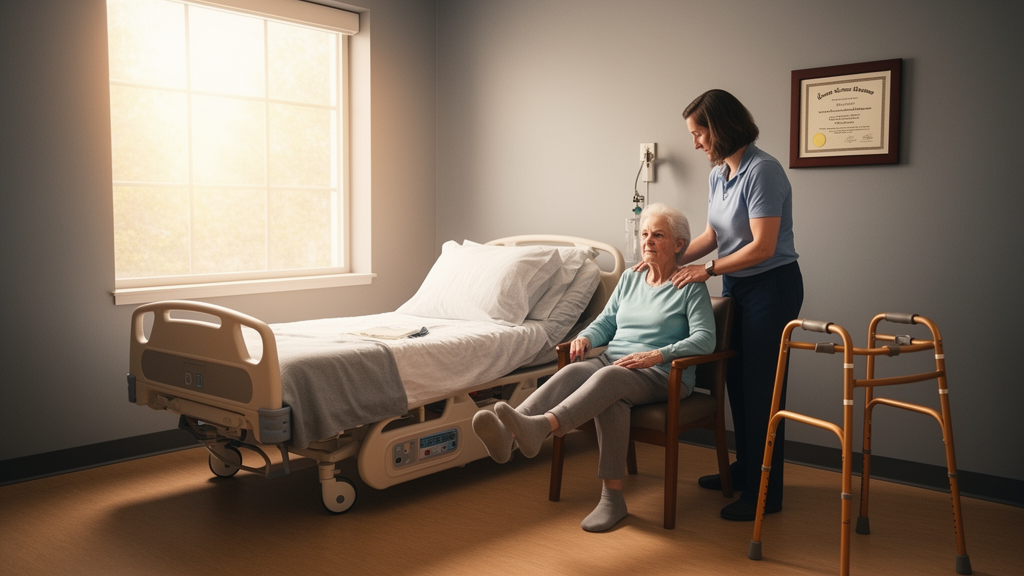
A hip fracture in old age is one of the most consequential injuries a person can experience, and in Sweden alone roughly 17,500 people sustain one every year. Most of those affected are over 80 years old, and as the population continues to age, the number of acute hip operations is expected to rise steadily in the decades ahead. Swedish health care has long followed a well-established standard procedure for these injuries, including fast-tracking patients to surgery, yet survival rates after the operation vary considerably from patient to patient. A new study from Linköping University, conducted together with researchers at Queen Mary University of London, set out to understand why that variation exists, and its findings point to a factor that many clinicians may not have considered a central part of surgical risk assessment: the patient’s level of education.
The research, published in the British Journal of Anaesthesia, drew on the Swedish register known as SPOR, which collects detailed data on surgeries and anaesthesia across the country. Using this registry, the team followed approximately 58,000 people who had suffered a hip fracture and undergone acute surgery. The scale of the dataset allowed the researchers to examine long-term outcomes with a precision that smaller studies could not achieve, and the results were striking. Among patients aged 80 to 84 years, mortality was three times as high as the expected mortality in the same age group in the general Swedish population, and this elevated risk persisted even two years after the operation.
With that baseline established, the researchers turned to the central question of the study: which socio-economic factors, if any, were most strongly correlated with mortality after hip fracture surgery. They examined four distinct factors individually: level of education, residential area, income, and access to home care or nursing homes. This approach mattered, because much of the earlier research in this field had relied on composite measures that bundle several socio-economic indicators together, making it difficult to know which component actually drives the association with survival. By separating the factors, the Linköping team could isolate their individual contributions.
The answer was unambiguous. According to Rasmus Åhman, PhD student at Linköping University and physician at Råslätt health centre in Jönköping, there is a link to increased risk of mortality in both the short and long term based on the individual socio-economic factors investigated, but it was above all the level of education that showed the strongest correlation with mortality. Income played a smaller role, and access to home care or nursing homes proved more difficult to interpret. Perhaps most surprising, residential area turned out not to play any major role at all. Based on the data, Åhman notes, there appear to be no clear differences in survival depending on the type of hospital where a patient had hip fracture surgery, suggesting that the standardised Swedish care pathway delivers broadly comparable surgical outcomes across the country.
The finding that education outweighs income is itself a technical contribution to the field. Previous studies that examined education and income separately had identified the two as roughly equivalent predictors of survival. But those studies typically based income level on taxable income, a measure that Åhman argues does not provide the whole picture, particularly for an older group that has not been part of the workforce for a long time. Taxable income in retirement may bear little relation to a person’s actual financial circumstances, accumulated resources, or living conditions. The Linköping researchers instead used a measure called disposable family income, developed by Statistics Sweden, which weighs together a large number of income and expenditure items to give a more comprehensive picture of an individual’s financial position. Even with this more refined income measure, education remained the dominant socio-economic correlate of survival.
Why would years of schooling influence whether an octogenarian survives a broken hip? Åhman points to a concept known as health literacy, which he believes may relate closely to level of education. Health literacy describes a person’s ability to absorb information from healthcare professionals and to understand why they should do different things: why the medication must be taken as prescribed, why the rehabilitation exercises matter, why follow-up appointments should be kept. In the long and demanding process that an operation entails, from the immediate recovery period through months of mobilisation and physiotherapy, patients who can better understand and act on medical guidance may fare substantially better than those who cannot.
Education may also act as a marker for something broader than individual comprehension. Åhman suggests that a higher level of education could be linked to a larger social network and better support from family and relatives. Recovery from hip fracture surgery is rarely a solitary undertaking; it depends on practical help at home, encouragement to keep moving, someone to notice when something goes wrong, and advocacy within a complex health system. Patients with stronger support structures may simply have more resources to complete the rehabilitation process successfully, and education can serve as a visible proxy for those invisible networks of care.
The researchers are careful about what their findings do and do not imply. As Åhman emphasises, the point is not that more people should study further. Rather, level of education can be seen as a marker that helps healthcare identify patients who may need additional support after surgery, for example in the form of tailored information, rehabilitation and follow-up after hospitalisation. In other words, the educational gradient in survival is not an argument for changing the population’s schooling; it is an argument for changing how the health system allocates its attention. A patient with limited formal education might benefit from clearer, simpler discharge instructions, more intensive rehabilitation planning, earlier and more frequent check-ins, and proactive involvement of family members or municipal services in the recovery plan.
The practical implications could be significant for a health system facing a growing volume of hip fracture operations. If education level is recorded and used as part of routine risk assessment, hospitals could flag patients at higher risk of poor outcomes before they leave the ward, directing scarce follow-up resources toward those most likely to need them. This kind of targeted support does not require new drugs or new surgical techniques; it requires recognising that the social circumstances of a patient are as clinically relevant as their age or the type of fracture. The study’s registry-based design, covering a nationwide population over an extended follow-up period, gives the finding considerable weight, and the publication in the British Journal of Anaesthesia places it in front of the anaesthetists and perioperative physicians who make the decisions about how these fragile patients are managed.
The study also carries a broader message about how medicine measures risk. For decades, surgical risk assessment has focused on physiological variables: age, comorbidities, anaesthetic fitness, fracture type. This research adds to a growing body of evidence that socio-economic circumstances leave a measurable imprint on survival even within a single, standardised, publicly funded health care system, where financial barriers to treatment are minimal. The fact that the type of hospital made little difference, while education mattered greatly, suggests that the residual variation in outcomes lies not in the operating theatre but in the weeks and months that follow, in patients’ homes and communities. Understanding and acting on that reality, the Linköping researchers argue, is the next step toward ensuring that the gains of fast-tracked, high-quality hip fracture surgery extend to every patient, regardless of how many years they spent in school.
Subject of Research: Socioeconomic status and mortality after acute hip fracture surgery in Sweden
Article Title: Level of education most strongly linked to survival after hip fracture
Article References: Level of education most strongly linked to survival after hip fracture. (n.d.). Original publication
Image Credits: AI Generated
DOI: Not provided
Keywords: hip fracture, mortality, education level, health literacy, socioeconomic status, Swedish registry, SPOR, Linköping University, British Journal of Anaesthesia, disposable family income, elderly patients, postoperative care
Cite Scienmag News
Courtney Benton. (October 8, 2026). Education Level Emerges as Strongest Predictor of Survival After Hip Fracture Surgery. Scienmag. https://scienmag.com/education-level-emerges-as-strongest-predictor-of-survival-after-hip-fracture-surgery/
Courtney Benton. "Education Level Emerges as Strongest Predictor of Survival After Hip Fracture Surgery." Scienmag, 8 October 2026, https://scienmag.com/education-level-emerges-as-strongest-predictor-of-survival-after-hip-fracture-surgery/. Accessed 8 October 2026.
Courtney Benton. "Education Level Emerges as Strongest Predictor of Survival After Hip Fracture Surgery." Scienmag. October 8, 2026. https://scienmag.com/education-level-emerges-as-strongest-predictor-of-survival-after-hip-fracture-surgery/


