


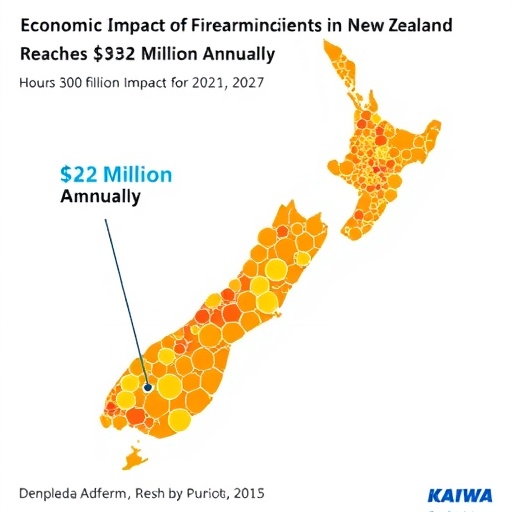
A comprehensive new study led by researchers from the University of Otago – Ōtākou Whakaihu Waka sheds unprecedented light on the substantial human and economic toll that firearm-related injuries and deaths impose on New Zealand. Covering the period from 2000 through 2018, the investigation meticulously quantified both hospitalisations and fatalities linked to firearms, drawing critical attention to the scale of harm beyond isolated tragic events. This detailed epidemiological analysis reveals that each year, firearm injuries alone cost the nation’s healthcare system approximately NZ$1.48 million, while the larger societal impact—measured in years of life lost (YLL)—amounts to an alarming NZ$321 million annually.
The research spanned all firearm incidents—encompassing assaults, accidents, and suicides—providing a comprehensive view of the multifaceted ways firearms affect public health outcomes. Hospital care costs during the 19-year window totalled NZ$28.2 million, but it is the premature mortality burden that dominates the financial impact, as captured by YLL data. By translating loss of productive life into economic terms, the study emphasizes how firearm-related deaths far exceed direct medical expenditure in their societal cost. Importantly, these figures consciously exclude the devastating 2019 Christchurch mosque shootings to focus on endemic firearm-related harm affecting everyday New Zealanders.
It is estimated that over the nearly two decades studied, more than 1,000 people lost their lives due to firearm incidents, while over 2,100 individuals required hospitalisation. Lead researcher Dr. Lucy Telfar-Barnard, from the University of Otago’s Faculty of Medicine, highlights that the majority of patients discharged from hospital settings had undergone surgical interventions, with the bulk of injuries traced back to firearm accidents rather than intentional violence. This data underscores a less publicised but significant component of firearm harm—unintentional injuries resulting from handling or misuse of guns.
Delving into mortality specifics, suicides accounted for the most deaths by far, with 819 individuals taking their own lives using firearms. Assault-related deaths, representing acts of interpersonal violence, numbered 147, while 48 deaths were accidental. The demographic breakdown indicates a stark gender and ethnic disparity: primarily men succumbed to firearm fatalities, with European New Zealanders exhibiting the highest mortality rates overall, closely followed by the Māori population. This inequity signals underlying socio-cultural and possibly structural risk factors interacting with firearm accessibility.
Geographical analysis reveals that rural settlements experienced higher rates of firearm hospitalisations compared to urban centres, suggesting that lifestyle, occupational hazards, and potentially looser firearm regulation enforcement in non-urban areas elevate risk. Furthermore, ethnicity-specific disparities persisted in hospitalisation data, with Māori victims having a threefold higher likelihood than Europeans of dying from firearm homicides. Māori and Pacific peoples together faced a two to three times increased risk of hospitalization subsequent to assault involving firearms, underscoring significant public health inequities requiring targeted intervention.
This comprehensive epidemiological portrait fortifies growing evidence calling for stringent regulation of firearm ownership and use in New Zealand. Dr. Telfar-Barnard emphasizes that the dual burden of lost life years and disability highlights the profound health system strain firearms impose. The study’s findings resonate strongly with prior research suggesting that regulatory policies, particularly those mandating thorough background checks and controlling high-risk weaponry, correlate with meaningful reductions in firearm-related deaths.
Historical legislative milestones in New Zealand’s firearm regulation landscape lend context to these findings. Following the 1990 Aramoana massacre, legislative amendments introduced comprehensive character assessments for license applicants, effectively curbing firearm-related suicides and homicides in the ensuing decades. Then, in the wake of the 2019 Christchurch mosque mass shootings, authorities enacted bans on military-style semi-automatic firearms and established a firearms registry aimed at enhancing accountability and control. These policy interventions demonstrate both the potential and necessity of sustained regulatory vigilance.
With approximately 1.2 million firearms estimated to be held nationwide in 2018 by an estimated quarter of a million license holders, New Zealand’s gun ownership landscape remains significant. Among these, over 65,000 were classified as military-style semi-automatic rifles, pistols, or restricted weapon types, predominantly owned by around 10,000 licenses holders. This substantial presence of advanced firearms underlines the critical need to balance legitimate sporting, hunting, and occupational uses with robust measures that suppress misuse and unauthorized access.
The economic lens through which this study evaluates firearm injury costs lends urgency to calls for policy refinement. Beyond direct hospital and acute care expenses, there lies a considerable burden related to long-term disability, mental health repercussions, law enforcement, and lost economic productivity—elements that compound the social and fiscal impact well beyond initial treatment phases. This holistic appraisal articulates a compelling rationale for preventative strategies encompassing licensing, education, and registry systems.
Firearm safety education emerges as a pivotal mechanism to reduce accidental injuries, which accounted for a notable share of hospitalisations. The evidence presented advocates for comprehensive public health campaigns that address safe handling, secure storage practices, and awareness of risks. Coupling educational efforts with legislative frameworks promises the most effective reduction in firearm-related morbidity and mortality over time.
Currently, government efforts focus on rewriting and modernizing the Arms Act as part of a governmental coalition agreement aimed at reforming firearms legislation. This process holds the promise of integrating research insights like those presented by Dr. Telfar-Barnard and colleagues into practical law reforms that could solidify gains for public safety and health outcomes. The integration of data-driven evidence in policy decisions is paramount as New Zealand seeks to reconcile firearm rights with its broader societal commitment to harm reduction.
Ultimately, this landmark cohort study offers an indispensable resource for policymakers, healthcare professionals, and the public alike, illustrating in stark terms how firearms exert an extensive and multifaceted health burden on New Zealand. As the data clearly show, the costs are not merely financial but represent profound human tragedies multiplied across communities and decades. Science-based stewardship of firearm ownership is thus an essential pillar in safeguarding collective wellbeing.
Cite Scienmag News
Ophelia Keating. (September 24, 2025). Economic Impact of Firearm Incidents in New Zealand Reaches $322 Million Annually. Scienmag. https://scienmag.com/economic-impact-of-firearm-incidents-in-new-zealand-reaches-322-million-annually/
Ophelia Keating. "Economic Impact of Firearm Incidents in New Zealand Reaches $322 Million Annually." Scienmag, 24 September 2025, https://scienmag.com/economic-impact-of-firearm-incidents-in-new-zealand-reaches-322-million-annually/. Accessed 4 September 2026.
Ophelia Keating. "Economic Impact of Firearm Incidents in New Zealand Reaches $322 Million Annually." Scienmag. September 24, 2025. https://scienmag.com/economic-impact-of-firearm-incidents-in-new-zealand-reaches-322-million-annually/


