

Monday, October 26, 2026
Science
No Result
View All Result
  • Login
  • HOME
  • SCIENCE NEWS
  • CONTACT US
  • HOME
  • SCIENCE NEWS
  • CONTACT US
No Result
View All Result
Scienmag
No Result
View All Result
Home Science News Medicine

Ecological study links Chinese provincial deprivation to unequal HIV/AIDS outcomes

October 26, 2026
in Medicine
Kristina Jarvis
By Kristina Jarvis Scienmag Editorial Profile - Infectious Disease Medicine
Reading Time: 2 mins read
0
Ecological study links Chinese provincial deprivation to unequal HIV/AIDS outcomes

Ecological study links Chinese provincial deprivation to unequal HIV/AIDS outcomes

65
SHARES
587
VIEWS
Share on FacebookShare on Twitter
ADVERTISEMENT

Chinese regions with the highest levels of deprivation experienced faster increases in reported HIV incidence and AIDS mortality from 2010 to 2019, according to an ecological analysis of provincial surveillance data. The most deprived regions also had higher HIV incidence and AIDS mortality rates than the least deprived regions, while the association between deprivation and HIV incidence was not uniformly linear.

The researchers compared four regional groups defined by the General Deprivation Index, using the least deprived group, Q1, as the reference. Eastern coastal regions generally had lower index values, whereas western regions had higher values, indicating greater deprivation. The analysis assessed trends in HIV incidence and AIDS mortality across the groups and estimated incidence and mortality ratios relative to Q1. Joinpoint regression was used to examine temporal trends, while negative binomial regression was used to estimate the ratios.

Between 2010 and 2019, the annual percentage change in HIV incidence in the highest-deprivation regions was 10.94% (95% confidence interval: 9.67%–12.22%). AIDS mortality increased more rapidly in the same regions, with an annual percentage change of 14.19% (95% confidence interval: 12.32%–16.10%). These figures represent modeled average annual trends over the study period. Compared with the least deprived regions, the highest-deprivation regions had a reported HIV incidence rate 1.30 times as high (95% confidence interval: 1.11–1.52) and an AIDS mortality rate 2.19 times as high (95% confidence interval: 1.78–2.70).

The authors identified a non-linear association between deprivation and HIV incidence, with Q4, the highest-deprivation group, bearing the heaviest disease burden. Because the study was ecological and analyzed geographical units using surveillance data, its results describe an association between regional conditions and reported outcomes rather than demonstrating that deprivation directly caused individual infections or deaths. The findings are also limited to the provinces and period covered by the surveillance analysis. The study does not establish individual-level risk or resolve the processes underlying the observed provincial differences, and its scale requires that regional disparities be distinguished from individual experience.

Subject of Research: Ecological analysis of regional deprivation and HIV/AIDS outcomes in Chinese provinces

Article Title: Regional deprivation and HIV/AIDS outcomes in China: an ecological study using provincial surveillance data

Article References: Xu, C., Wang, M., Dai, L., Chen, X., Guo, S., Zhao, X., & Wang, Y. (2026). Regional deprivation and HIV/AIDS outcomes in China: an ecological study using provincial surveillance data. BMC Public Health. https://doi.org/10.1186/s12889-026-29641-x

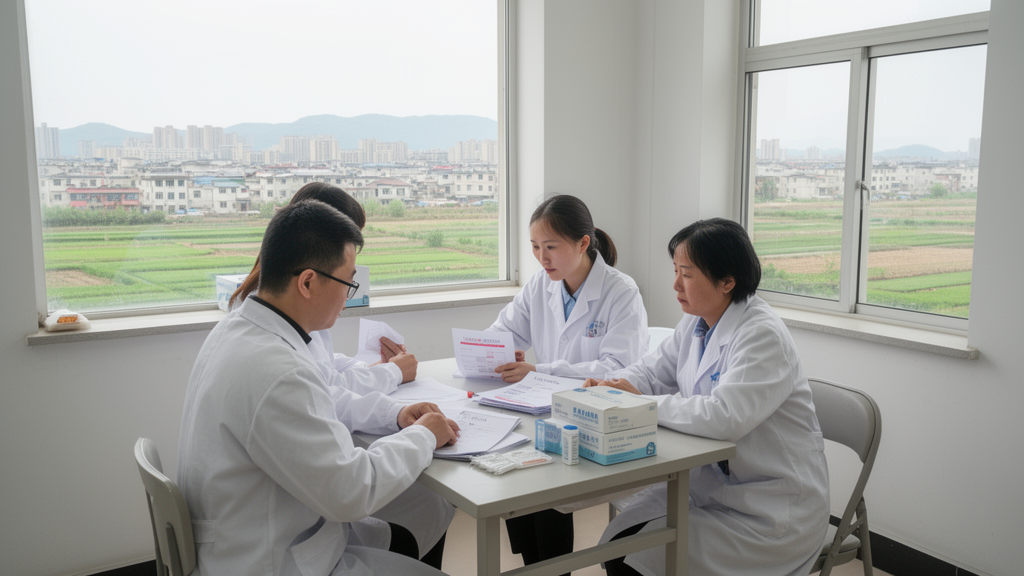
Image Credits: AI Generated

DOI: 10.1186/s12889-026-29641-x

Keywords: HIV incidence, AIDS mortality, regional deprivation, China, provincial surveillance, health inequalities, ecological study, public health, Regional, deprivation, AIDS, outcomes

Cite Scienmag News

Kristina Jarvis. (October 26, 2026). Ecological study links Chinese provincial deprivation to unequal HIV/AIDS outcomes. Scienmag. https://scienmag.com/ecological-study-links-chinese-provincial-deprivation-to-unequal-hiv-aids-outcomes/


Kristina Jarvis. "Ecological study links Chinese provincial deprivation to unequal HIV/AIDS outcomes." Scienmag, 26 October 2026, https://scienmag.com/ecological-study-links-chinese-provincial-deprivation-to-unequal-hiv-aids-outcomes/. Accessed 26 October 2026.

Kristina Jarvis. "Ecological study links Chinese provincial deprivation to unequal HIV/AIDS outcomes." Scienmag. October 26, 2026. https://scienmag.com/ecological-study-links-chinese-provincial-deprivation-to-unequal-hiv-aids-outcomes/

Tags: AIDSAIDS mortalityChinaChinese provincial deprivation and HIV/AIDS disparitiesdeprivationeastern vs western China health disparitiesecological analysis of HIV/AIDS outcomes in Chinaecological studyhealth inequalitiesHIV incidenceimpact of deprivation on infectious disease spreadoutcomesprovincial surveillancePublic healthRegionalregional deprivationregional socioeconomic factors and HIV incidenceregional variation in HIV/AIDS mortality ratessocioeconomic determinants of HIV infectionsocioeconomic inequality and public health outcomesspatial disparities in HIV epidemic in Chinatemporal trends in HIV/AIDS statisticstrend analysis of HIV incidence and AIDS mortalityuse of Joinpoint and negative binomial regression in epidemiological studies
Share26Tweet16
Previous Post

Sinan stone composite heals its own cracks within seconds

Next Post

Jumping spider shows two-stage sleep with REM-like state, study finds

Related Posts

FDA clears University of Michigan suction-and-agitation device for lung clot removal
Medicine

FDA clears University of Michigan suction-and-agitation device for lung clot removal

October 26, 2026
High satisfaction with interactive e-books among Egyptian nursing students, study finds
Medicine

High satisfaction with interactive e-books among Egyptian nursing students, study finds

October 26, 2026
Diabetes Engineering Studios Show How Student Analysis Shifts From Concepts to Quantitative Models
Medicine

Diabetes Engineering Studios Show How Student Analysis Shifts From Concepts to Quantitative Models

October 26, 2026
Modest Cuts in Antibiotic Use Could Avert 38,000 AMR Deaths Yearly
Medicine

Modest Cuts in Antibiotic Use Could Avert 38,000 AMR Deaths Yearly

October 26, 2026
Gene Loss Drives Blood Vessel Growth in Aggressive IDH-Mutant Astrocytoma
Medicine

Gene Loss Drives Blood Vessel Growth in Aggressive IDH-Mutant Astrocytoma

October 26, 2026
Type I Interferon Signaling Helps Clear Early Lyme Disease Infection in Mice
Biology

Type I Interferon Signaling Helps Clear Early Lyme Disease Infection in Mice

October 26, 2026
Next Post
Jumping spider shows two-stage sleep with REM-like state, study finds

Jumping spider shows two-stage sleep with REM-like state, study finds

  • Mothers who receive childcare support from maternal grandparents show more optimized

    Mothers who receive childcare support from maternal grandparents show more parental warmth, finds NTU Singapore study

    27656 shares
    Share 11059 Tweet 6912
  • University of Seville Breaks 120-Year-Old Mystery, Revises a Key Einstein Concept

    1061 shares
    Share 424 Tweet 265
  • Bee body mass, pathogens and local climate influence heat tolerance

    682 shares
    Share 273 Tweet 171
  • Researchers record first-ever images and data of a shark experiencing a boat strike

    546 shares
    Share 218 Tweet 137
  • Groundbreaking Clinical Trial Reveals Lubiprostone Enhances Kidney Function

    531 shares
    Share 212 Tweet 133
Science

Embark on a thrilling journey of discovery with Scienmag.com—your ultimate source for cutting-edge breakthroughs. Immerse yourself in a world where curiosity knows no limits and tomorrow’s possibilities become today’s reality!

RECENT NEWS

  • Jumping spider shows two-stage sleep with REM-like state, study finds
  • Ecological study links Chinese provincial deprivation to unequal HIV/AIDS outcomes
  • Sinan stone composite heals its own cracks within seconds
  • FDA clears University of Michigan suction-and-agitation device for lung clot removal

Categories

  • Agriculture
  • Anthropology
  • Archaeology
  • Athmospheric
  • Biology
  • Biotechnology
  • Blog
  • Bussines
  • Cancer
  • Chemistry
  • Climate
  • Earth Science
  • Editorial Policy
  • Marine
  • Mathematics
  • Medicine
  • Pediatry
  • Policy
  • Psychology & Psychiatry
  • Science Education
  • Science News
  • Social Science
  • Space
  • Technology and Engineering

Subscribe to Blog via Email

Enter your email address to subscribe to this blog and receive notifications of new posts by email.

Join 5,151 other subscribers

© 2025 Scienmag - Science Magazine

Welcome Back!

Login to your account below

Forgotten Password?

Retrieve your password

Please enter your username or email address to reset your password.

Log In
No Result
View All Result
  • HOME
  • SCIENCE NEWS
  • CONTACT US

© 2025 Scienmag - Science Magazine

Discover more from Science

Subscribe now to keep reading and get access to the full archive.

Continue reading