

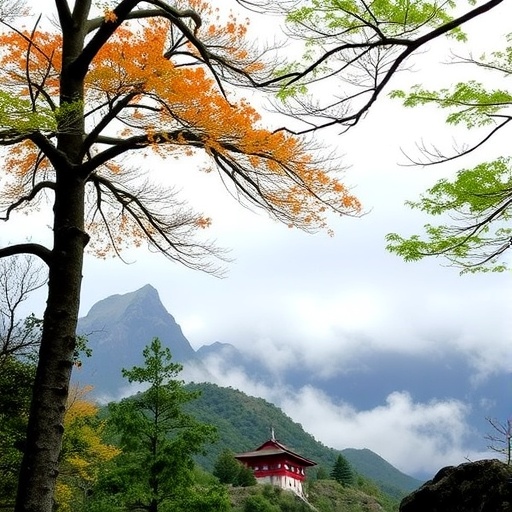
In a groundbreaking study presented by researchers Luan, He, and Wang, the complex dynamics of ecological sensitivity in temperate mountain regions have been explored with a specific focus on the striking Mount Tai in China. This mountainous area, renowned not just for its scenic beauty but also for its ecological significance, is now under the microscope in an effort to understand how seasonal changes impact its delicate ecosystems. The findings aim to provide deeper insights into how varying climatic conditions can lead to significant shifts in ecological responses and adaptability.
The research investigates the seasonal differentiation mechanisms of ecological sensitivity, which is crucial for conservation planning and resource management. Seasonal fluctuations, particularly in temperature and precipitation, can dramatically alter the habitat and survival rates of various species. By scrutinizing these changes over time, the study highlights the urgent need for adaptive strategies that can withstand environmental stressors, especially as climate change accelerates.
The methodology adopted by the researchers combines extensive fieldwork with advanced remote sensing technology, enabling them to gather extensive data across different seasons. This multi-layered approach provides a richer and more accurate representation of ecological changes on Mount Tai. The researchers monitored vegetation patterns, soil moisture levels, and species distribution, thereby constructing a comprehensive ecological profile of the area over an entire year.
One of the striking outcomes of the study is the demonstration of a strong correlation between seasonal climatic factors and ecological response patterns. For instance, hotter summers led to marked shifts in plant communities, with certain species thriving while others experienced stress or decline. Such phenomena reinforce the interconnectedness of species and their environments, emphasizing how climate-induced changes can precipitate cascading effects throughout the ecosystem.
Additionally, the study reveals that the timing of seasonal events, such as flowering and fruiting, has significant ecological ramifications. As climate patterns shift with rising temperatures, mismatches in the timing of these critical events could disrupt pollinator availability and consequently affect food web dynamics. These findings highlight the necessity for ongoing research into phenological shifts and their potential impacts on ecosystem services.
Understanding these seasonal dynamics is vital for developing effective conservation strategies, particularly in regions that serve as ecological hotspots. By identifying areas that are particularly sensitive to seasonal changes, policymakers can prioritize interventions and allocate resources more effectively. This research not only has implications for Mount Tai but can also inform global conservation efforts in similar temperate mountainous regions.
Furthermore, the research emphasizes the importance of integrating traditional ecological knowledge with scientific data. Indigenous perspectives and local knowledge systems can complement scientific findings, enriching our understanding of ecological changes under shifting climatic conditions. This collaborative approach fosters a more holistic understanding of sustainable resource management and conservation practices.
The implications of the findings extend beyond the confines of academia, urging stakeholders at various levels—government, NGOs, and local communities—to engage with and act upon the insights provided. By prioritizing ecological sensitivity, stakeholders can enhance resilience against the backdrop of climate volatility; ultimately ensuring the preservation of both biodiversity and ecosystem services that are essential for human well-being.
In concluding their study, the researchers advocate for a proactive stance on ecological monitoring and a commitment to adaptive management practices. The complexities of ecological sensitivity necessitate ongoing research, interdisciplinary collaboration, and active engagement with local communities to foster resilience in temperate mountainous regions. The story of Mount Tai serves as a microcosm of the broader ecological challenges facing our planet, underscoring the urgent need for action.
The findings from this study stand as a call to arms for both the scientific community and policymakers alike. As climate change continues to manifest its impacts globally, understanding the nuances of ecological sensitivity will be critical in shaping responsive and responsible environmental governance. Thoughtful application of these findings could lead to a future where both people and nature thrive in harmony.
As this research gains traction, it will undoubtedly stimulate further inquiries and discussions concerning the fragile state of ecosystems worldwide. The ongoing dialogue will be essential in fostering awareness and generating the necessary support for conservation initiatives aimed at mitigating the impacts of climate change in sensitive areas like Mount Tai.
Recognizing the profound interconnectedness of ecosystems laid bare by this research is imperative. As societies continue to evolve, so too must our approaches to environmental stewardship, ensuring that sensitive ecological regions receive the attention and care they so desperately need in the face of an uncertain future.
The comprehensive evaluation conducted by Luan and colleagues provides a vital reference point for future studies exploring ecological sensitivity amid seasonal variations. By remaining attuned to these ongoing changes, we stand a better chance of safeguarding the natural world’s delicate balance, ensuring that these precious ecosystems endure for generations to come.
In sum, the study is more than a mere observation of ecological responses; it is a clarion call for collective action and responsibility in addressing the myriad impacts of climate change. The work opens new avenues for research and reinforces the meaning of resilience in the face of environmental challenges, positioning Mount Tai as a critical focal point in our understanding of ecology under duress.
With the world watching, the lessons gleaned from Mount Tai may very well provide a model for how we navigate the complexities of climate adaptation, conservation, and sustainability moving forward.
Subject of Research: The seasonal differentiation mechanism of ecological sensitivity in temperate mountain regions.
Article Title: Seasonal differentiation mechanism of ecological sensitivity in temperate mountain scenic areas: a case study of Mount Tai, China.
Article References:
Luan, K., He, W., Wang, J. et al. Seasonal differentiation mechanism of ecological sensitivity in temperate mountain scenic areas: a case study of Mount Tai, China. Environ Monit Assess 198, 107 (2026). https://doi.org/10.1007/s10661-025-14934-2
Image Credits: AI Generated
DOI: https://doi.org/10.1007/s10661-025-14934-2
Keywords: ecological sensitivity, Mount Tai, climate change, seasonal dynamics, biodiversity, conservation, ecosystem services.


