

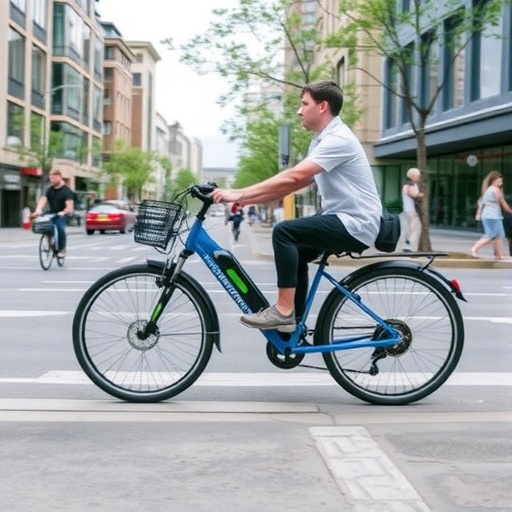
In an era where climate change poses unprecedented challenges to urban mobility, researchers have begun to explore innovative solutions that enhance resilience while simultaneously promoting sustainable practices. A recent study focuses on the role of electric bicycles, commonly known as e-bikes, in facilitating climate-resilient urban transportation. Conducted by a team of scholars led by Zhang Y., this research underscores the importance of heat adaptation strategies in urban environments, presenting clear evidence of how such adaptations can be seamlessly integrated into daily commuting patterns.
E-bikes are rapidly gaining popularity in metropolitan regions around the globe, primarily due to their inherent flexibility and ecological advantages. Unlike traditional bicycles, e-bikes provide an added boost that allows riders to traverse longer distances with ease, making them a viable option for commuting. The study investigates how these vehicles not only offer a practical solution for urban travel but also serve as a strategic asset in the face of climate-induced heat challenges. This collaborative analysis sheds light on the far-reaching implications of e-bike adoption in cities needing to bolster climate resilience.
A critical aspect of the study is its focus on mediation analysis, a statistical technique that helps illuminate the nuances of cause-and-effect relationships between variables. In the context of this research, mediation analysis is employed to explore the interplay between e-bike usage, heat adaptation, and urban mobility. By establishing the links among these variables, the researchers aim to provide a comprehensive understanding of how e-bikes can mitigate the adverse effects of extreme heat conditions on urban transportation systems.
The findings suggest that e-bikes play a vital role in promoting heat adaptation among urban commuters. In environments where heatwaves have become a recurrent occurrence, traditional modes of transport may prove uncomfortable or even dangerous. E-bikes, with their electric assistance and ergonomic designs, offer a means to circumvent these challenges. The study reveals that commuters using e-bikes are more willing to engage in outdoor activities during the summer months, thereby enhancing their overall mobility once extreme temperatures become a factor.
Moreover, the research emphasizes the significance of combining technological advancements in e-bike design with urban planning initiatives aimed at integrating green infrastructure. For instance, dedicated bike lanes shaded by trees or covered with sustainable materials can significantly improve the comfort level of e-bike riders during hot weather. The study outlines strategic recommendations for urban planners and policymakers, advocating for investments in infrastructure that not only supports e-bike usage but also fosters heat resilience within urban environments.
Interestingly, the benefits of e-bikes extend beyond individual user experiences. The broader implications of increased e-bike usage are linked to an overall reduction in greenhouse gas emissions and traffic congestion in crowded cities. As more individuals opt for these electric bicycles, the reliance on fossil fuel-based vehicles diminishes, paving the way for cleaner cities and enhanced public health. The study points to a promising paradigm shift, suggesting that e-bikes could serve as a focal point in future urban mobility strategies, especially in a warming world.
However, the research does not overlook the existing barriers to e-bike adoption. Cost remains a significant factor, particularly in low-income communities where access to alternative modes of transport is already limited. By identifying these obstacles, the study advocates for targeted policies that can subsidize e-bike purchases, particularly for vulnerable populations. Ensuring equitable access to e-bikes will be crucial in maximizing their potential benefits and guaranteeing that climate resilience strategies include all community members.
Furthermore, the researchers address the psychological aspects associated with adopting e-bikes for commuting. Many potential users harbor concerns about safety, range anxiety, or the physical demands of riding an e-bike in high temperatures. To tackle such hesitancies, education and community outreach programs could serve as tools to alleviate fears. By raising awareness of the advantages of e-bikes and promoting success stories from existing users, these initiatives can help in driving a cultural shift towards embracing this mode of transport.
The integration of e-bikes into the larger framework of urban mobility also extends to partnerships between private enterprises and local governments. As the demand for e-bikes continues to escalate, collaborations in the realms of infrastructure development, maintenance, and smart city innovations will become increasingly relevant. The study highlights the importance of leveraging public-private partnerships as a means of fostering environments conducive to e-bike adoption and sustainability.
In conclusion, the significance of e-bikes in enhancing climate-resilient urban mobility cannot be understated. As urban areas are faced with the dual challenges of growing populations and increasing temperatures, the insights drawn from this research provide a pathway toward a more sustainable and adaptable future. With the right structural and policy frameworks in place, e-bikes may well become the cornerstone of urban transportation in a climate-conscious era.
The study conducted by Zhang Y. and colleagues offers a fresh perspective on the intersection of technology, health, and environmental sustainability in urban planning. As cities grapple with the reality of climate change, innovative solutions such as e-bikes provide a glimpse into what a future of adaptable transportation might look like. The urgency of these findings rests not only on their practical implications but also on their potential to inspire a collective movement towards greener commuting practices.
In the wake of climate challenges, rethinking the future of urban mobility to incorporate e-bikes as a core component appears not just strategic but essential for building resilient cities. The journey towards advanced urban transportation systems is ongoing, and the research emphasizes that e-bikes could lead the charge toward tackling heat adaptation and fostering sustainable practices for generations to come.
Subject of Research: E-bikes and Climate Resilient Urban Mobility
Article Title: E-bikes enhance climate resilient urban mobility through heat adaptation as revealed by mediation analysis.
Article References:
Zhang, Y., Du, P., Ma, W. et al. E-bikes enhance climate resilient urban mobility through heat adaptation as revealed by mediation analysis.
Commun Earth Environ (2026). https://doi.org/10.1038/s43247-026-03248-x
Image Credits: AI Generated
DOI: 10.1038/s43247-026-03248-x
Keywords: E-bikes, Urban Mobility, Climate Resilience, Heat Adaptation, Mediation Analysis, Sustainable Transportation.


