

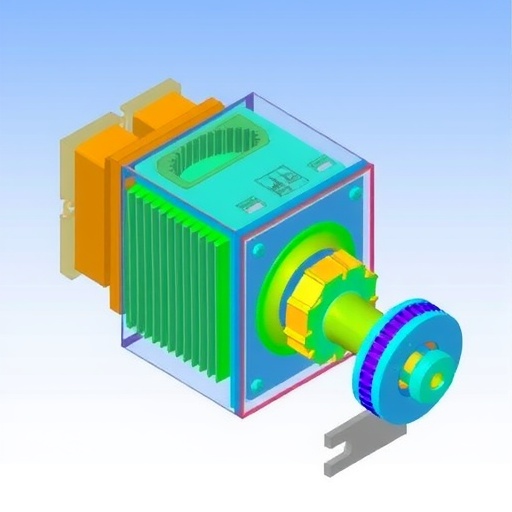
In a groundbreaking study published in the esteemed journal Earthquake Engineering and Engineering Vibration, researchers Lee, SJ., Lee, JE., and Dinh, N.H. delve deeply into the dynamic characteristics of mold transformers, an essential component in electrical energy distribution systems. This key investigation focuses on mold transformers equipped with rotary friction dampers, a technological innovation aimed at enhancing their performance under seismic loading. The research underscores the significant yet often overlooked interplay between structural design and energy efficiency during seismic events, an area crucial to ensuring the resilience of infrastructure.
The motivation behind exploring mold transformers stems from their critical role in minimizing economic losses and enhancing safety during earthquakes. These transformers are pivotal in high voltage systems, directly influencing the performance and reliability of power supply networks. By analyzing how seismic forces affect transformer dynamics, the researchers aim to provide insights that could lead to improved engineering practices in transformer design, particularly for areas prone to seismic activities.
The methodology adopted in this study is noteworthy for its innovative approach, particularly the employment of shaking table tests. By simulating real-world earthquake conditions, the researchers rigorously tested various configurations of mold transformers paired with rotary friction dampers. This experimental setup mimics the physical effects of seismic vibrations, allowing for a detailed investigation of how these systems respond under stress. These rigorous tests were supplemented with analytical models, ensuring that the results are not only empirically validated but also theoretically grounded.
During the tests, the dynamic behavior of the mold transformers revealed critical insights regarding their stiffness and damping ratios. The integration of rotary friction dampers markedly altered their response, suggesting that optimal damping design can significantly mitigate seismic forces. This outcome aligns with existing literature emphasizing the importance of energy dissipation devices in improving the earthquake resilience of structures. The findings advocate for a design paradigm where damping solutions are not merely supplementary but are integral to transformer architecture from the outset.
One distinctive aspect of the study is its emphasis on the relationship between transformer dynamics and overall system stability. It becomes evident that mold transformers are not standalone components but rather parts of a larger interconnected system. The interaction between transformers and the electrical grid means that their dynamic characteristics can influence grid stability during seismic events. Thus, enhancing their performance could have far-reaching implications for disaster resilience and energy continuity.
The research also highlights the diverse applications of rotary friction dampers beyond mold transformers. As these dampers provide effective energy dissipation, their principles could be adapted to other structural components within high-stakes environments, such as bridges and buildings. By disseminating this knowledge, the study prompts cross-disciplinary collaborations aimed at challenging conventional design methodologies across engineering sectors.
Moreover, the study’s implications extend beyond engineering into regulatory frameworks surrounding infrastructure safety. As natural disasters become increasingly frequent due to climate change, the findings of this research could empower policymakers to revise existing building codes and safety regulations. By advocating for the integration of advanced damping technologies in mold transformer designs, the study serves as a catalyst for future revisions in industry standards, potentially leading to safer and more resilient power distribution systems.
As the researchers prepare to disseminate their findings, they anticipate a broad appeal within both academic and industrial circles. The potential for collaborative projects is vast, as electrical engineers, seismic experts, and materials scientists converge around these findings. Such synergy may catalyze further innovations, propelling the development of next-generation transformer technologies that are not only seismic-resistant but also energy-efficient.
Furthermore, the research is particularly timely considering global trends towards renewable energy integration. As more variable power sources, such as wind and solar, are connected to the grid, the stability of power distribution becomes paramount. Mold transformers equipped with advanced damping mechanisms could enhance grid stability, allowing for a smoother integration of renewable sources. This pivot is aligned with worldwide efforts to adopt sustainable energy practices, thus showcasing the study’s relevance to current global challenges.
In conclusion, the research highlights both the critical and complex nature of mold transformers in today’s energy landscape. Their dynamic characteristics, particularly under seismic conditions, warrant further exploration and innovation. The findings from this study not only advance our understanding of transformer design but also provide a foundation for future research that can significantly influence the safety and reliability of electrical infrastructure.
The advancements in rotary friction dampers could lead to major paradigm shifts in how engineers approach disaster preparedness and structural resilience in energy systems worldwide. As engineers and stakeholders absorb these findings, a more proactive stance toward disaster risk management in electrical infrastructure may soon become a reality.
Moving forward, the researchers emphasize the need for ongoing experimentation and refinement of the designs presented in their study. The evolving nature of seismic research and earthquake engineering necessitates an adaptive approach to both technology and methodology. As the field progresses, these mold transformers may set a new standard for energy systems, marrying technological advancement with ecological responsibility.
In light of this research, the importance of interdisciplinary collaboration becomes increasingly clear. Combining insights from various fields can lead to innovations that not only address immediate engineering challenges but also anticipate future needs. The results of this study are likely to invigorate the discussion surrounding infrastructure resilience and may inspire a wave of innovations in the field of electrical engineering that prioritizes safety and sustainability.
Subject of Research: Dynamics of mold transformers with rotary friction dampers under seismic loading.
Article Title: Experimental and analytical investigations of the dynamic characteristics of a mold transformer with rotary friction dampers based on shaking table tests.
Article References:
Lee, SJ., Lee, JE., Dinh, N.H. et al. Experimental and analytical investigations of the dynamic characteristics of a mold transformer with rotary friction dampers based on shaking table tests.
Earthq. Eng. Eng. Vib. 24, 451–472 (2025). https://doi.org/10.1007/s11803-025-2318-4
Image Credits: AI Generated
DOI: April 2025
Keywords: dynamic characteristics, mold transformers, rotary friction dampers, seismic loading, energy distribution, structural resilience.


